

Key Takeaways
|
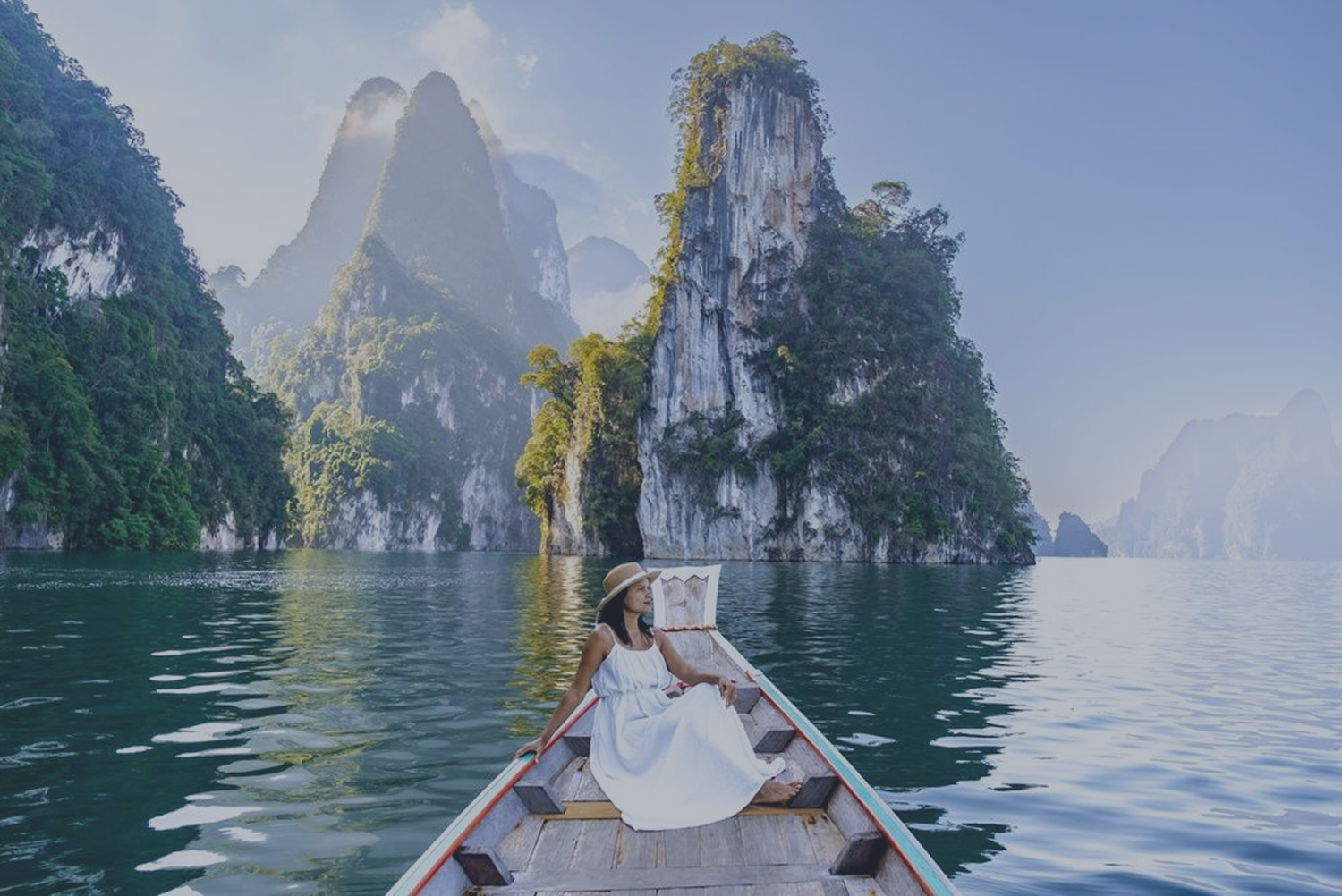
Bali is usually the most familiar destination in Indonesia for Indian travellers, but places such as Java, Flores, Sumatra, Sulawesi, and West Papua offer diverse experiences.
You can watch the sunrise over Borobudur, hike around Mount Bromo, see orangutans, and snorkel with turtles. To experience all this, you need to know how to navigate, as these activities span different islands in Indonesia.
Some attractions are easy to reach from major tourist centres, while others require domestic flights, ferries, private boats, or long road journeys. So, once you pick your favourite thing to do in Indonesia, research entry permits, whether a tour guide is required, and how to get there.
Top Things to Do in Indonesia
If you are looking for a honeymoon destination, a family holiday or an adventure trip, Indonesia offers experiences for almost every type of traveller. The list below covers temples, volcanoes, wildlife, and festivals to choose from.
1. Visit Borobudur Temple, Central Java
- Timings: 6:30 AM – 4:30 PM.
- Approx. Entrance Cost: 3,51,672 IDR (1,900 INR).
Borobudur is the world’s largest Buddhist monument and dates back to the 9th century during the reign of the Syailendra Dynasty.
Builders constructed the structure without cement or mortar, and it consists of three tiers that represent Buddhist cosmology. The temple features 2,672 stone sculptures carved onto the flat stone and 504 Buddha statues.
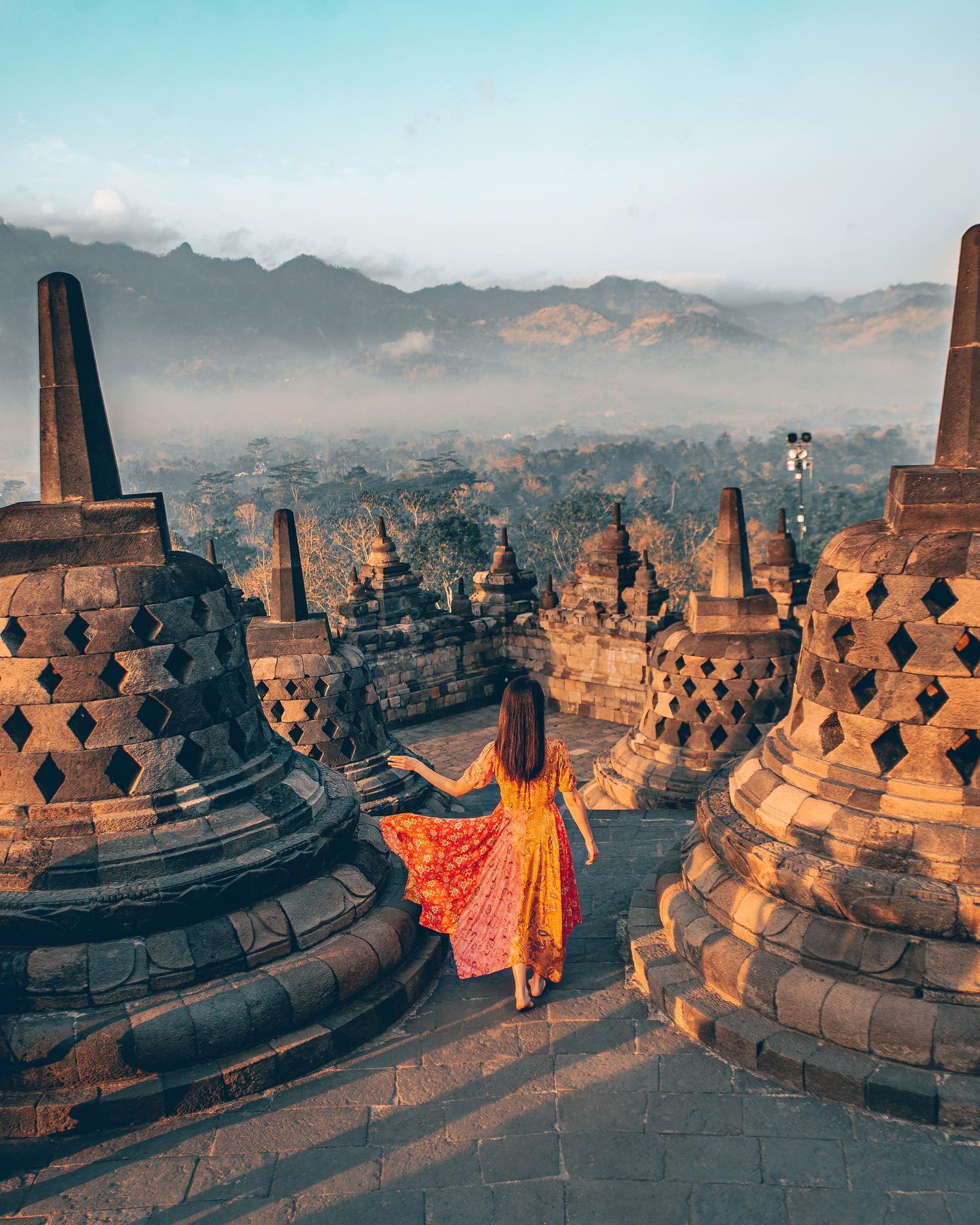
Sunrise is a popular time to visit because visitors can see the surrounding hills and valleys in the early morning light.
Hire local guides at the entrance if you want to understand the stories carved into the stone walls. If you wear shorts, you must wear a traditional sarong around your waist, available for rent at the entrance.
Note: If you are visiting the temple for sunrise, the only way is to book a tour. Also, only 1,200 visitors are allowed in a day, so prebook your tour.
2. Watch the Ramayana Ballet at Prambanan
- Timings: 5:30 PM – 9:30 PM (Tuesday, Thursday, Friday, Saturday).
- Approx. Ballet Price: VIP: 4,50,000 IDR (2,419 INR), Class I: 2,00,000 (1,075 INR), Class II: 150,000 (806 INR).
- Approx. Temple Entry: 4,46,374 IDR (2,400 INR).
Prambanan is Indonesia’s largest Hindu temple and is dedicated to the Trimurti of Shiva, Vishnu, and Brahma. Built in the 9th century, its tall stone temples feature detailed carvings, including scenes from the Ramayana.
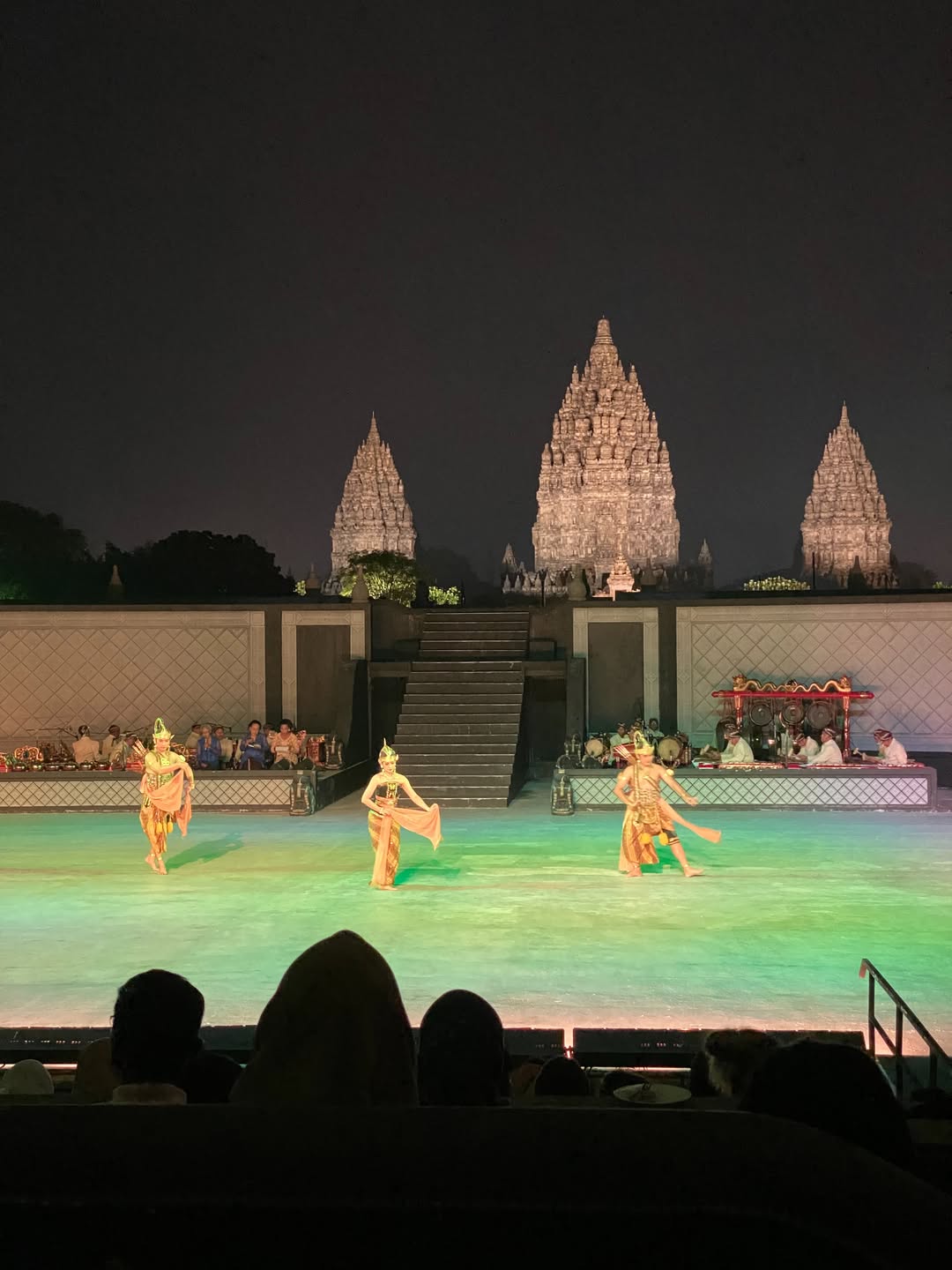
Most travellers come here for the Ramayana Ballet, which tells stories on stage through Javanese dance. With traditional music, costumes, and large-scale choreography, the performance remains iconic, set against the illuminated Prambanan temples.
The story follows Rama, Sita, Lakshmana, and Hanuman, giving visitors an introduction to the Ramayana.
Note: If you plan to attend, check the performance calendar before visiting, as schedules can change.
3. Watch the Sunrise at Mount Bromo, East Java
- Timings: Sunrise is around 5:00 – 5:30 AM. Arrive around 4:00 AM.
- Approx. Entrance Fee: Weekend: 3,20,000 IDR (1,720 INR). Weekday: 2,20,000 IDR (1,182 INR).
- Approx. Jeep Cost: Shared: 2,00,000 IDR (1,075 INR) per person. Private Jeep: starts at 500,000 IDR (2,688 INR).
Mount Bromo is an active volcano rising from the Tengger Caldera, surrounded by the Sea of Sand, and the sunrise tour is one of the must-do activities in Indonesia.
Most sunrise trips begin around 3 AM. Staying in Cemoro Lawang makes it easy to reach the access point in 10 – 15 minutes. Take a jeep, not a car, because the roads are too steep.
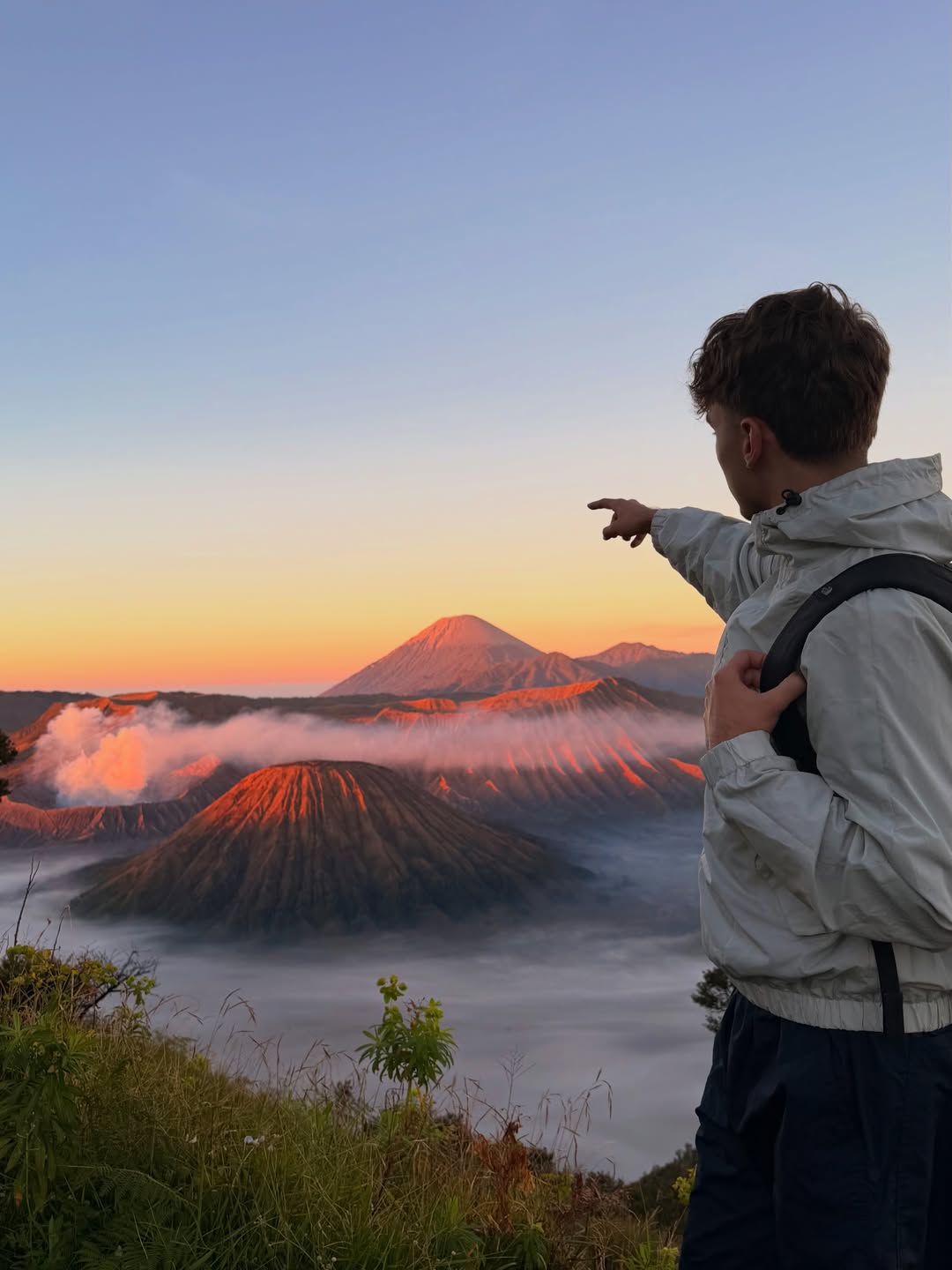
The Jeep takes you towards one of the sunrise viewpoints, such as Mount Penanjakan or Kingkong Hill. After sunrise, the trip continues across the volcanic Sea of Sand towards Mount Bromo.
You can then climb the steps to the crater rim and look out over the active volcanic landscape.
Note: Temperatures can be very low before sunrise, sometimes dropping below 5°C. Wear a thick jacket, gloves, and a beanie to cover your ears.
4. See the Blue Flames of Kawah Ijen, East Java
- Timings: 12:00 AM – 8:00 AM.
- Approx. Tour Cost: 4,50,000 IDR (2,419 INR) incl. entrance ticket, hotel pickup, tour guide, and mask.
Kawah Ijen is famous for its electric-blue flames, visible at night, created when sulphuric gases ignite upon contact with air at high temperatures. You can only see this in darkness, which is why visitors begin the climb at night.
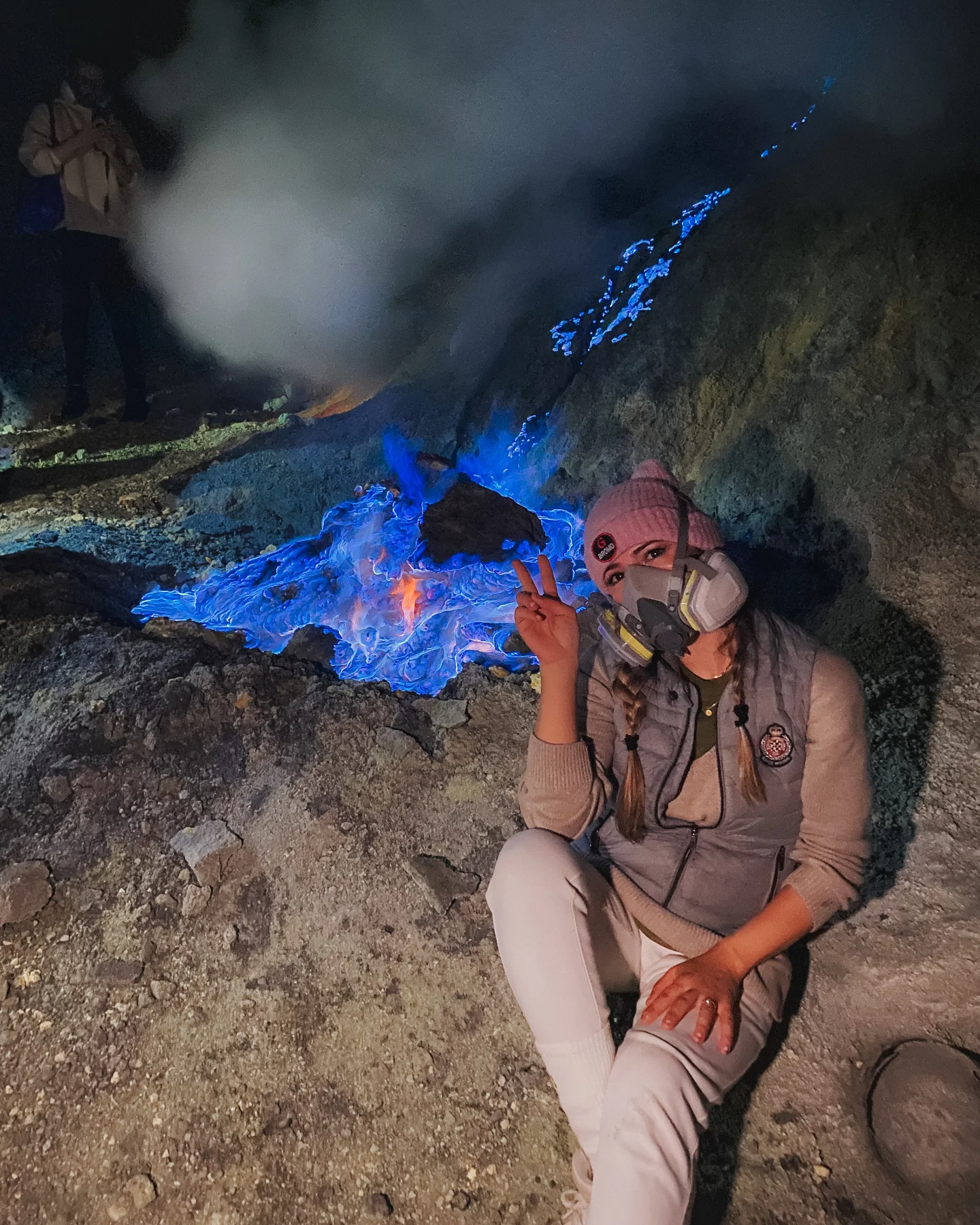
Reach the parking area around 1:00 AM and hike for 1h 30m up to the crater rim. You descend into the crater to witness the Blue Flames, which are only visible between 1:00 AM and 4:00 AM. Then climb back up to the crater rim to watch the sunrise and view the turquoise crater lake.
Ijen is also known for its sulphur mining. You will see miners carry baskets of solid sulphur up and down the mountain and also talk to them.
Note: The volcanic lake is extremely acidic, and the area can contain dangerous sulphur gases. A proper gas mask and a guide are essential.
5. Cycle Through the Jatiluwih Rice Terraces, Bali
- Timings: Start around 8:00 AM before the midday heat.
- Approx. Tour Cost: 5,50,000 IDR (2,957 INR).
Jatiluwih is a vast agricultural landscape in Tabanan, Bali. Unlike the smaller, commercialised rice-field attractions around Ubud, Jatiluwih covers a much larger area just below Mount Batukaru. It is a good place to experience Bali’s traditional farming in the beautiful countryside.
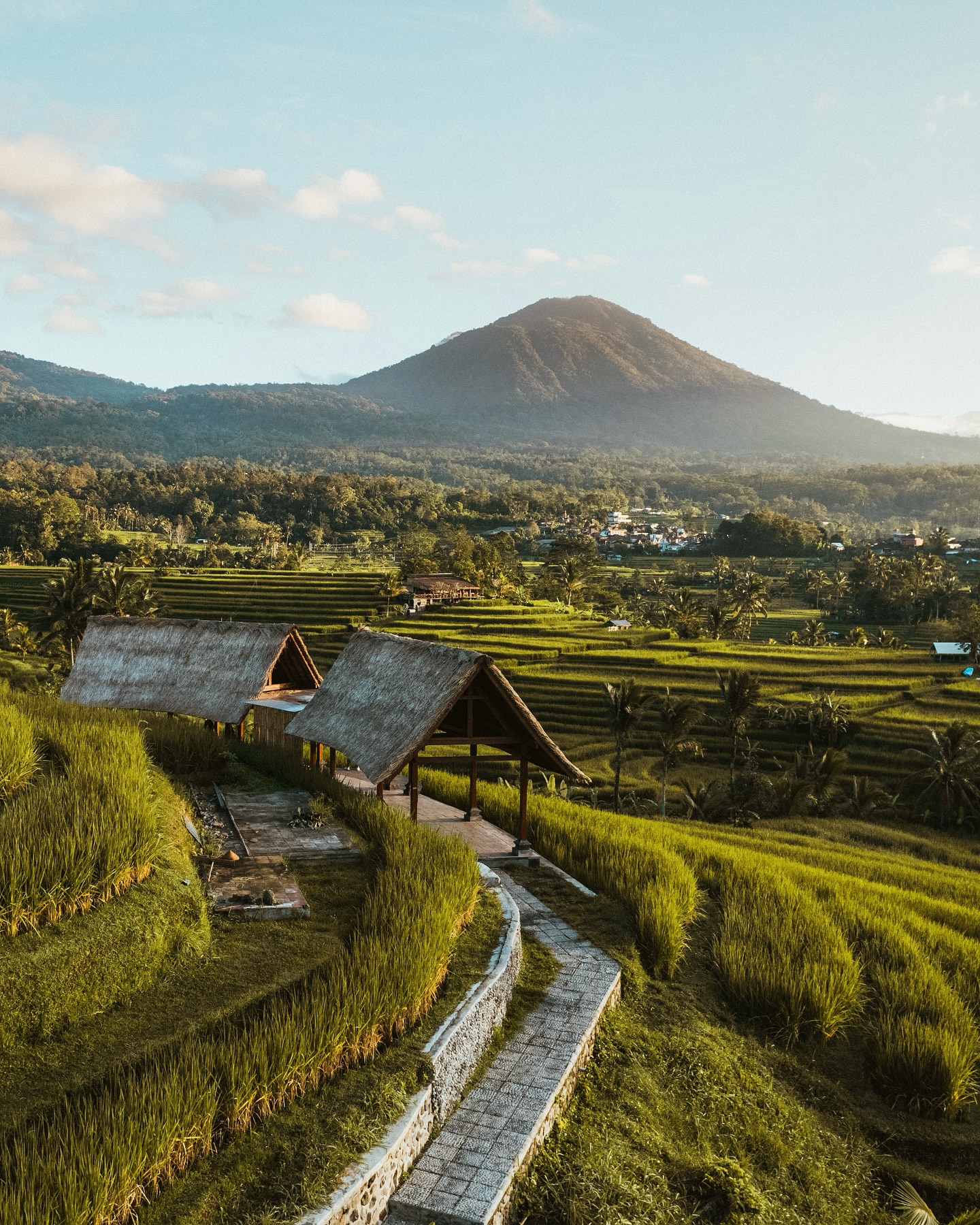
Organised cycling tours usually include hotel transfers and an electric bicycle, which helps with the hilly sections. You also get a helmet, local guide, traditional lunch and snacks.
Your guide will lead you along narrow pathways into the farmlands, showing you how the 1,000-year-old Subak cooperative water management system operates in daily life. You will also visit the historic Hindu temple in Bali, Luhur Besikalung, during the tour.
6. Hike to Tumpak Sewu Waterfall
- Timings: 7:00 AM – 3:00 PM.
- Approx. Entrance Cost: 1,00,000 IDR (537 INR).
Tumpak Sewu is one of the most famous waterfalls in Java with nearly 9,700 Google reviews. Visitors often say it is spectacular, majestic, adventurous, and absolutely worth it.
The name Tumpak Sewu translates to “a thousand waterfalls” in Javanese. It refers to the numerous streams that fall together over the cliff.
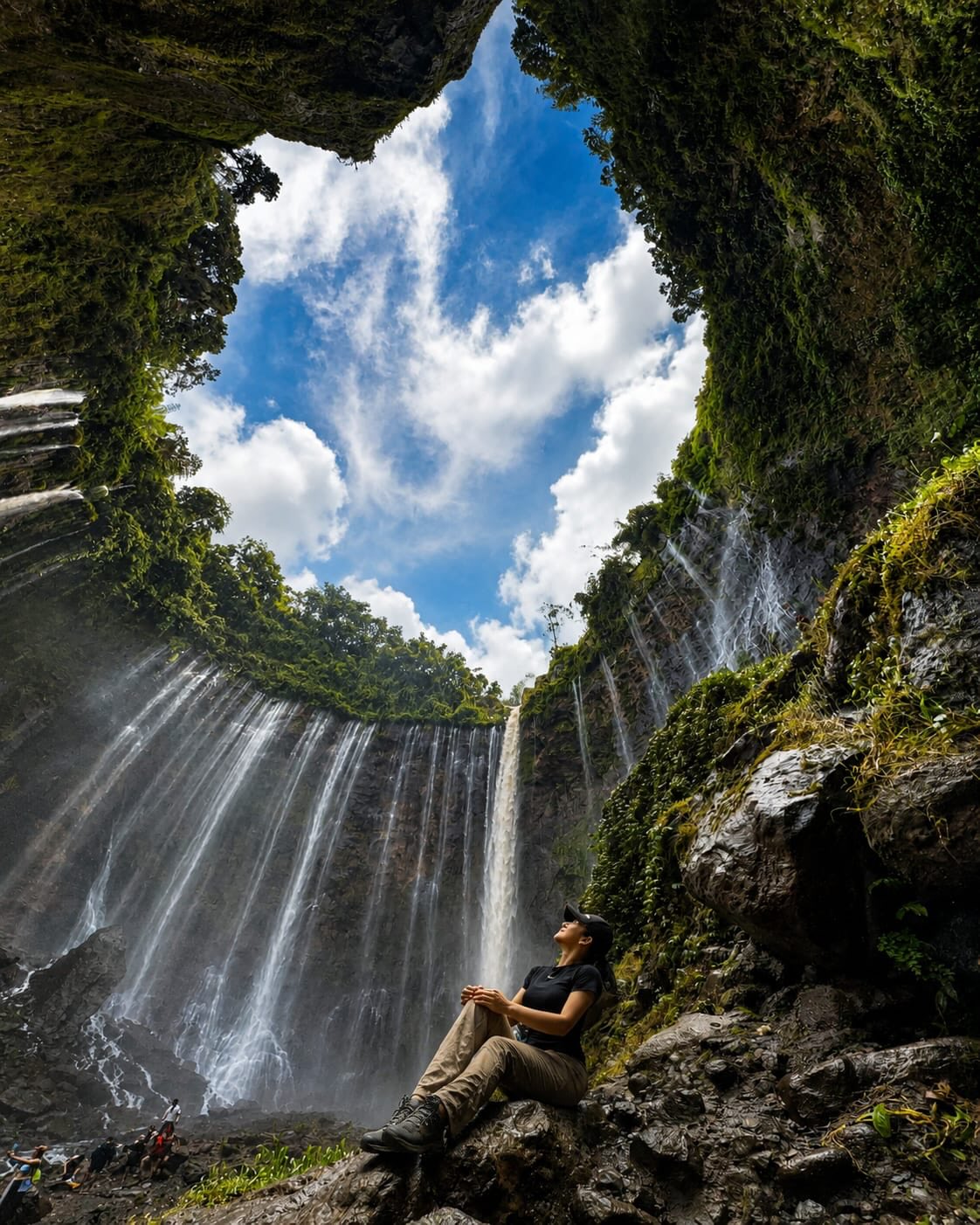
The easiest way to enjoy the view is from the top viewpoint, where one can watch the waterfall spread across the canyon walls. If you want adventure, trek down into the deep canyon; it takes roughly thirty to forty minutes.
To prepare for the canyon descent, you must wear sturdy shoes, as the trail is challenging. You will climb down wet bamboo ladders, slippery limestone paths, and cross streams.
Once you reach the base of the waterfall, take photos and admire nature. Then, follow the riverbed to visit Goa Tetes, a unique cave system featuring natural swimming pools and orange-tinted rock formations.
Note: This canyon trek is not suitable for families with young children or elderly parents. Instead, stay by the upper viewpoint.
7. See Orangutans in Borneo
- Approx. Cost: 6,695,615 IDR (36,000 INR) per person for a three-day private boat experience. Cost varies depending on inclusions.
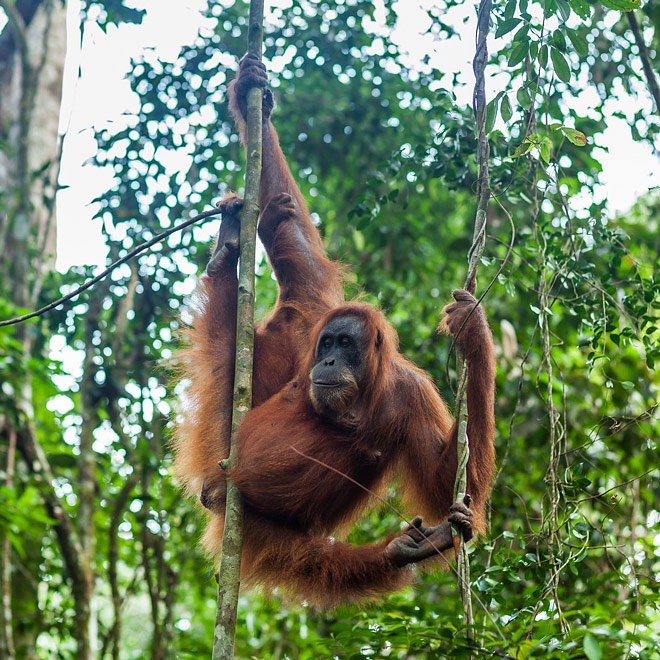
Tanjung Puting National Park is among the best places in Indonesia to see wild orangutans.
Your entire journey takes place on a traditional wooden houseboat called a klotok. These wooden boats have two levels. You will spend almost all your time on the upper deck under a shady canopy, relaxing at dining tables while watching wild proboscis monkeys and birds.
At night, the crew clears away the tables and spreads out mattresses with mosquito nets. So, you can sleep while listening to the sound of the forest.
It is best to book an all-inclusive tour, which covers your airport transfers, boat hire, local licensed guide, national park permits, camera fees, and all meals.
During the trip, you will visit Camp Leakey, which is the orangutan rehabilitation facility. Then the guide will lead you into the dense forest to viewing areas where you can watch wild and rehabilitated orangutans swinging down from the high trees.
8. Visit Komodo National Park
- Best Time: April to November, when the sea is calm.
- Approx. Tour Cost: 9,000 INR on a shared boat.
Komodo National Park offers some of Indonesia’s most distinctive sights, including islands and the world’s largest lizard, the Komodo dragon.
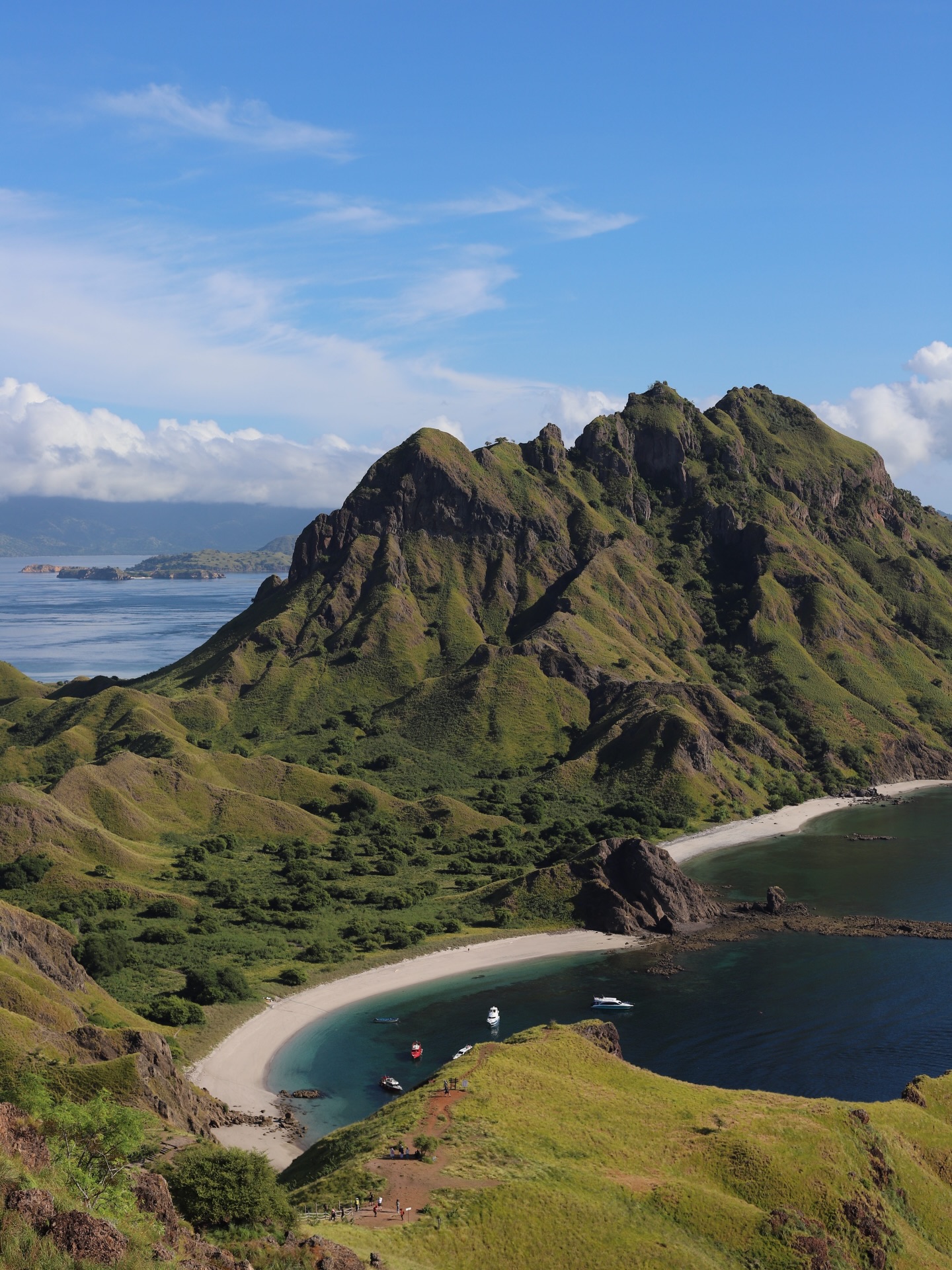
If you want an adventure that is completely different from usual Bali beaches, Komodo National Park is a must-visit. To get there, you first need to take a domestic flight from Bali to a small port town called Labuan Bajo in Flores.
Most travellers stay in Labuan Bajo town for a couple of nights. From there, hire a local wooden boat or join a shared daily speedboat tour to reach the park.
A standard day trip includes visiting the famous Pink Beach, trekking on Padar Island for that iconic photo of three colourful bays, and seeing the giant Komodo dragons.
This place has one of the best scuba diving spots in the world, and divers can see manta rays, reef sharks, sea turtles, and beautiful coral gardens. The best time to visit is April to November, when the weather is dry and the sea is calm.
Note: Always stay near the guide, and don’t walk around alone. These dragons are powerful predators and run fast when they attack.
9. Dive or Snorkel in Raja Ampat
- Best Time: October to April, when marine life is active and the sea is calm.
- Approx. Cost: 6,50,962 IDR (3,500 INR) for a single dive or snorkel session.
- Approx. Permit Fee: Marine Park: 7,00,000 IDR (3,764 INR). Visitor Entry: 1,000,000 IDR (5,377 INR). Both these permits are mandatory.
Raja Ampat is in Indonesia’s West Papua region, making it one of the world’s most important areas for marine biodiversity.
There are over 1,400 types of reef fish, and when you dive or snorkel, you will see schools of fish, coral walls, manta rays, and reef sharks.
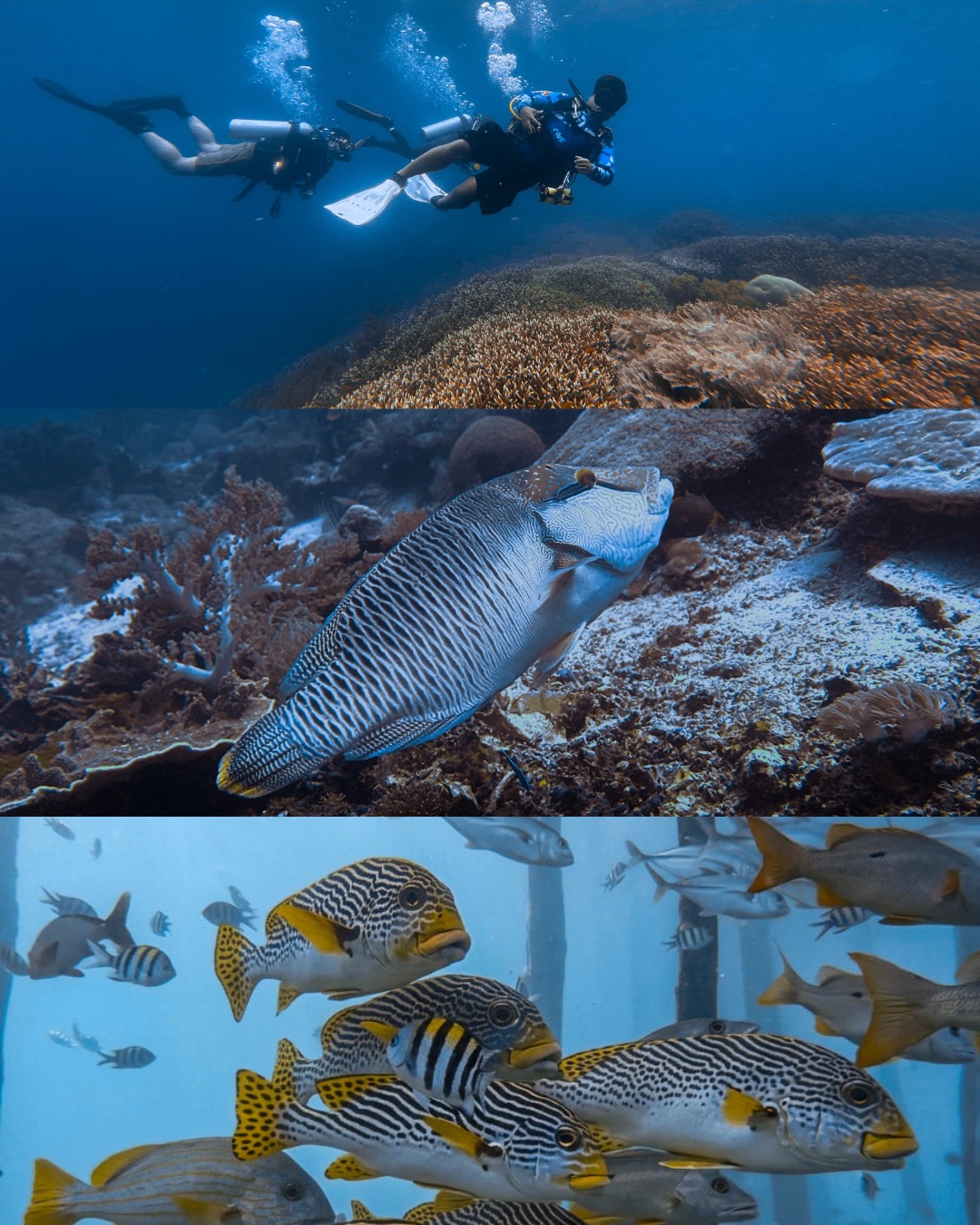
Some of the best places to dive and snorkel in Raja Ampat are Cape Kri, Arborek Jetty, Manta Sandy, and Melissa’s Garden.
The biggest challenge in planning a trip to Raja Ampat is a long and expensive journey. To get there, you must first fly to Jakarta or Bali and take a flight to Sorong Airport, then a boat ride to Waisai.
This whole trip can take more than twenty-four hours, so plan at least five to seven days in Raja Ampat to experience most of it.
10. Experience Tana Toraja Culture, Sulawesi
- Approx. Tour Cost: 9,29,946 IDR (5,000 INR).
If you want to experience a unique culture where death is celebrated with a festival, visit Toraja in Sulawesi.
The local people here have a deep, traditional belief system where they do not think of a deceased person as dead right away. Instead, they treat them as sick and keep them inside their boat-roofed houses, called Tongkonan, for months or even years while the family saves money for a grand funeral.
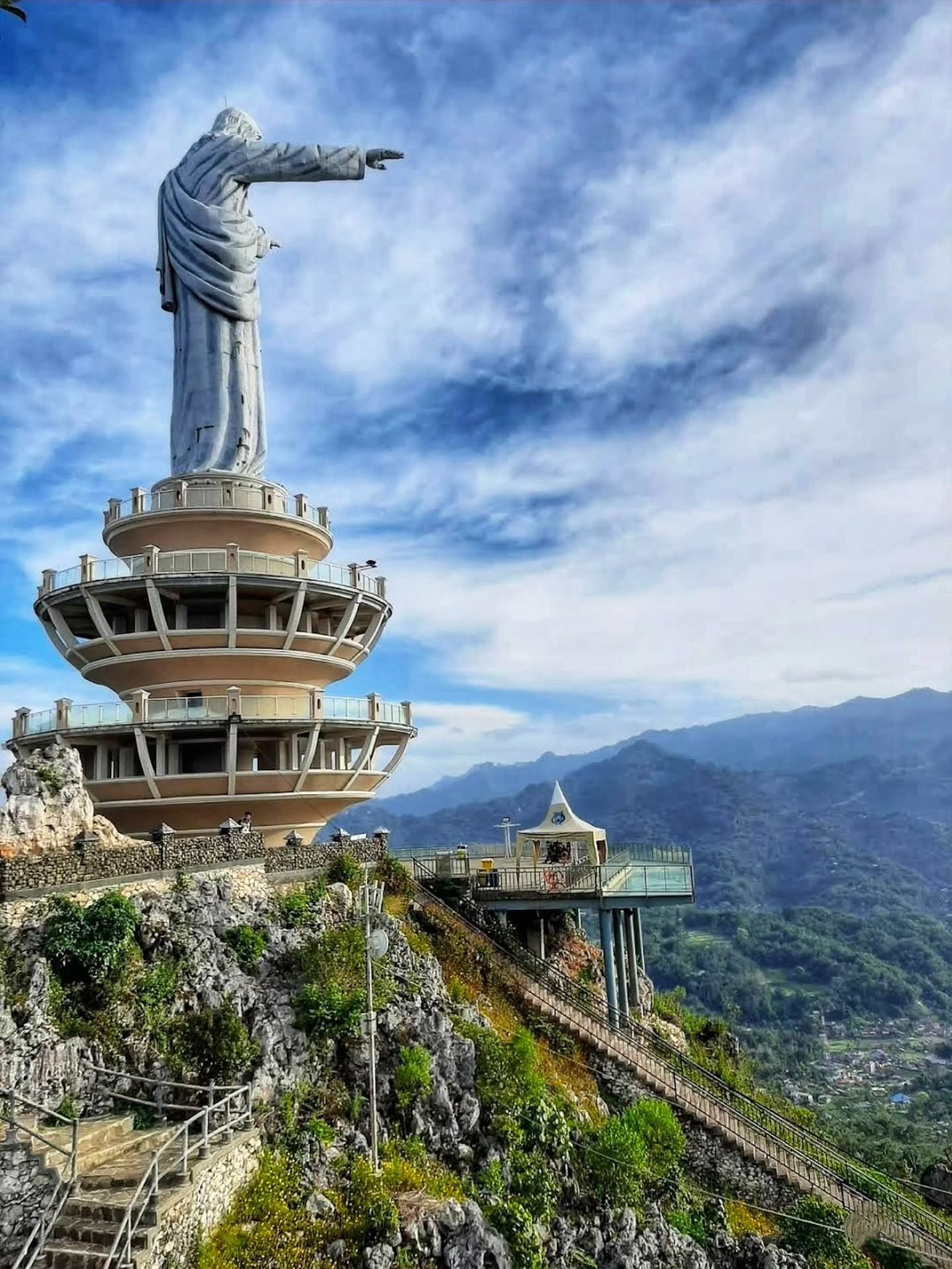
These ceremonies are grand and feature traditional group chanting. They also sacrifice water buffaloes and pigs, which locals believe carry the soul to the afterlife.
You will also visit ancient burial sites like Londa, where coffins are stacked inside damp limestone caves. In Lemo, the carved wooden dolls called tau-tau stand on high cliff balconies. Also visit Kambira, a sacred spot where babies who died before teething were buried inside living trees.
11. See the Three Crater Lakes of Mount Kelimutu, Flores
- Best Time: 4:00 AM to 5:00 AM.
- Approx. Entrance Cost: 1,50,000 IDR (806 INR).
Mount Kelimutu is known for its three crater lakes. The unusual feature is that the lakes can change colour over time. Volcanic gases and minerals alter the water’s chemistry, causing the lakes to appear in different shades such as blue, green, brown or reddish tones at different times.
The viewpoint lets you see all three lakes together, and the changing morning light makes the colours easier to distinguish.
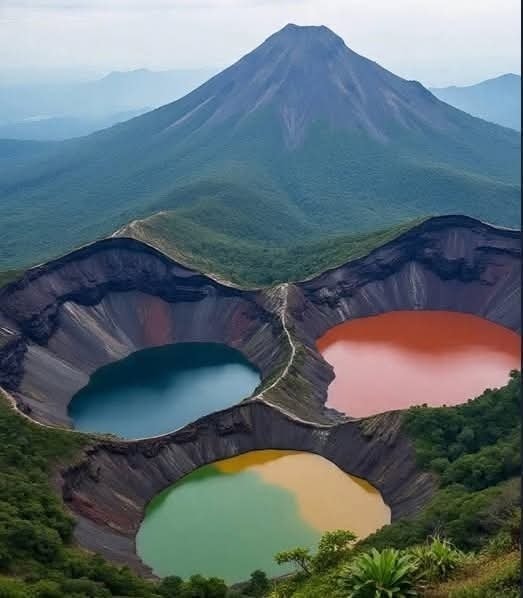
To experience this, stay in Moni village, a peaceful place surrounded by waterfalls and hot springs. Wake up early around 3:30 AM and start your short trek to the summit viewpoint by 4:00 AM.
Local people have a spiritual belief about these lakes. They believe that when a person dies, their soul travels here to rest, and the lakes sort them by age and character.
Note: The trek is very easy and suitable for elders and young children. The temperature at the summit can drop below 10°C before sunrise, so cover yourself with a jacket and gloves.
12. Stay Overnight in Wae Rebo Village, Flores
- Approx. Overnight Cost: 4,00,000 IDR (2,151 INR) incl. meals, stay, and the community contribution.
To experience how people live in a remote mountain village completely away from the modern world, stay overnight in Wae Rebo. The village has even won a UNESCO heritage award for preserving its ancestral architecture.
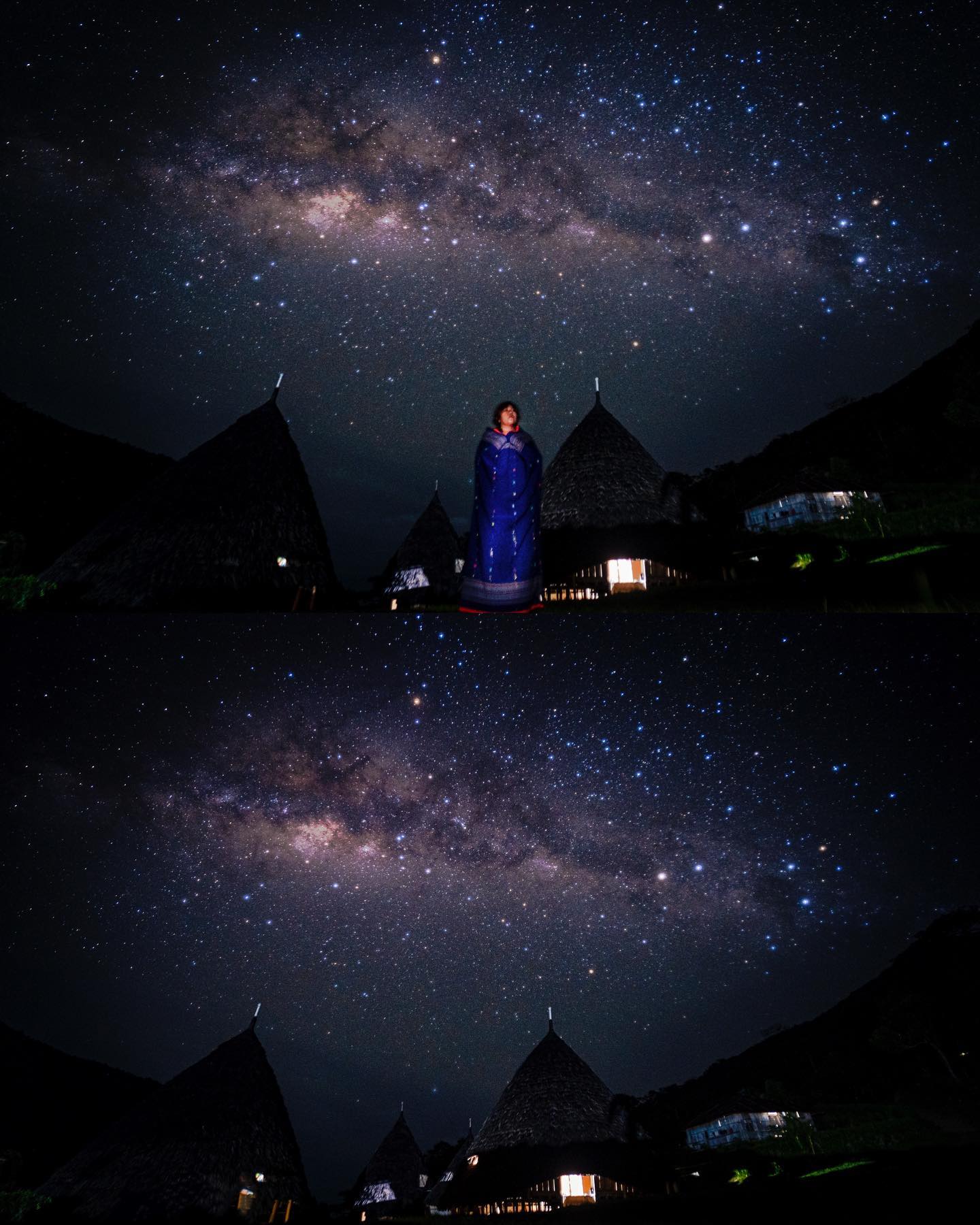
This village is well-known for its seven unique, five-story cone-shaped wooden houses called Mbaru Niang. These traditional structures are built entirely of wood and thatch, with no metal nails. Local Manggarai families live here and store their harvests.
Your experience here includes trekking through tropical forests, meeting the locals, sharing a dinner cooked over an open fire, and sleeping on woven mats inside one of these wooden cones. You will have a lifestyle without luxury hotel facilities, private rooms, or hot showers.
Take a 2-hour drive from Ruteng to Wae Rebo Village Trail Head. From there, you will hike up a steep jungle trail for about 2 hours to reach the valley.
13. Attend the Baliem Valley Festival, West Papua
- Time to Visit: August (the dates change every year, so always confirm)
- Approx. Cost: Free to attend.
The unique thing to do in Indonesia is to attend the Baliem Valley Festival. It offers some of the most raw, untouched tribal gatherings in the remote highlands of West Papua. You will arrive in the Jayawijaya Mountains at an altitude of 1,600 metres.
Every August, the three main highland tribes: the Dani, Lani, and Yali gather near the town of Wamena to celebrate their ancient traditions.
The highlight of the festival is the mock tribal warfare, where hundreds of warriors dressed in traditional attire, including feathers and kotekas (traditional penis gourds). Then, they stage battles in an arena to show their agility and defence skills.
You will hear the loud chanting of warriors and the unique sound of the Pikon, a traditional Papuan musical instrument.
Beyond the mock battles, you can witness traditional spear games, pig races, and the famous pig feast, where meat, sweet potatoes, and bananas are slow-cooked in pits lined with fire-heated stones.
Note: There is a mandatory government travel permit, known as a Surat Jalan, which local guides can arrange for you beforehand.
14. Surf at Uluwatu, Bali
- Approx. Cost: Board rental: 60,000 IDR (322 INR). Surf Lessons: 5,00,000 IDR (2,688 INR).
For beautiful cliff views and professional surfing in Bali, Uluwatu is the place to go. Located on the southern tip of Bali’s Bukit Peninsula, this area is known for its limestone cliffs, the Uluwatu temple, and strong waves that attract experienced surfers.
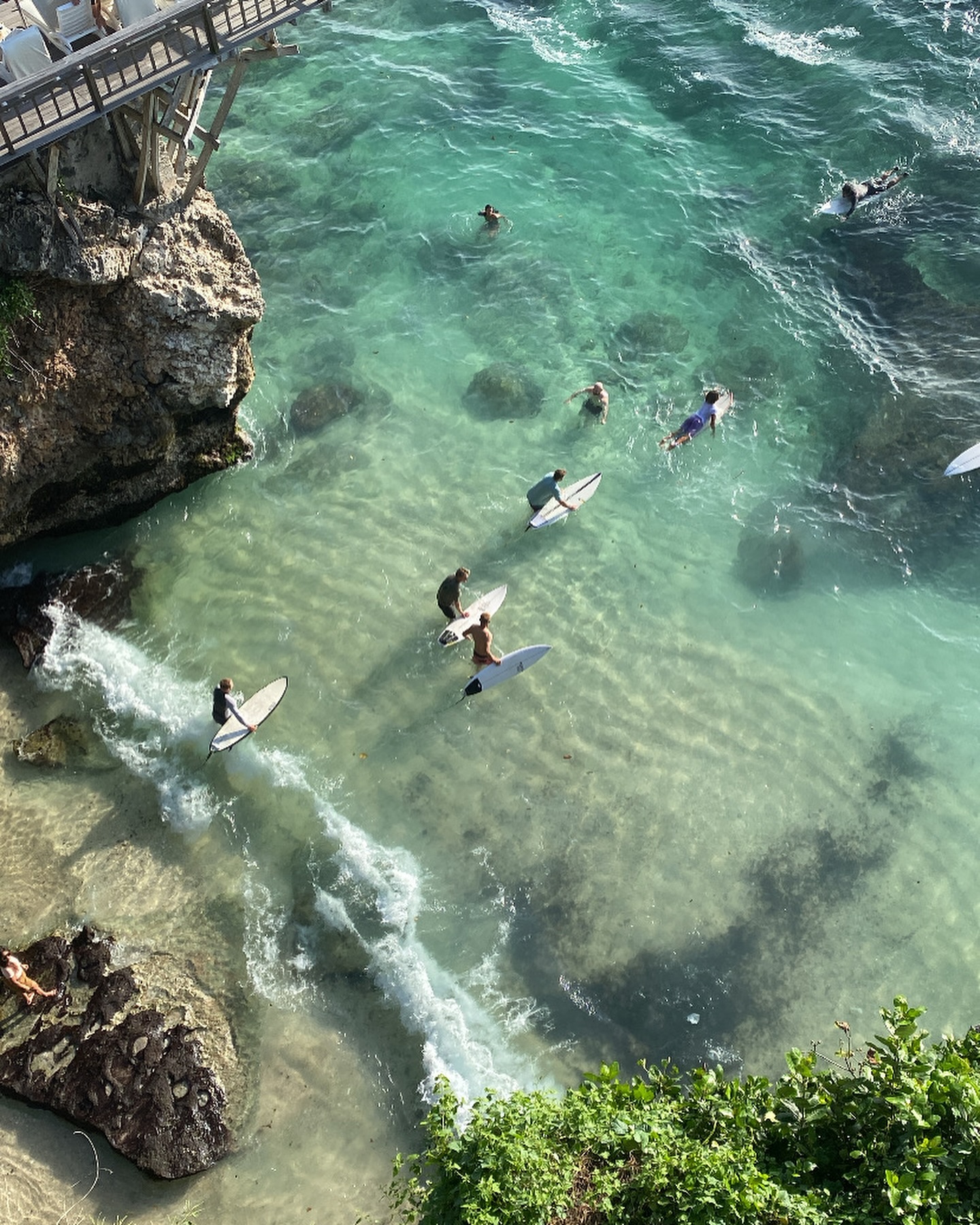
You don’t need to know how to surf to visit here. Most travellers hang out at trendy cliffside cafes like Single Fin or Delpi Cafe for a drink and watch the surfers ride from viewing decks.
To enjoy the beach area down below, you must walk down a narrow concrete staircase carved directly into the cliffside. The path leads to a unique cave at the bottom, where surfers carry their boards and head into the ocean.
Then visit the Uluwatu Temple; you can combine the temple visit with the evening Kecak fire dance, which takes place around sunset.
When you visit the temple area, be careful of the local monkeys. These monkeys snatch mobile phones, sunglasses, food, and hats, so it is wise to keep all your loose belongings safely zipped inside your backpack.
15. Snorkel with Turtles in the Gili Islands, Lombok
- Approx. Snorkelling Boat trip Cost: 5,000 INR.
The Gili Islands are three small islands off the coast of Lombok: Gili Trawangan, Gili Meno, and Gili Air. They are known for clear water, beaches, and a slower pace of travel.
Motorised vehicles are completely banned on all three islands. So, the only way to get around is by walking, renting a bicycle, or hiring a local horse-drawn cart called a cidomo.
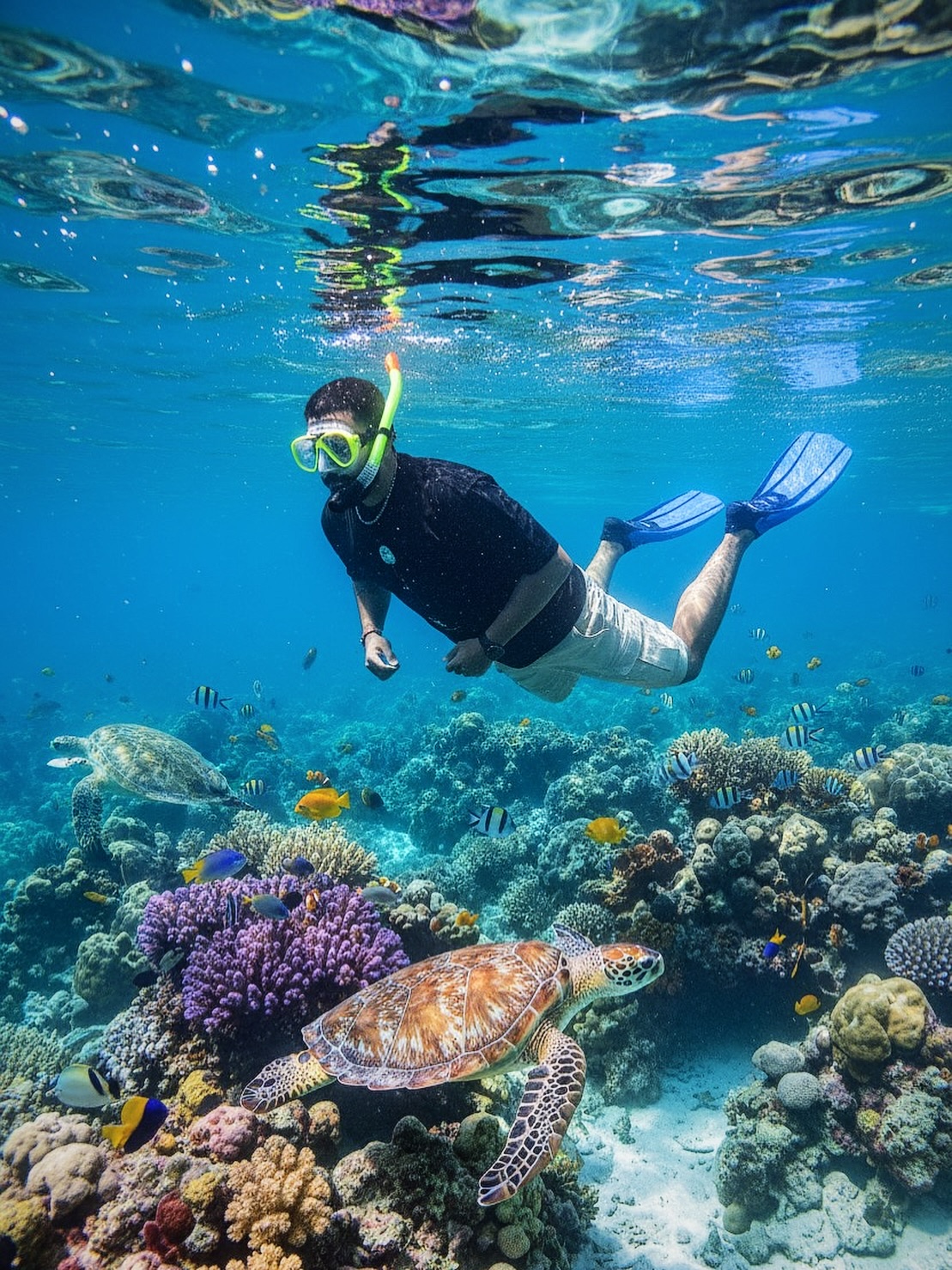
The most popular activity on the Gili Islands is to snorkel with green sea turtles just a few metres away from the beach. Some of the best spots are Turtle Point in Gili Trawangan, Turtle Heaven in Gili Meno, and Turtle Beach in Gili Air.
You can easily book a shared glass-bottom boat tour to the best spots, including the underwater circle of stone statues near Gili Meno and the colourful coral reefs teeming with fish.
To reach the Gili Islands, you need to take a speedboat ride from either Bali or Lombok harbour, which takes about two hours. This sea journey can get very rough, so take motion sickness medicine before boarding.
Conclusion
From ancient temples and volcanic landscapes in Java to orangutans in Borneo, Komodo dragons in Flores and coral reefs in Raja Ampat, the country has experiences for different types of travellers.
Your choice of destination should depend on how much time you have, how far you are willing to travel, and what you want to experience.
If you need help planning an Indonesia trip, Dimaak Tours can help you create an itinerary that matches your interests, budget, and travel dates.
FAQs on the Best Things to Do in Indonesia
1. What is the best place to visit in Indonesia for first-time travellers?
Bali is the easiest for a first trip because you can combine beaches, temples, rice terraces, waterfalls, cafes, shopping, and cultural experiences without travelling long distances.
2. Which places in Indonesia are best for nature lovers?
Komodo National Park is great for wildlife and island landscapes. Visit Raja Ampat for marine life. Then go to Mount Bromo and Kawah Ijen for volcanoes and Jatiluwih for large rice terraces.
3. Is a visa required for Indians to visit Indonesia?
Indonesia offers a visa-on-arrival option. The VoA gives you a 30-day stay and costs approximately 500,000 IDR (2,675 INR).
4. Which Indonesian destination is best for adventure?
Visit Java for volcano experiences such as Mount Bromo and Kawah Ijen. Flores is good for Komodo trips and volcanic landscapes, while Sumatra offers rainforest trekking and wildlife experiences.
