

Key Takeaways
|
Phnom Penh is a city where visitors can see Cambodia’s royal history, Khmer Rouge regime, local markets, and riverside life.
If you are planning a Cambodia itinerary, then Phnom Penh needs at least 2 to 3 days to cover the city’s major attractions. This also gives you time to try local street food and shop.
The guide covers 10 top things to do in Phnom Penh, with details on timings, entry fees, and what you can expect at each place.
The Best 10 Things to Do in Phnom Penh
Cambodia is generally listed as one of the best affordable destinations for Indian travellers. So, enjoy many activities in Phnom Penh without spending too much.
The recommended things in this blog will suit every kind of traveller, with costs ranging from free visits to paid attractions and reasonably priced activities.
1. Royal Palace & Silver Pagoda
- Timings: 8:00 AM to 5:00 PM. The Palace closes for a lunch break from 11:00 AM to 2:00 PM.
- Approx. Cost: 960 INR.
- Tip: Both men and women must cover their shoulders and knees.
The Royal Palace is located on Sothearos Boulevard right along Phnom Penh’s riverfront. Built in 1866, this beautiful complex serves as the official residence of the King of Cambodia.
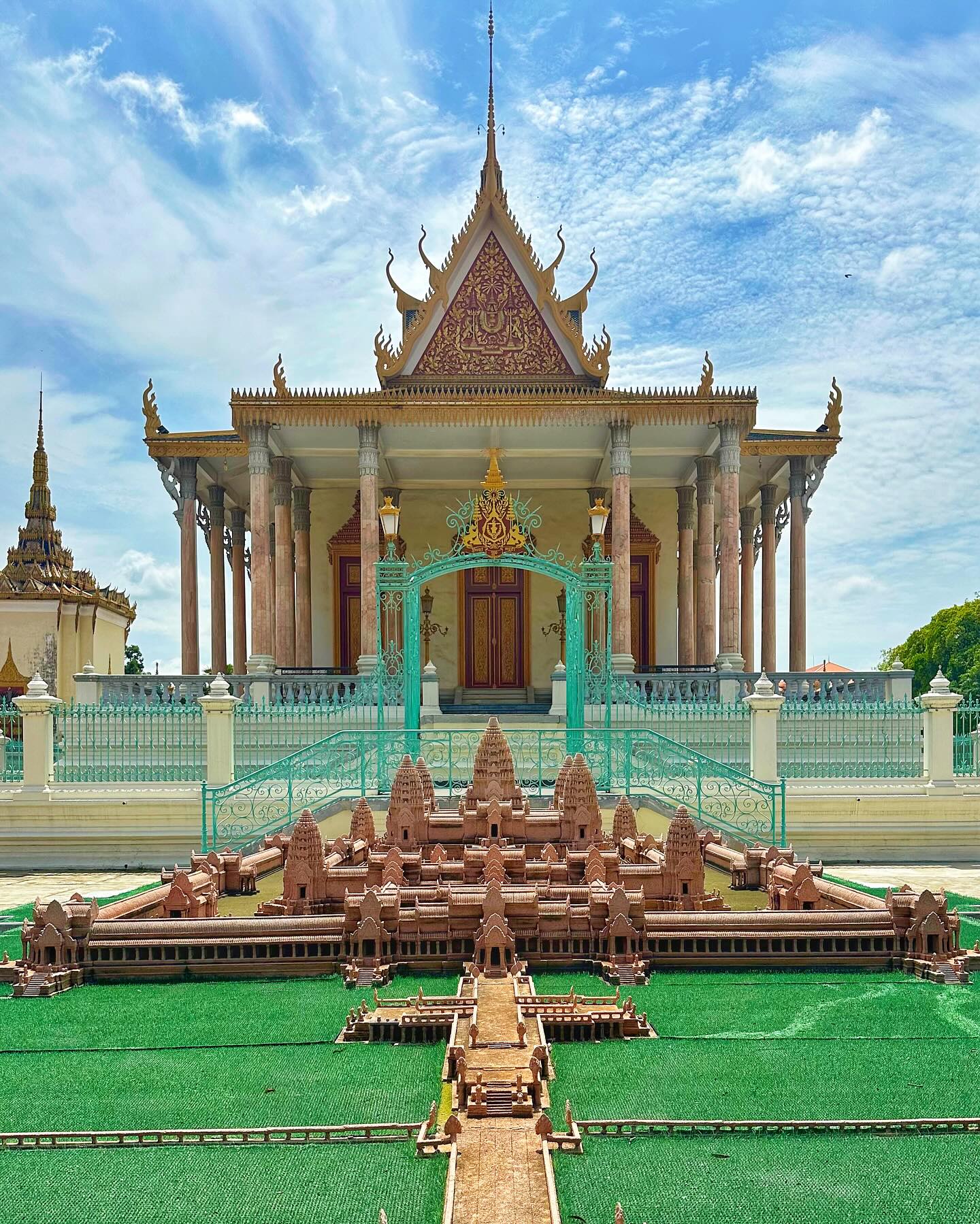
Once you are there, admire the ornate Khmer architecture. There is a Throne Hall, where visitors are not allowed inside but can peek through the window.
After that, you can visit the Silver Pagoda, which is located within the same compound. A garden path takes you straight to the temple area.
Take off your shoes and step inside the temple; look down to see a floor made of over 5,000 real, solid silver tiles. You get to see some of Cambodia’s national treasures here, including a 17th-century Emerald Buddha and a Gold Buddha decorated with 9,500 glittering diamonds.
What most Indian travellers look forward to is located just outside this temple. The long gallery walls of the Silver Pagoda courtyard feature murals depicting the Reamker, which is the Cambodian version of the ancient Indian epic, the Ramayana.
2. Choeung Ek Genocidal Centre
- Timings: 7:30 AM – 5:30 PM.
- Approx. Cost: 290 INR. 575 INR if you need an audio guide.
- Tip: There are no live guides available; paying the extra for the multilingual audio guide is recommended.
The Choeung Ek Genocidal Centre is located about 10 kilometres southeast of central Phnom Penh.
Between 1975 and 1979, this place served as the primary execution and mass burial site for thousands of people sent from the prison. Today, it is one of the most well-known memorial sites in Cambodia.
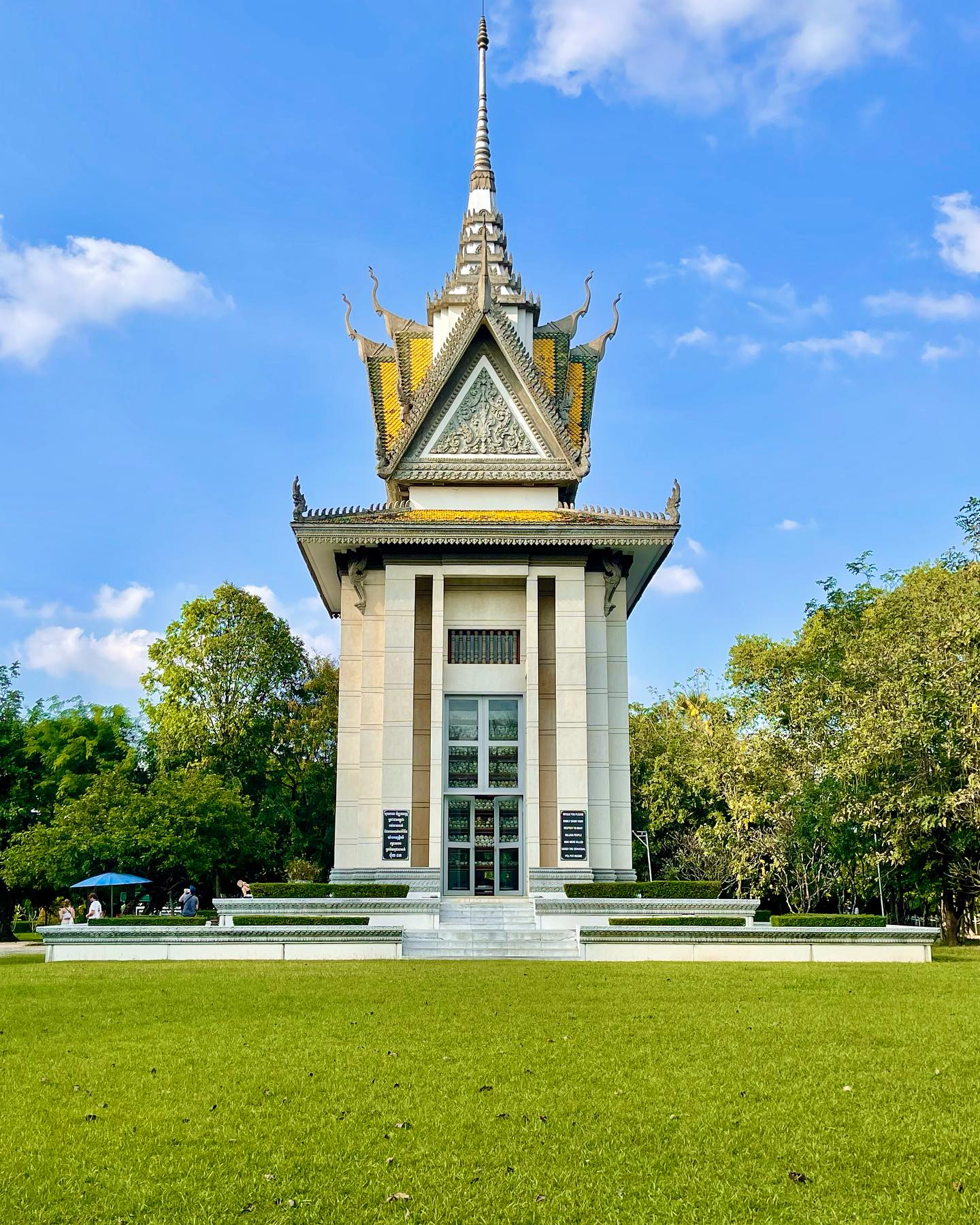
Once you buy a ticket and step inside, the first thing most people notice is how quiet the place is. It reflects the horrific history it carries and serves as a space to mourn the victims.
Inside, you will see the former mass graves of the victims. There are glass cases displaying clothing and bones.
There is a small museum where a short 15-minute documentary film is screened to help you understand the history. You will also pass the ‘Killing Tree’, where Khmer Rouge soldiers used to execute infants and young children.
The most significant monument on the grounds is the towering Memorial Stupa. It stands as a beautiful tribute to the victims and houses thousands of skulls sorted by age and gender behind its glass walls.
3. Tuol Sleng Genocide Museum
- Timings: 8:00 AM – 5:00 PM.
- Approx. Cost: 480 INR.
Tuol Sleng was a secondary school converted by the Khmer Rouge into a secret interrogation and detention centre, known as Security Prison 21 (S-21) in 1975.
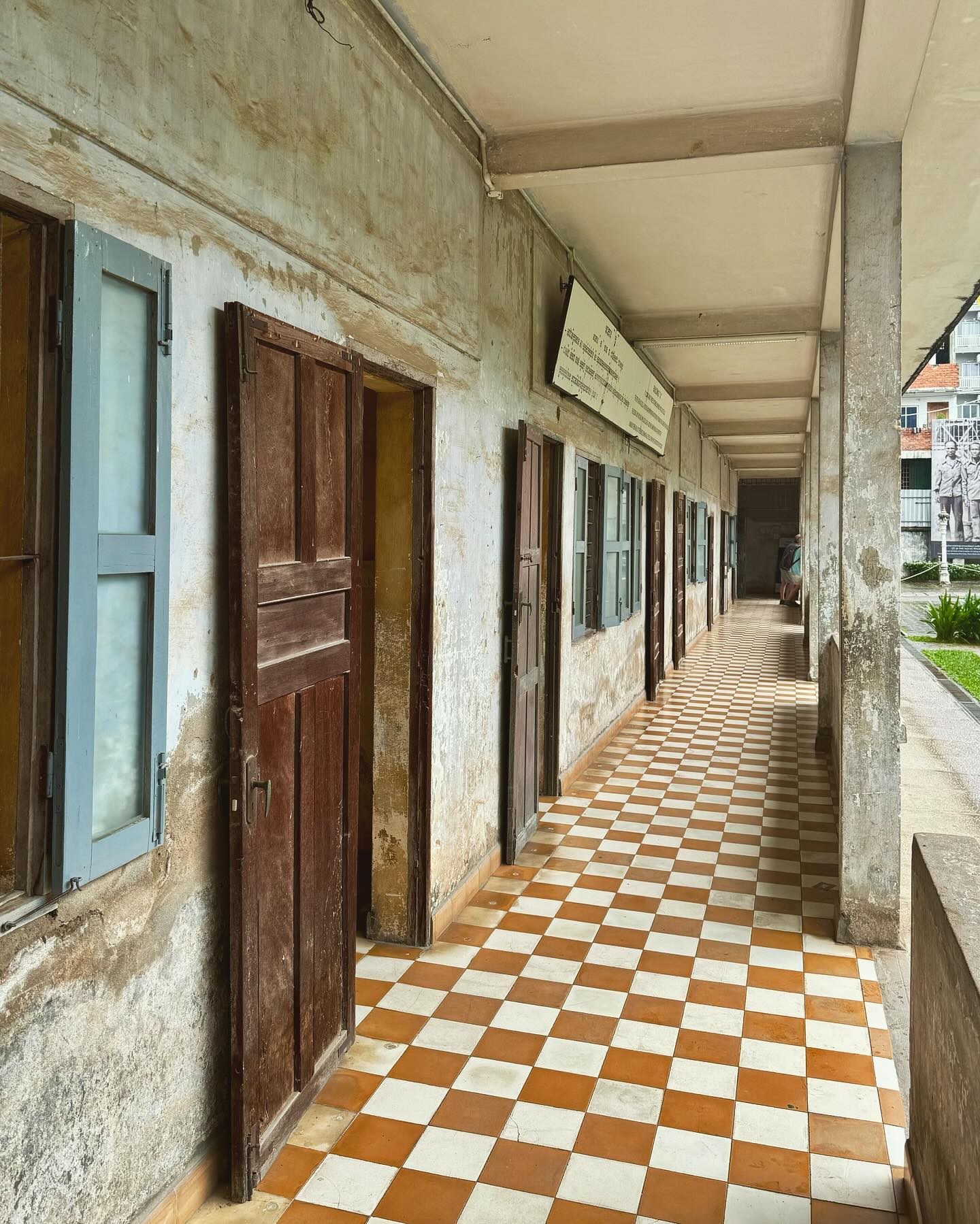
Today, it stands as a memorial site that preserves tragic evidence and photographs of Cambodia’s past to honour the victims.
As you walk through the compound, you will see preserved classrooms where prisoners were chained to iron bed frames. The interior walls are lined with black-and-white photos of the men, women, and children who were detained here.
There is a mini movie theatre in Building E, where a short historical documentary film is regularly screened for visitors.
The first floor of Building B is a quiet space where researchers and visitors can study books about Cambodian history. On the first floor of Building D, there is a space kept for visitors to relax and meditate. It is designed to help ease your mind and reduce stress after seeing the emotional exhibits.
4. Independence Monument
- Timings: Open 24/7.
- Tip: Visit around sunset or after dark when the monument is illuminated.
The Independence Monument is one of the most recognisable landmarks in Phnom Penh. The monument is situated at the intersection of Norodom Boulevard and Sihanouk Boulevard; it was built to honour Cambodia’s independence from French colonial rule in 1953.
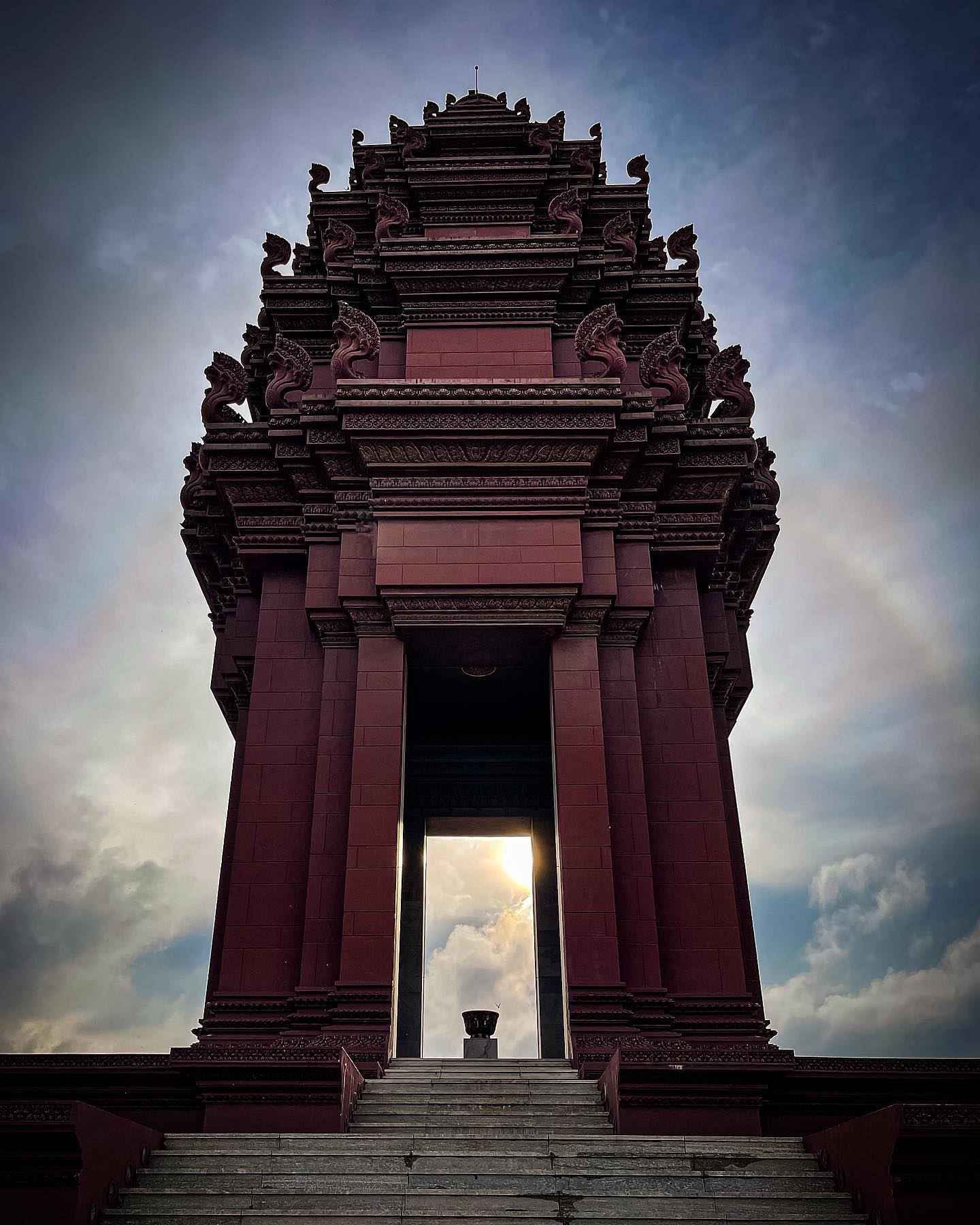
The monument is designed in the shape of a lotus flower, inspired by traditional Khmer architecture. You cannot enter the monument, but you can walk around the surrounding area and take photographs from outside.
The best time to visit is around sunset, when the monument is lit in the evening, and the weather is cooler.
You can also combine this stop with the nearby Norodom Sihanouk Memorial, 700 metres away and a walk along the surrounding boulevards.
5. Sisowath Quay (Riverside Promenade) & Cruise
- Timings: Open 24/7. The best time to visit is from 5:00 PM to 9:00 PM for the sunset.
- Approx. Cost for Sunset Boat Cruise: 1,500 INR.
Sisowath Quay is a beautiful, 3-kilometre-long pedestrian pathway that stretches along the riverfront near the confluence of the Tonle Sap and Mekong rivers.
If you want to experience the riverside local life, this is one of the best places in Phnom Penh to do it.
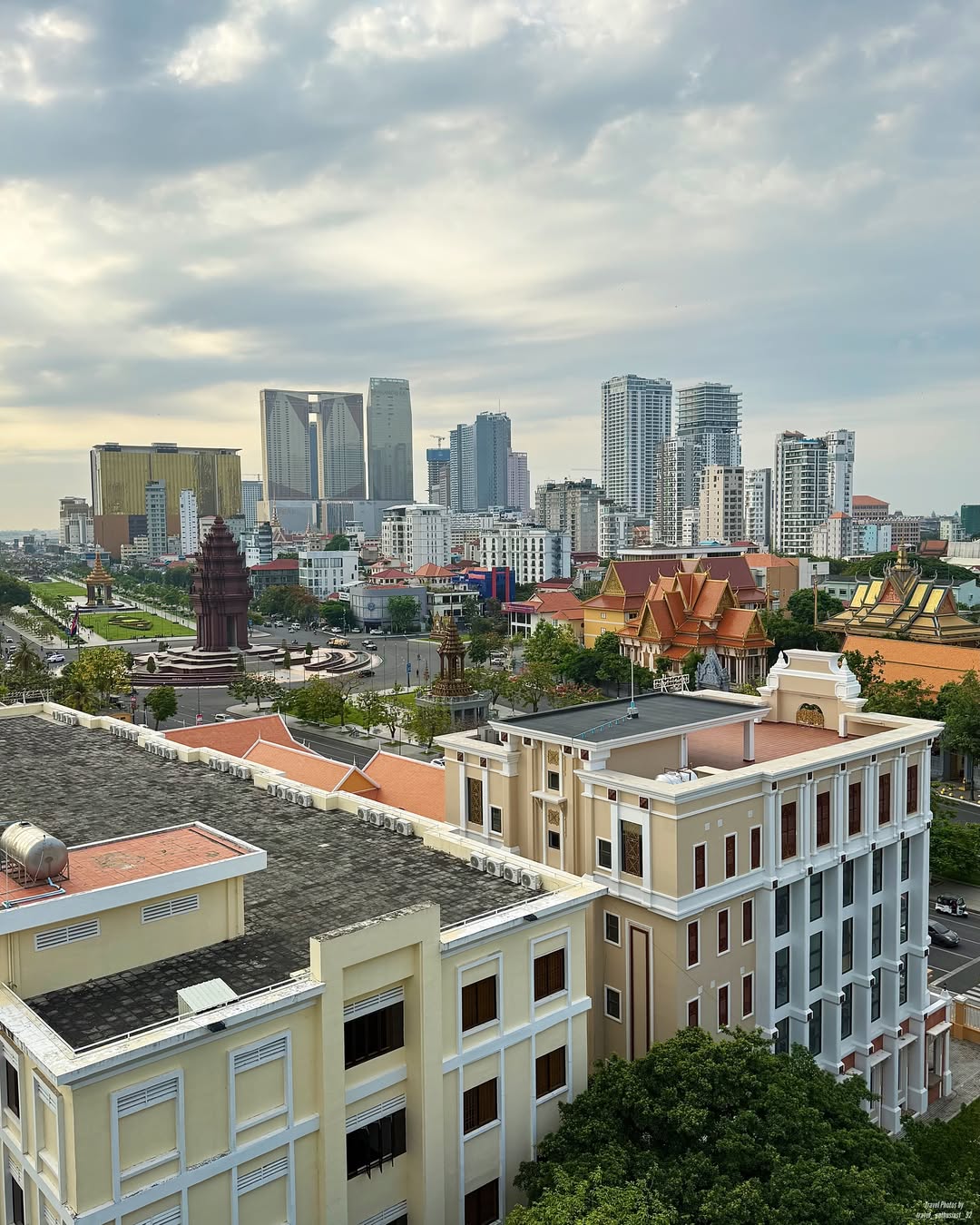
The pathway itself is lined with street food vendors, boutique hotels, bars, and French colonial-era landmarks like Post Office Square, which is located just a short walk inland.
You will see street performers, families enjoying picnics, friends hanging out, and groups of locals participating in aerobics classes.
The main highlight is the sunset boat cruise. Head to the pier on Sisowath Quay for a standard 1.5-hour sunset cruise with beer and snacks, which departs daily at 5:00 PM and returns at 6:30 PM. However, there are dinner cruises that start around 7:00 PM to 7:30 PM.
6. Central Market (Psar Thmei)
- Timings: 7:00 AM – 5:00 PM.
The famous Central Market, known locally as Psar Thmei, is the centre of Phnom Penh. The market building was completed in 1937 during the French colonial era; it has an incredible Art Deco design.
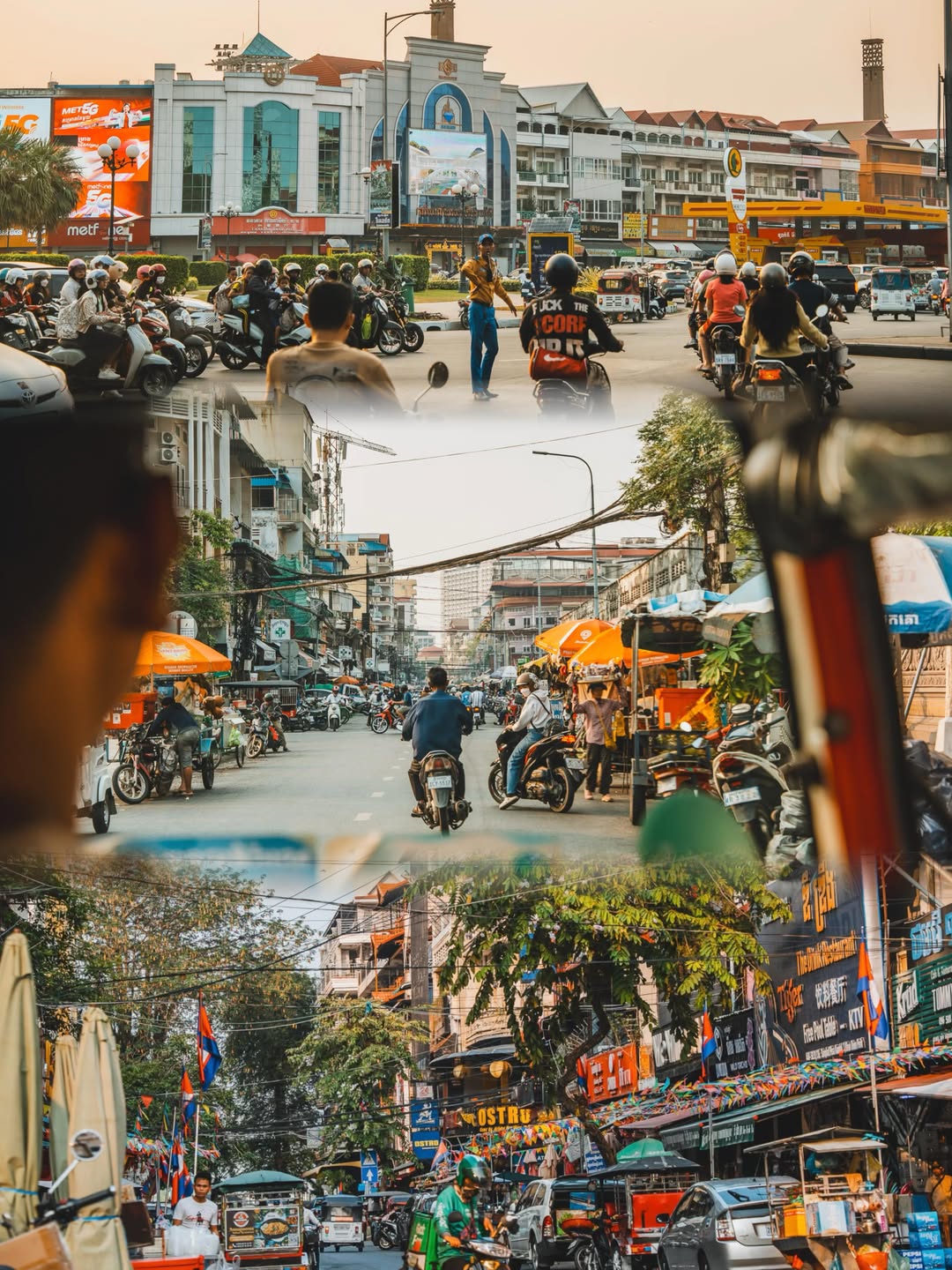
The building is shaped like a cross and features a 26-metre-high central dome. This is the main centre dome where the gold and jewellery shops are located. Then, the four hallways that create the plus sign face each direction: South, North, West, and East. Each of these hallways sells different specialities. Some focus on electronics and toys, while others sell clothes, household items, handicrafts, and fresh flowers.
This market is a good option for shopping in Cambodia for local snacks and traditional clothes. Once you are done with shopping, there is a food court where you can sit down to try authentic Cambodian food.
7. Toul Tompong Market (Russian Market)
- Timings: 6:00 AM – 4:30 PM. Saturday and Sunday close at 4:00 PM.
Locally known as Phsar Toul Tom Poung, this market is located in the southern part of Phnom Penh. It got its English name in the 1980s during the Cold War era, when many Russian expats lived in the city and came here to shop for Soviet goods.
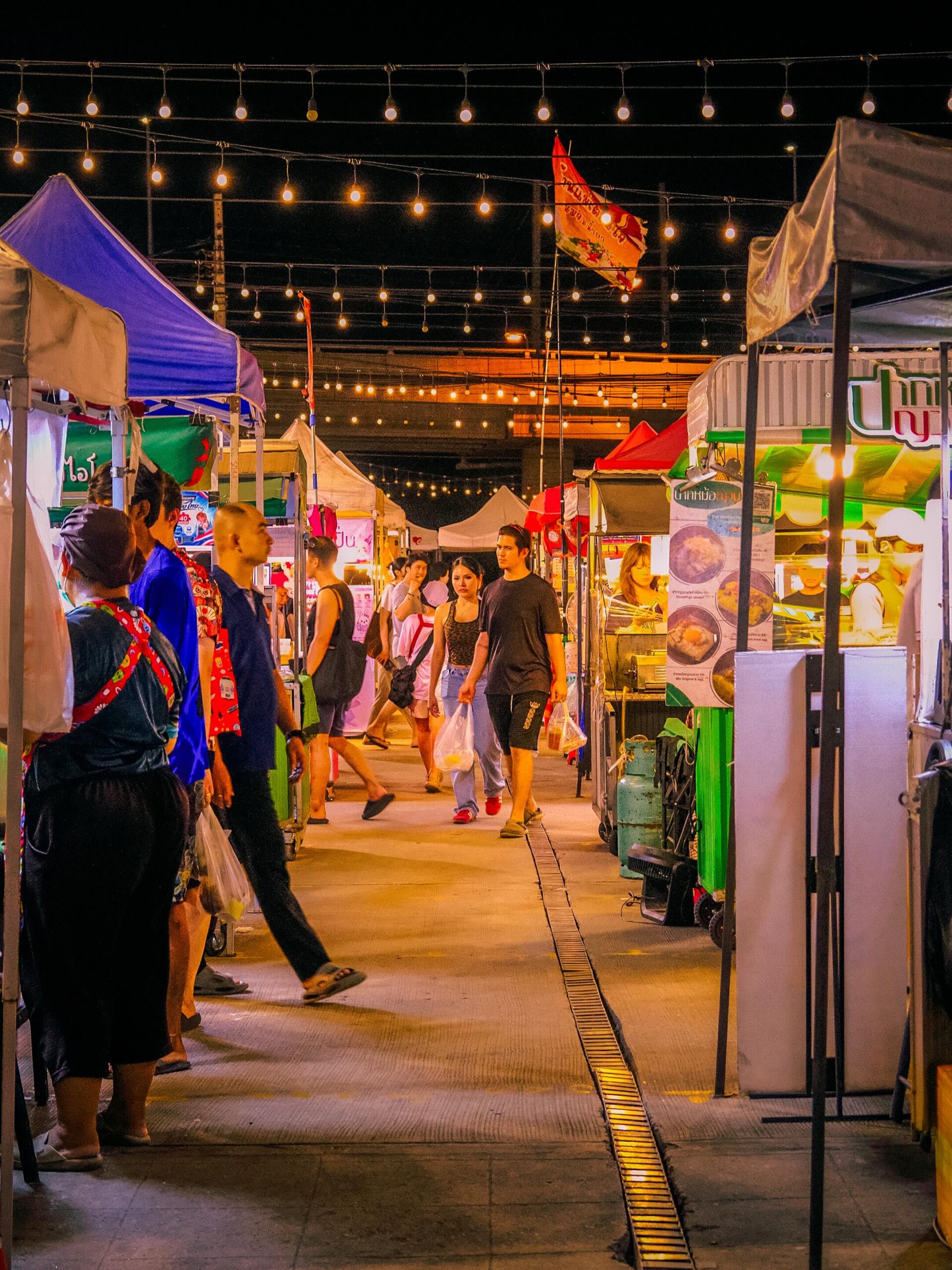
The market is very cramped and narrow, so make sure you keep your valuables safe from thieves. However, if you are looking for cheap and quality shopping, visiting this market is highly recommended. It is famous for selling discounted Western brand clothes.
There are stalls that sell handwoven Cambodian silks, traditional woodcarvings, ceramic replicas of Angkor Wat, and unique silver jewellery.
After shopping, head straight to the food court in the middle of the market. There are small stools; just grab one to sit and order food.
8. Koh Dach (Silk Island)
- Timings: Ferries run from 6:00 AM to 8:00 PM.
- Tip: Plan to take the ferry from 8:00 AM onwards, as that is when the Silk Island Community Centre workshops and tourist stalls officially open for the day.
Koh Dach, known as Silk Island, is located in the middle of the Mekong River, around 15 kilometres north of Phnom Penh.
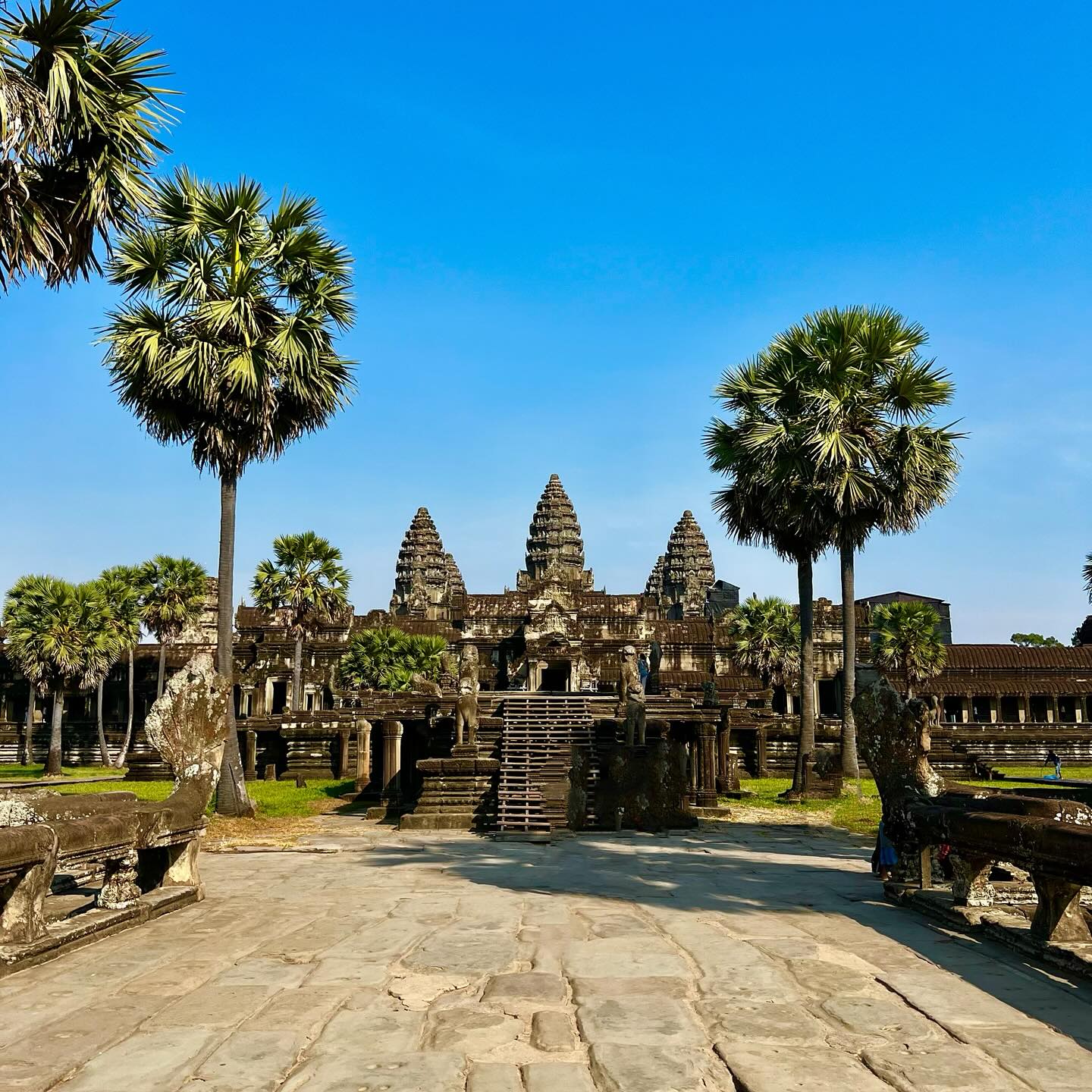
To reach the island, drive north across the Japanese Bridge. Alternatively, you can catch a passenger ferry from a jetty near Sisowath Quay.
When you are on the island, rent a bicycle to explore, as it is about 12 kilometres long and completely flat. You can cycle through fruit orchards, rice paddies, traditional wooden stilt houses, and the Cham Muslim community with mosques.
Then stop at the main cooperative silk-weaving centre. A guide will take you on a 30-minute tour of the entire silk process, from silkworms feeding on fresh mulberry leaves to raw silk extraction, natural dyeing, and final weaving.
This is the perfect spot to buy authentic silk souvenirs directly from the families, and gives you a chance to watch them at work. Moreover, Koh Dach has a traditional and religious Cham community; dress modestly, covering knees and shoulders.
9. Wat Phnom Daun Penh
- Timings: 7:00 AM to 7:00 PM.
- Approx. Entry fee: 96 INR.
Wat Phnom Daun Penh is also called the Mountain Pagoda. It is a peaceful hilltop temple right in the centre of Phnom Penh and rises 27 metres above the streets.
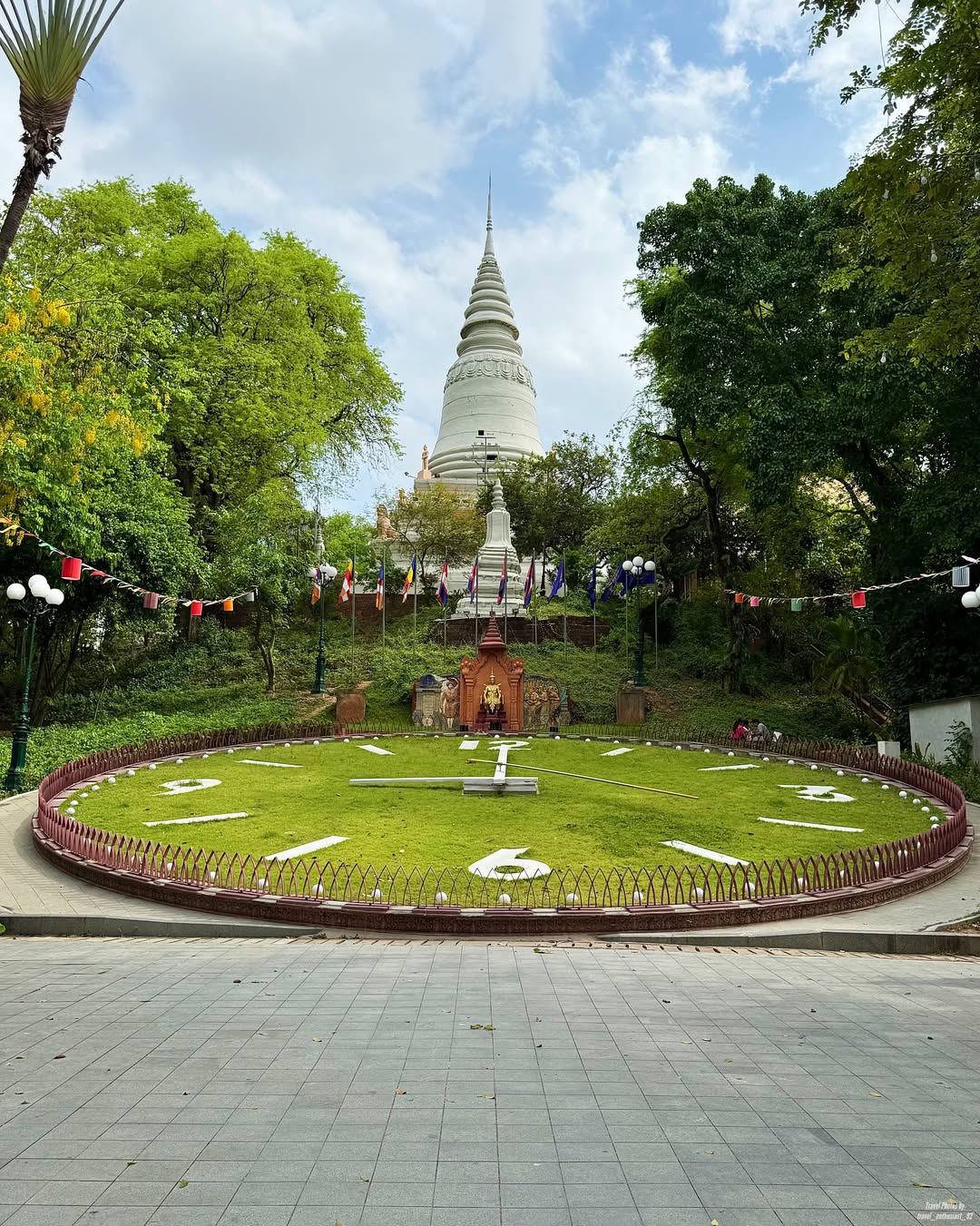
The story of Wat Phnom dates back to 1372. According to legend, a wealthy widow named Daun Penh (Lady Penh) found four bronze Buddha statues and a stone statue of Vishnu inside a floating koki tree trunk along the banks of the Tonle Sap River. Believing this was a sacred sign, she built a small hill and erected a sanctuary on top to house the relics.
When you enter the temple, there is a grand staircase guarded by stone lions and handrails shaped like Naga serpents, mythological multi-headed snake gods.
Visit the assembly hall; the central temple sanctuary is decorated with gold leaf and colourful tiles. Inside there is a large bronze Buddha on a high pedestal.
Then spend some time observing walls and ceilings covered in historic murals depicting Jataka tales (the previous lives of the Buddha) and scenes from the Reamker (the Cambodian version of the Ramayana).
There is a shrine dedicated to the genie Preah Chau, and an eight-armed statue of the Indian god Vishnu nearby.
A four-pillar shrine houses a statue of Lady Penh dressed in traditional Khmer attire, located behind the main pagoda. Devotees gather here to burn incense and pray for success, often leaving offerings of bananas or jasmine flower garlands.
10. National Museum of Cambodia
- Timings: 8:00 AM – 5:00 PM.
- Approx. Cost: 955 INR.
- Tips: Don’t carry large bags or backpacks into the gallery. If you do, leave them at the cloakroom facility located near the main entrance.
The National Museum of Cambodia is located right next door to the Royal Palace in central Phnom Penh and is just a 10-minute slow walk.
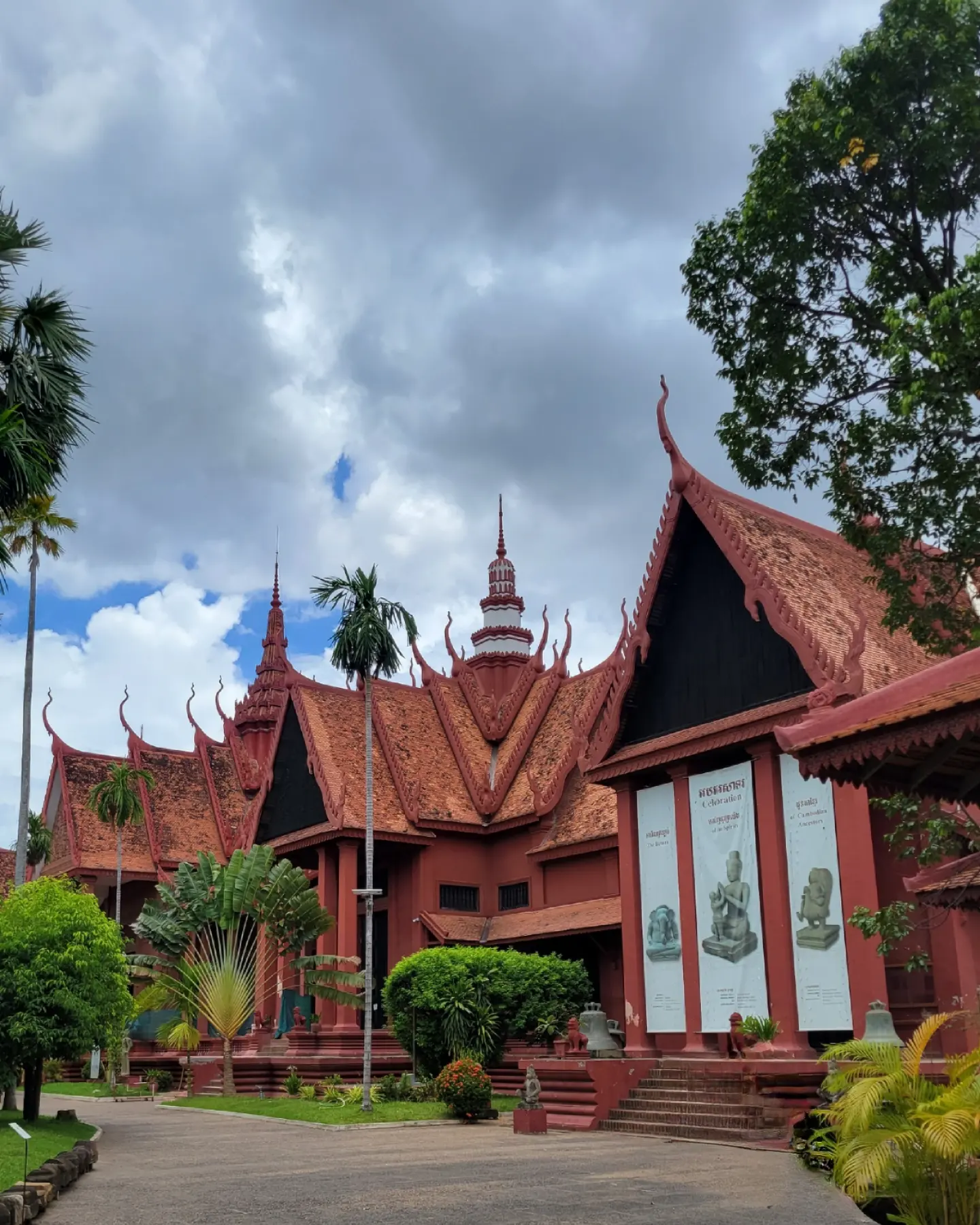
The building is a red-ochre pavilion designed to look like a traditional Khmer temple. Inside, it holds the world’s most important collection of Khmer art and Cambodian archaeological artefacts.
It takes about 1 – 1.5 hours, during which you will see priceless treasures, including ancient sandstone sculptures, bronze statues, historical tools, and royal furniture from the Angkor Empire. However, photography is strictly forbidden inside the museum galleries to protect the ancient sandstone and bronze artefacts from light damage.
There is a courtyard with lotus ponds and greenery surrounding the place, making it the perfect spot to sit in the shade and relax after your tour.
Conclusion
With just 2 – 3 days, travellers can experience some of the top things to do in Phnom Penh, such as palaces, museums, a river cruise and local markets.
You do not need to visit all 10 places in this list to enjoy the city. Instead, pick the experiences that match what you want from your trip.
If you need help planning your Phnom Penh itinerary or would like to combine it with other cities in Cambodia, contact Dimaak Tours. We will customise cities and activities, book hotels, provide visa assistance and guide you through the entire trip.
FAQs on the Best Things to Do in Phnom Penh
1. How many days are enough for Phnom Penh?
With two to three days, it is possible to plan a hassle-free trip. In two days, it covers the Royal Palace, Tuol Sleng, Choeung Ek, the riverside, and Central Market. On the third day, add a day trip to Koh Dach and the Russian Market.
2. What is the best time to visit Phnom Penh?
The best time to visit Phnom Penh is during the cool and dry months from November to February. During this time, the weather is warm, humidity is lowest, and there is very little rainfall. This makes it a better time for outdoor activities in Phnom Penh like the Royal Palace and Silk Island.
3. Is Phnom Penh safe for Indian tourists?
Phnom Penh is one of the cities in Cambodia that is safe to visit when you follow normal travel precautions. Keep your phone and other valuables secure in crowded areas, use app-based tuk-tuks such as Grab instead of local taxis, and avoid walking late at night, especially when you drink.
4. What are the best things to do in Phnom Penh at night?
The riverside promenade and boat cruise are good options in the evening. You can spend time at the nearby bars and restaurants, and eat street food around Sisowath Quay.
