


Thailand isn’t just famous for beaches and temples. It’s one of the world’s greatest street food destinations. From the night markets of Bangkok to the old-town streets of Chiang Mai, some of the country’s best meals are cooked over roadside woks and charcoal grills.
Thailand’s street vendors are so respected that stalls like Jay Fai and K. Panich Sticky Rice have earned Michelin recognition – proof that incredible food doesn’t require luxury dining rooms.
What makes Thai street food unforgettable isn’t just flavor. it’s accessibility, affordability (most dishes cost 40–100 baht), and regional variety. But with hundreds of options across markets and roadside stalls, knowing what to try makes all the difference.
In this guide, we break down 15 must-try Thai street foods, what they taste like, how spicy they really are, and when to eat them. So you can order confidently and eat like a local.
Understanding Thai Dish Names
Thai menu names follow a surprisingly logical structure. Once you understand a few core words, you can decode almost any dish even without photos.
Most Thai dishes are named using this formula
Cooking method + main ingredient + herb / flavour
For example:
- Pad Krapow Gai
- Pad = Stir-fried
- Krapow = Holy basil
- Gai = Chicken
So when you see a long Thai name, break it down word by word. This makes ordering faster, easier, and far less intimidating, particularly at busy street stalls where English menus may not be available.
Common Ingredients You’ll See on Thai Menus
These words appear everywhere:
- Khao = Rice
- Gai = Chicken
- Moo = Pork
- Nuea = Beef
- Gung = Prawn/shrimp
- Kai = Eggs
If you remember just these six, you’ll already understand half the menu.
Types of Rice in Thai Dishes
- Khao Niew = Sticky rice (commonly served in Northern and Isaan cuisine)
- Khao Suay = Plain steamed jasmine rice
- Khao Mun = Rice cooked in chicken fat or broth (rich and aromatic)
If you order Khao Mun Gai, you now know you’re getting chicken with fragrant fat-cooked rice, not plain steamed rice.
Cooking Methods of Thai Food
Street vendors often describe dishes by cooking style first:
- Pad = Stir-fried
- Thord/Tod = Deep fried
- Tom = Boiled
- Nung = Steamed
- Yang = Grilled
If you prefer grilled over fried food, look for “Yang.”
If you want something lighter, “Tom” dishes are usually broth-based.
How to Control Spice & Customise Your Order
Thai street food can be intensely spicy but you’re always allowed to adjust.
- Mai Phet = No spice
- Prik Nung med = Less spice
- Wan = Sweetness
- Jay/Jey or mangsawirat = Vegetarian food
- Phet Noi = A little spicy
- Phet Mak = Very spicy
💡 Important: Even “Phet Noi” can be spicy by international standards. If you’re sensitive to heat, start with “Mai Phet.”
List of 15 Popular Thai Street Foods
From spicy noodles and grilled meats to sweet coconut desserts and refreshing drinks, Thai street food has something for everyone.
Here are 15 must-try Thai street foods you shouldn’t miss when visiting Thailand.
1. Pad Thai: Stir-Fried Rice Noodles
Pad Thai is one of Thailand’s most popular street food dishes and a common first choice for visitors.
Rice noodles are stir-fried over high heat with eggs, tofu, and your choice of chicken or shrimp. The flavour comes from tamarind pulp, fish sauce, palm sugar, and preserved radish (chai po), creating a balanced mix of sweet, salty, and tangy.
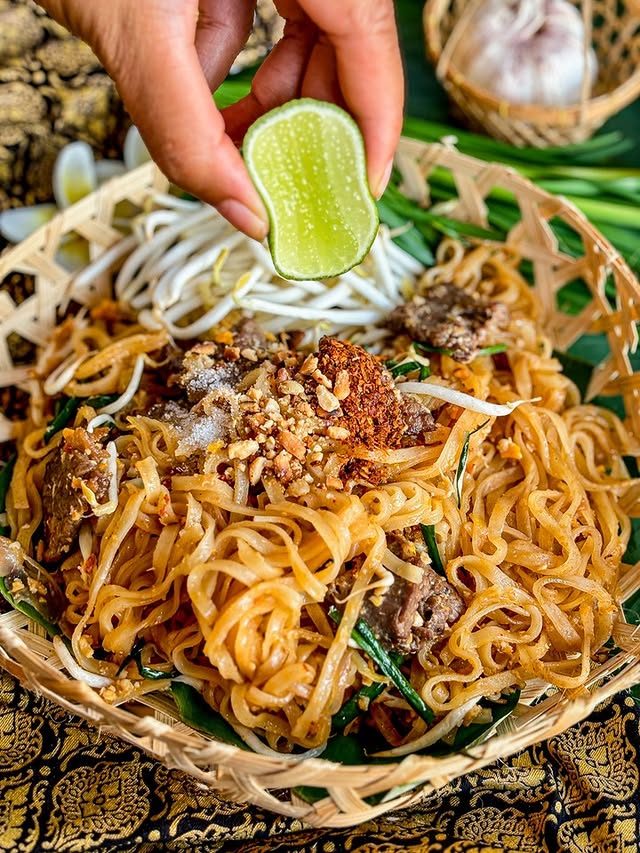
The dish is typically served with crushed peanuts, fresh bean sprouts, and a wedge of lime to squeeze on top before eating.
It’s widely available across Thailand, but it tastes best when cooked quickly over a roadside wok, where the high flame adds a light smoky flavour.
- Average street price: 50–90 baht
- Spice level: Mild to medium (can be customised)
- Best time to eat: Lunch or dinner
2. Som Tam: Papaya Salad
Som Tam originates from Thailand’s northeastern Isaan region and is one of the country’s boldest street food dishes.
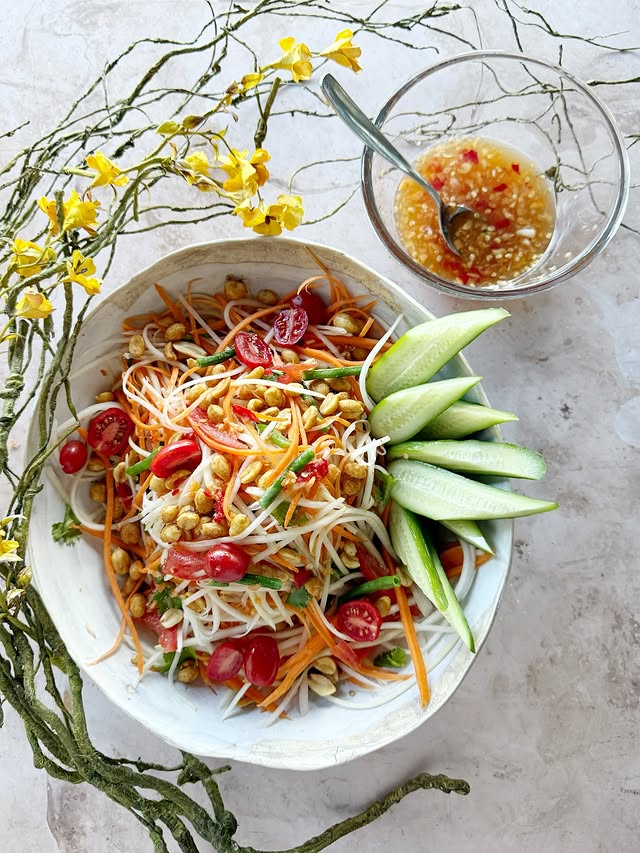
Shredded green papaya is pounded in a mortar with tomatoes, long beans, garlic, fresh chilli, fish sauce, lime juice, palm sugar, dried shrimp, and roasted peanuts. The result is crunchy, spicy, sour, and slightly sweet all in one bite.
It’s commonly eaten with sticky rice and grilled meats, especially in Isaan-style street stalls. In some regions, Som Tam is served as a side dish, while in others it’s the centrepiece of the meal.
- Average street price: 40–70 baht
- Spice level: High (can be customised)
- Best time to eat: Lunch or dinner
Pro tip: If you’re sensitive to spice, say “Mai Phet” or “Phet Noi”, authentic Isaan versions can be very spicy.
3. Khao Pad: Thai-Style Fried Rice
Authentic Khao Pad is typically prepared using jasmine rice. Day-old rice is preferred to achieve the ideal texture, as freshly cooked rice can make the dish mushy.
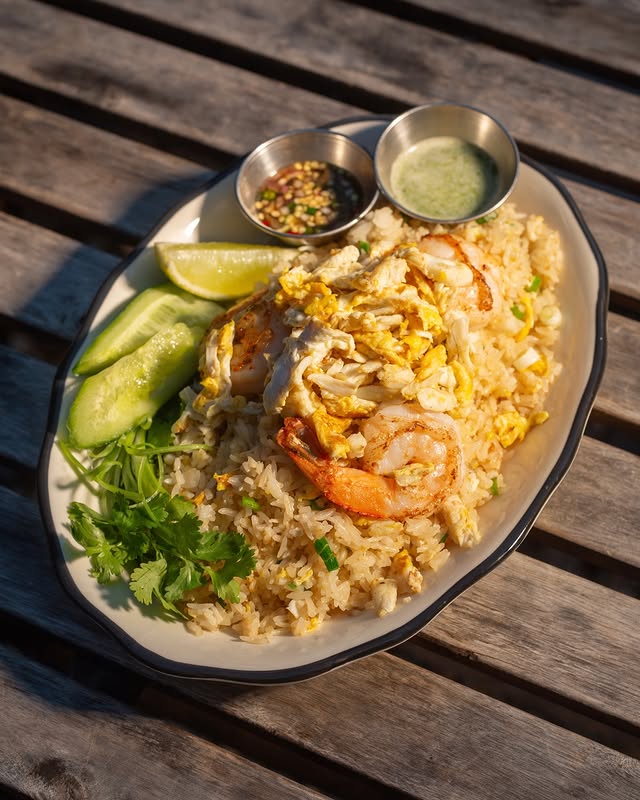
The rice is stir-fried in a wok with fish sauce, soy sauce, eggs, and spring onions.
Khao Pad can be made with various proteins, including chicken, prawns, crab, pork, or tofu.
An interesting variation is “Khao Pad Amerikan” (American Fried Rice), which is believed to have originated during the Vietnam War to cater to American soldiers stationed in Thailand.
- Average street price: 50–80 baht
- Spice level: Mild (chilli added separately)
- Best time to eat: Lunch or late night
4. Khao Mun Gai: Chicken Rice
Khao Mun Gai is Thailand’s version of chicken rice, introduced by Chinese immigrants and adapted to local tastes.
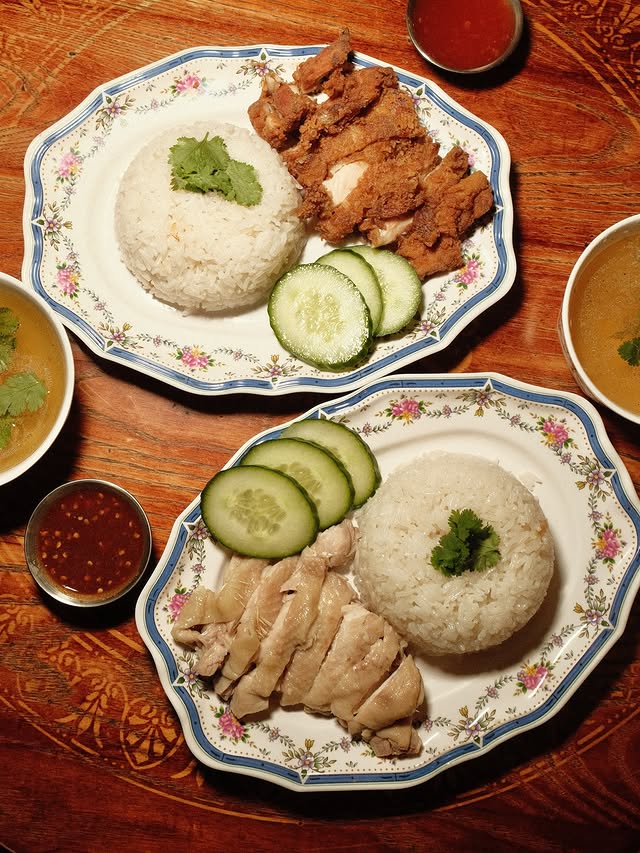
The dish consists of tender poached chicken served over fragrant rice cooked in chicken fat and broth. In the name “Khao Mun Gai,” mun refers to the rich, oily texture of the rice, which gives the dish its signature aroma and flavour.
It’s typically served with a light chicken broth and a dipping sauce made from fermented soybeans, garlic, chilli, ginger, and vinegar.
If you prefer mild, comforting flavours, Khao Mun Gai is a safe and satisfying choice.
At street stalls, you’ll often see whole chickens hanging in glass cabinets, which is a clear sign that fresh Khao Mun Gai is being served.
- Average street price: 40–70 baht
- Spice level: Mild
- Best time to eat: Breakfast or lunch
5. Gaeng Kiew Wan Gai: Thai Green Curry
Green curry is made with coconut milk, green chilli paste, and aromatic herbs, which give the dish its signature green colour, known as “kiew” in Thai.
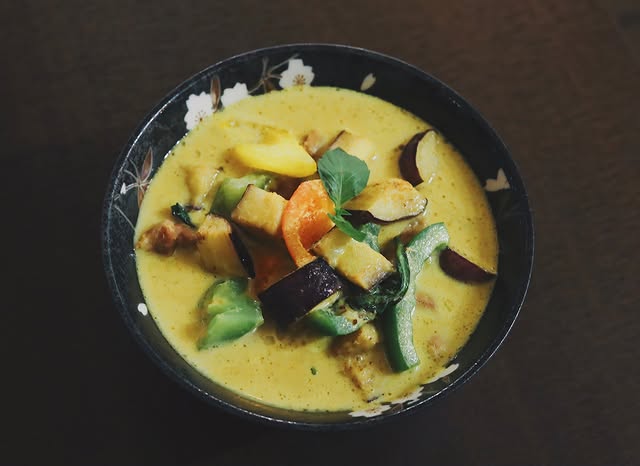
The coconut milk and a touch of palm sugar add mild sweetness, while the chilli paste provides balanced heat, making it a popular pairing with steamed rice.
Among Thailand’s three classic curry types, red, yellow, and green. Green curry is the most recent, emerging in the early twentieth century.
- Average street price: 60–100 baht
- Spice level: Medium to high
- Best time to eat: Lunch or dinner
6. Khao Niew Ma Muang: Mango sticky rice
Mango sticky rice is made with glutinous rice soaked in sweetened coconut milk and served with slices of ripe mango. The combination creates a rich, creamy base balanced by the mango’s natural sweetness and soft texture.
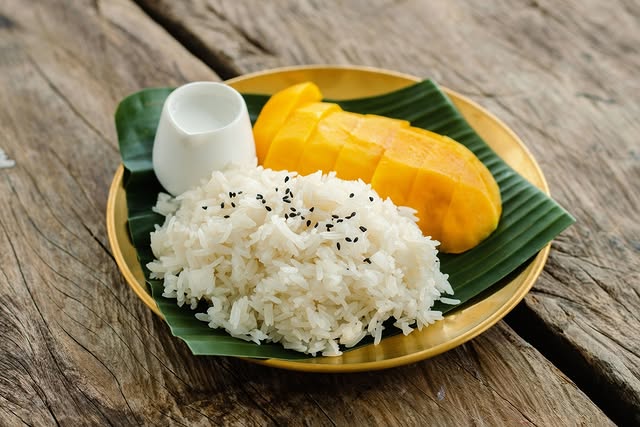
Known locally as Khao Niew Ma Muang, it is one of Thailand’s most popular desserts and widely available at street stalls, especially during mango season.
It’s a popular choice for travellers who prefer something sweet and mild after eating spicy dishes.
In 2022, Thai rapper Milli drew international attention to mango sticky rice after eating it on stage at the Coachella music festival, leading to a surge in global interest in the dessert.
- Average street price: 60–120 baht (seasonal variation)
- Spice level: Not spicy
- Best time to eat: Afternoon or dessert after dinner
- Best season: March–June (mango season)
7. Moo ping: Pork Skewers
Moo Ping consists of pork marinated in a mixture of garlic, coriander root, pepper, and soy-based seasonings before being grilled over charcoal on bamboo skewers.
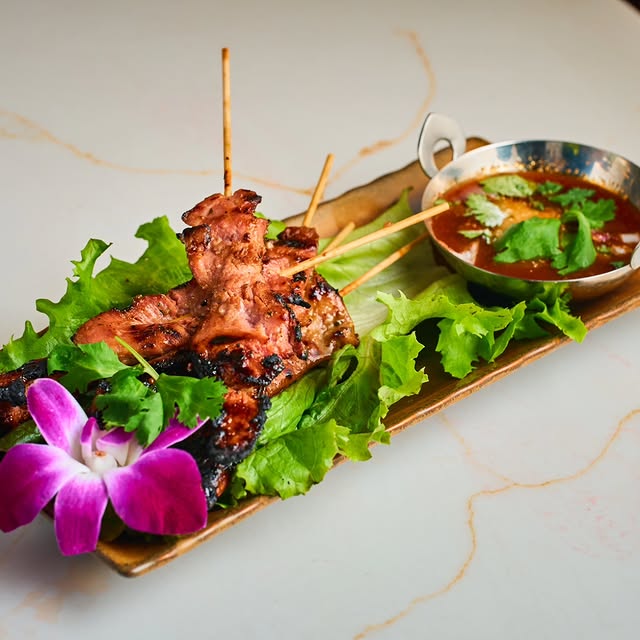
The result is tender, smoky, and slightly sweet pork with caramelised edges. It is typically served with sticky rice and eaten as a quick breakfast or morning snack.
Because Moo Ping is rarely found outside Thailand in its authentic street-style form, it’s a must-try while visiting.
- Average street price: 10–25 baht per skewer
- Spice level: Mild
- Best time to eat: Breakfast or morning snack
8. Gai Tod: Fried Chicken
Gai Tod is Thai-style fried chicken, marinated with garlic, pepper, aromatic spices, and oyster or fish sauce.
The chicken, usually wings or thighs, is coated in rice flour and deep-fried in a wok until golden and crispy. Many vendors fry it twice to achieve extra crunch.
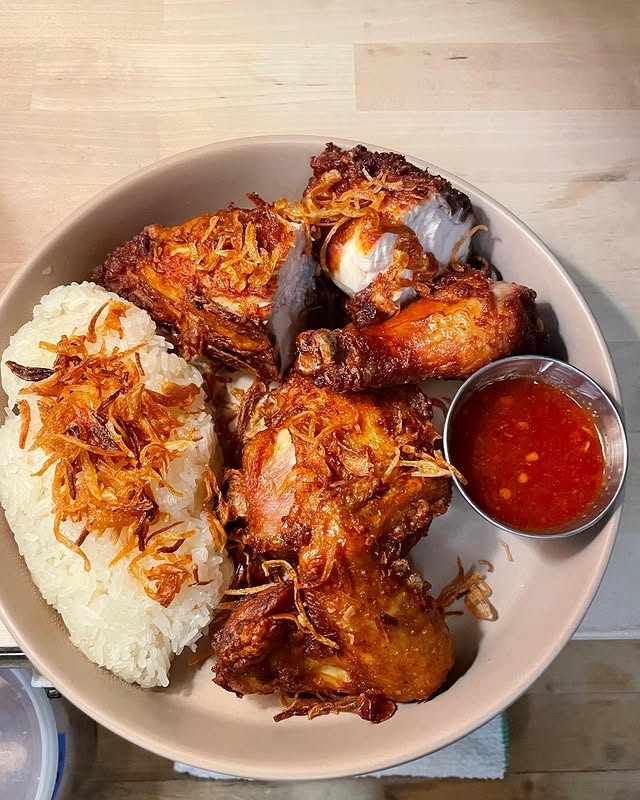
It is typically served with Nam Jim Gai (sweet chilli dipping sauce) and can be paired with Som Tam (papaya salad) for a balanced combination of crispy, spicy, and fresh flavours.
- Average street price: 20–50 baht per piece
- Spice level: Mild (spicy sauce served separately)
- Best time to eat: Lunch or evening snack
9. Bua Loy Nam King: Rice balls in ginger syrup
Bua Loy Nam King is a Thai-Chinese dessert made of soft, chewy rice balls filled with black sesame paste and served in warm ginger syrup.
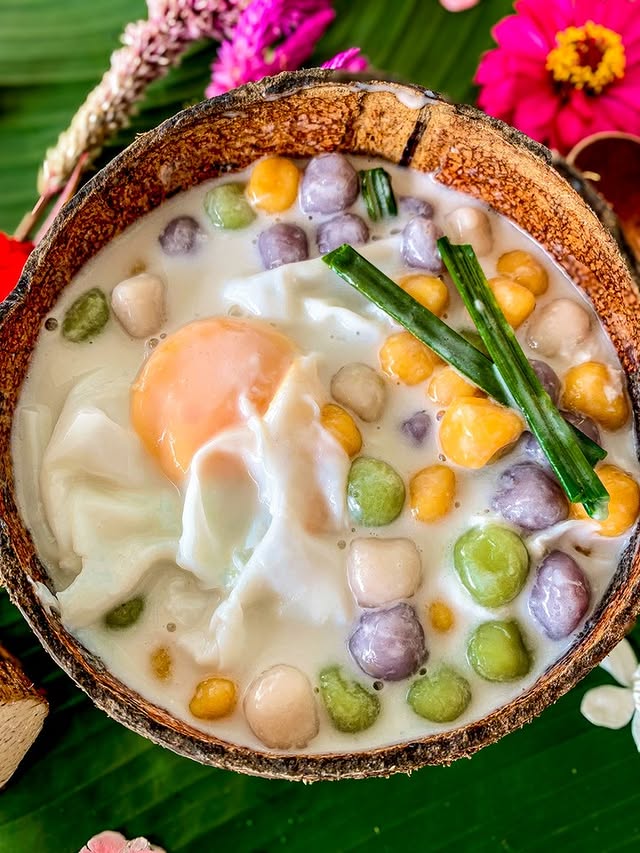
The combination of tender dumplings and aromatic ginger creates a lightly sweet, soothing dessert that is especially comforting in the evening.
It is commonly sold by street vendors from small carts, particularly in local markets.
- Average street price: 30–50 baht
- Spice level: Not spicy
- Best time to eat: Evening
10. Khanom Krok: Coconut Rice Pancakes
Khanom Krok, often referred to as coconut rice pancakes, is one of Thailand’s oldest traditional street snacks.
Made from a mixture of coconut milk, rice flour, and sugar, the batter is poured into a hot cast-iron pan with small semi-spherical moulds. The pancakes cook quickly, forming a lightly crisp exterior while remaining soft and creamy inside. They are often topped with chopped green onions, corn, or taro for added texture.
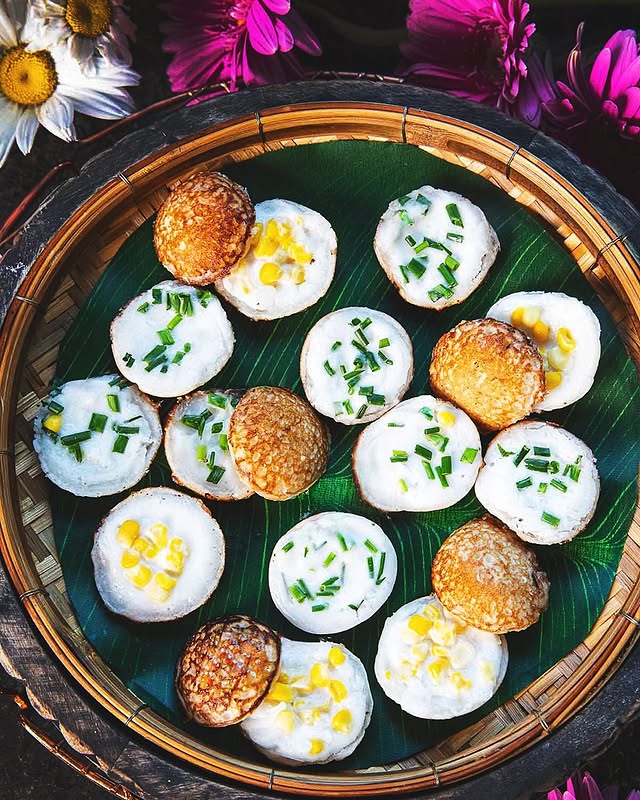
The result is a balanced combination of sweet and savoury flavours. For the best taste and texture, they are best enjoyed fresh off the pan.
- Average street price: 20–40 baht per tray
- Spice level: Not spicy
- Best time to eat: Afternoon snack
11. Gluay-thord: Deep-fried Bananas
Also known as Kluay Tod, this snack consists of bananas sliced lengthwise, coated in batter, and deep-fried until golden brown and crispy.
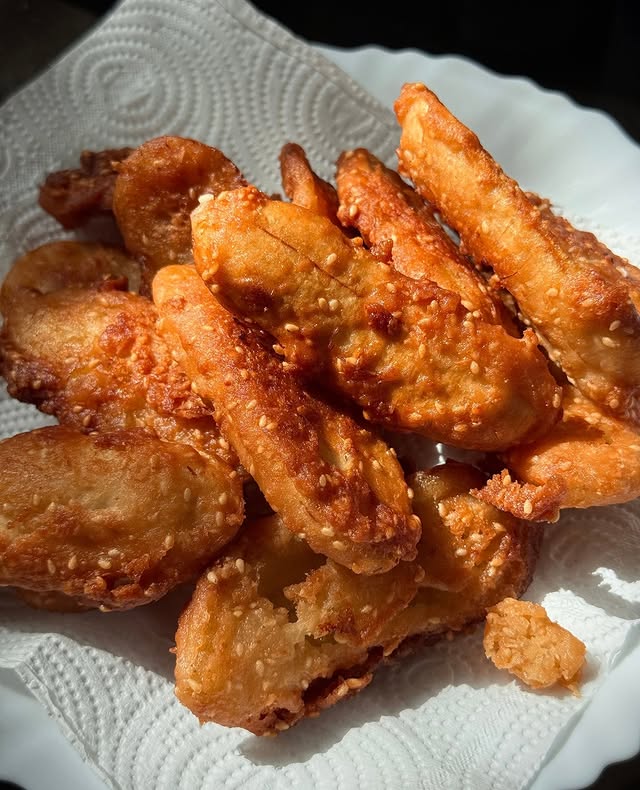
The batter is made from rice flour, cornflour, salt, shredded coconut, eggs, and a touch of vanilla, then sprinkled with sesame seeds before frying.
- Average street price: 20–40 baht per portion
- Spice level: Not spicy
- Best time to eat: Afternoon or evening snack
12. Kanom Jeeb: Steamed Dumplings
Kanom Jeeb are Thai-style steamed dumplings made with thin wonton wrappers filled with minced pork or shrimp.
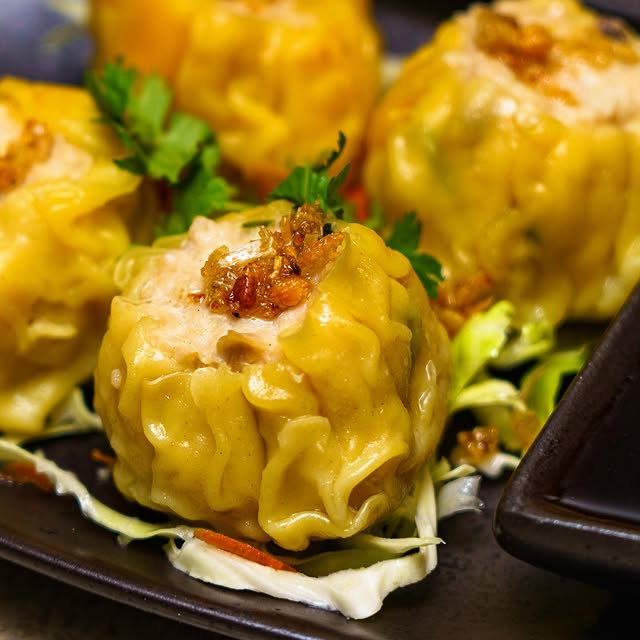
The wrappers are prepared from flour, eggs, and cornstarch, then rolled into thin sheets. Each wrapper is filled, gathered at the top, and pinched into pleats. “Jeeb” means “to pinch” in Thai, creating the dumpling’s signature ruffled shape.
The dumplings are steamed in bamboo or metal steamers until tender and are typically served with soy sauce or a light chilli dipping sauce.
They can also be frozen and steamed directly when ready to eat.
- Average street price: 30–60 baht per serving
- Spice level: Mild
- Best time to eat: Morning or afternoon
13. Thai Tom Yum: Soup
Thai Tom Yum is one of Thailand’s best known dishes, a hot and sour soup built around three essential aromatics: lemongrass, kaffir lime leaves, and galangal.
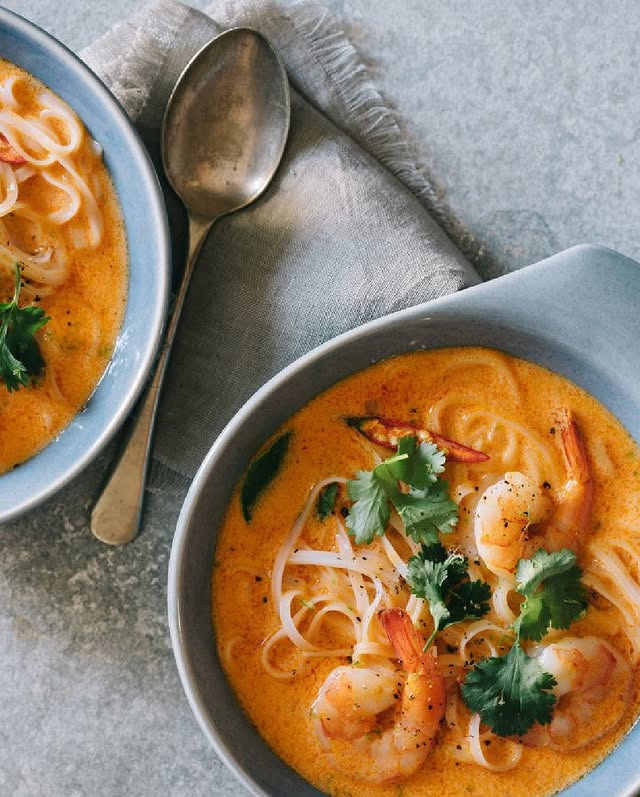
For heat, shallots, garlic, and roasted chillies are ground into a paste and added to the broth to intensify the aroma.
Most versions of Tom Yum include whole shrimp, often with the head and shell intact, which deepens the broth and gives the soup its characteristic richness.
- Average street price: 60–120 baht
- Spice level: Medium to very high
- Best time to eat: Lunch or dinner
14. Nam Bai Bua Bok: Pennywort Juice
Pennywort is a herb commonly consumed in Thailand as a refreshing street drink. It is believed to help cool the body and is popular in the country’s hot and humid climate.
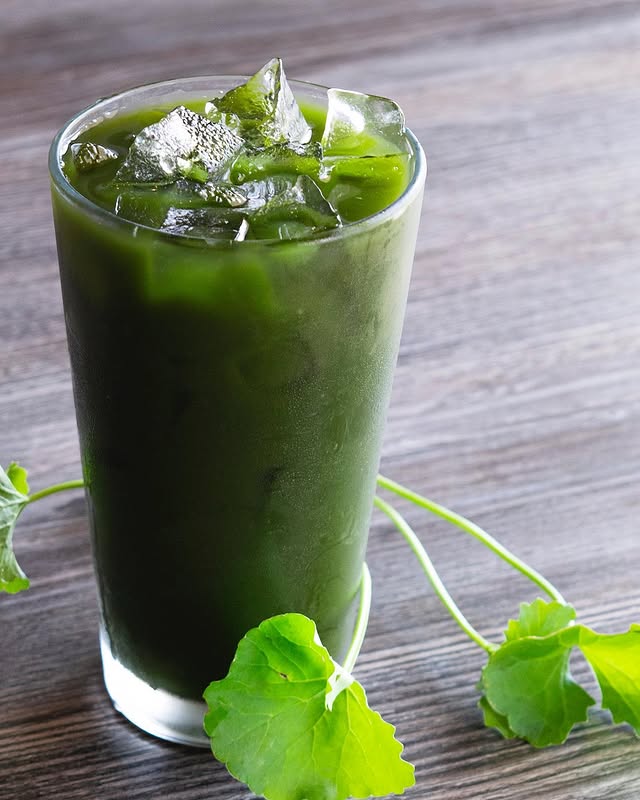
On its own, pennywort has a naturally bitter taste. To balance this, vendors often blend the leaves with sugar, condensed milk, or coconut milk, creating a lightly sweet and refreshing juice.
- Average street price: 20–40 baht
- Spice level: Not spicy
- Best time to drink: Afternoon (especially in hot weather)
15. Soy Sauce Ice Cream
Soy sauce ice cream combines vanilla ice cream with a light drizzle of soy sauce, creating a flavour similar to salted caramel with a subtle savoury depth.
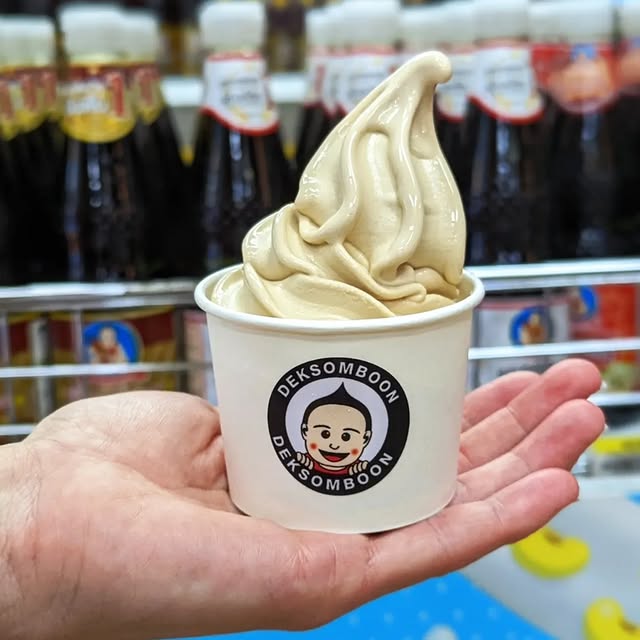
This unusual pairing enhances the fifth basic taste, known as umami, which adds a balanced mix of sweet and savoury notes commonly associated with ingredients like tomatoes and mushrooms.
- Average street price: 30–60 baht
- Spice level: Not spicy
- Best time to eat: Dessert or evening snack
Conclusion
Beyond quick meals, street food in Thailand reflects the country’s culture, creativity and its bold flavours. With many stalls operating long hours, these dishes are easy to access across cities and local markets.
Learning a few Thai food terms can make ordering simpler and help you customise dishes to your preference.
These 15 street foods are worth adding to your Thailand itinerary if you want to experience local cuisine beyond restaurant dining.
FAQs About Thailand Street Food
1. Is it ok to eat street food in Thailand?
Thai street food is extremely popular for tasty, warming and, most importantly, good-quality food. However, make sure to look out for undercooked meat before eating, which can cause major health issues.
2. Is street food expensive in Thailand?
One of the reasons Thai street food is popular is because of how inexpensive it is. You can get a tummy-filling rice plate for less than 70 baht, which is around 200 INR.
3. What is the best time to eat street food in Thailand?
Street food is available throughout the day, but evenings are often the best time to explore night markets and roadside stalls. Breakfast options like grilled pork skewers and chicken rice are commonly available in the morning, while many markets become livelier after sunset.
