


Key Takeaways
|
The Dutch have spent centuries learning to live with water, as much of the Netherlands lies at or below sea level. The constant risk of flooding led them to build dykes, canals and an elaborate system of water management.
This has influenced not just the landscape but also the way towns developed and people lived. Today, centuries-old traditions sit alongside modern European life, and its historic streets, canals and distinct way of life make it a country well worth experiencing.
For anyone planning their first visit, here are some of the best places to visit in the Netherlands, from major cities such as Amsterdam and Rotterdam to smaller towns and villages.
Best Places to Visit in the Netherlands
The following destinations cover different sides of the Netherlands, from its major urban centres and historic towns to its countryside and coastline.
1. Amsterdam
Amsterdam is one of the most famous places to visit in the Netherlands. Its 17th-century canal district is a UNESCO World Heritage Site, with an interconnected network of canals, historic merchant houses and bridges that reflect the city’s growth as a major trading port.
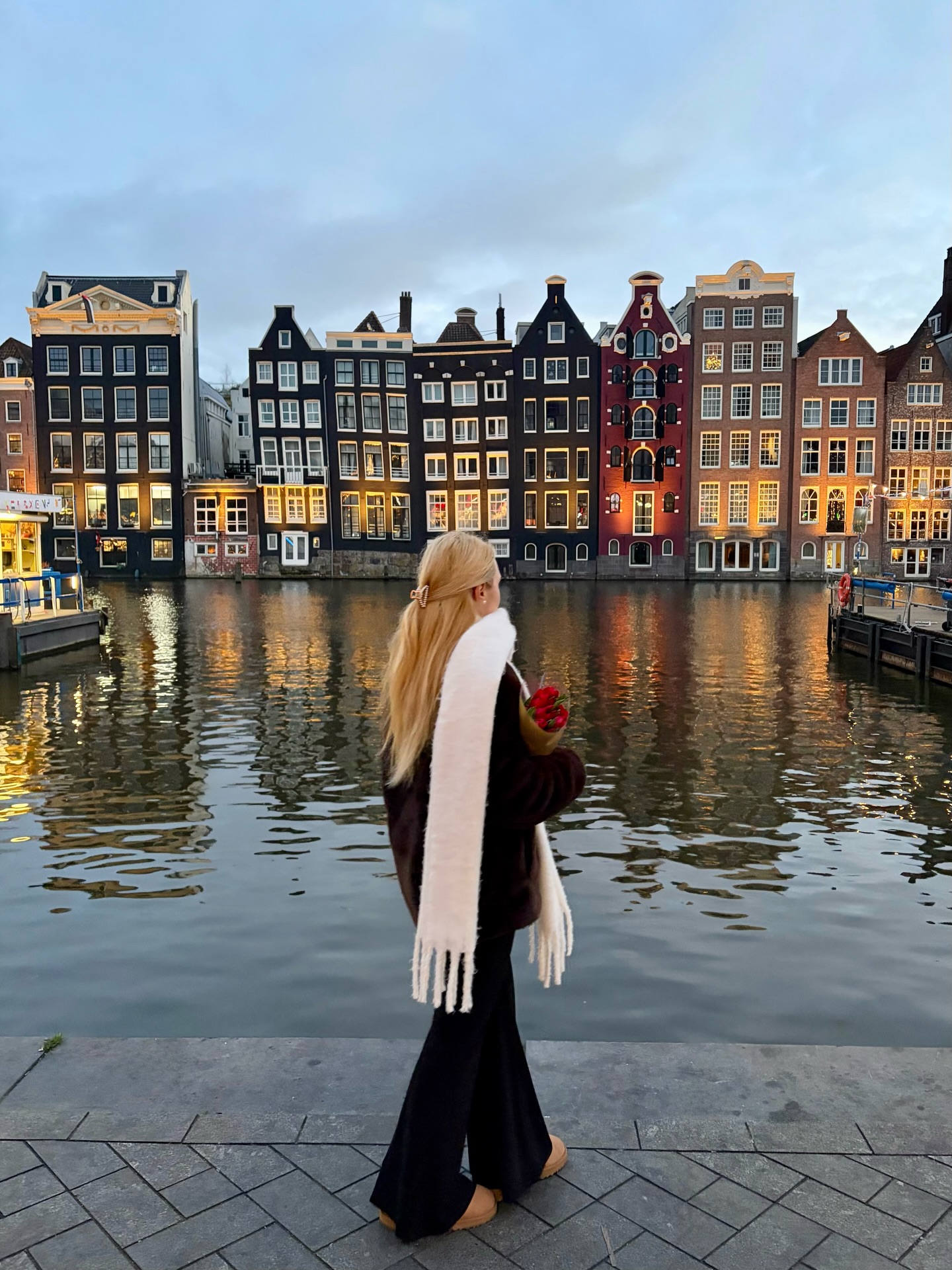
A canal cruise will give you a different view of this old urban layout, while neighbourhoods such as Jordaan and De Pijp provide a glimpse of everyday city life.
The Rijksmuseum has an extensive collection of Dutch art and history, while the Van Gogh Museum traces the painter’s work and life. The Anne Frank House is another important stop, with the Secret Annex preserved as part of the museum.
The 17th-century Royal Palace on Dam Square is another major landmark and serves as the King’s official reception palace. When open to the public, visitors can see the Citizens’ Hall, historic galleries and royal reception rooms.
How long to spend: 3 days
2. Rotterdam
Rotterdam looks different from Amsterdam and other older Dutch cities. German bombing during World War II destroyed much of Rotterdam’s historic centre, leaving Laurenskerk as the only medieval building still standing in Rotterdam’s city centre.
Delfshaven, a neighbourhood in western Rotterdam, escaped the bombing. Its old harbour, canal-side houses, Pilgrim Fathers’ Church and De Distilleerketel windmill preserve its historic port character.
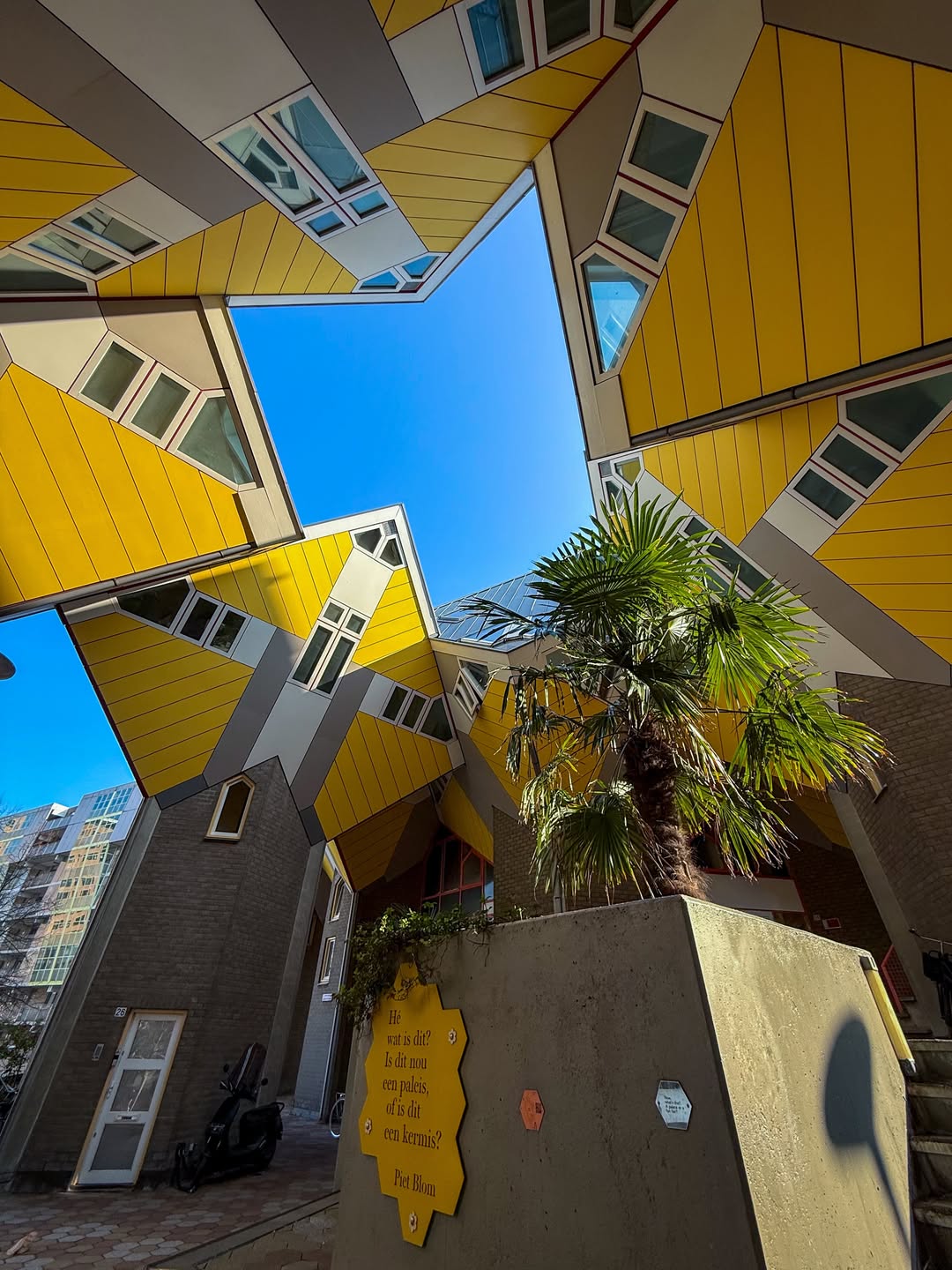
Post-war reconstruction reshaped the city with wider streets and open spaces, while later development added contemporary landmarks such as Cube Houses and the Markthal.
The Cube Houses, designed by Piet Blom, stand at unusual angles on raised pillars. The Kijk-Kubus is open to visitors, with furnished rooms that show how the design works as a home.
The Markthal has a horseshoe-shaped design, with apartments and offices built in an arch above its large indoor food market, where you can browse fresh produce, cheese and local specialities, or try local food.
The Erasmus Bridge is one of Rotterdam’s most recognisable landmarks. Its tall, angled white pylon and fan of supporting cables have earned it the nickname ‘The Swan’. You can walk or cycle across the bridge for views of the Nieuwe Maas River and Rotterdam’s skyline.
West of the city centre, the Euromast observation tower has some of the best views of Rotterdam and its harbour. You can also take a harbour tour to see the city’s working port.
How long to spend: 1 or 2 days
3. Utrecht
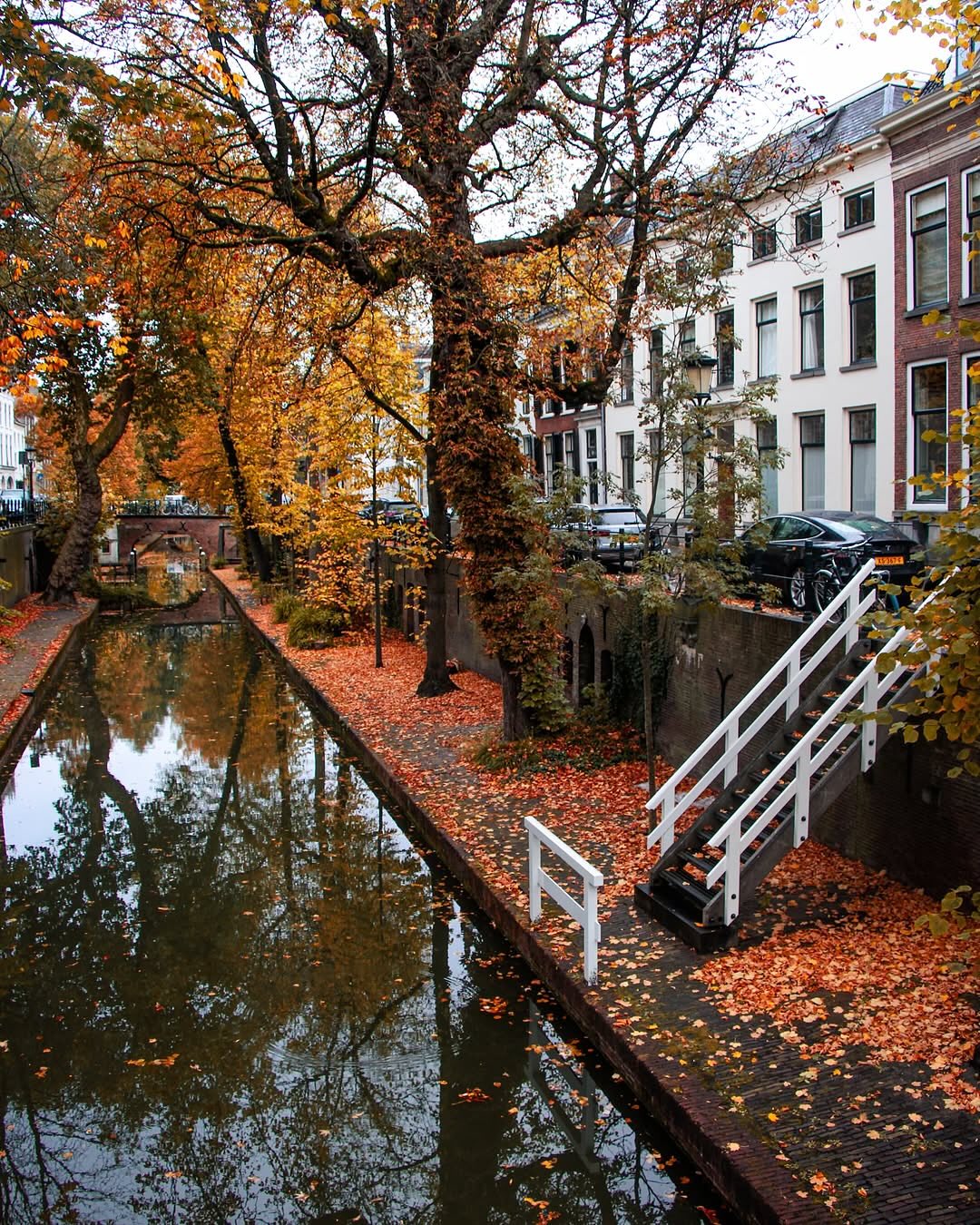
The Oudegracht (Old Canal) runs through Utrecht’s historic centre, with old wharf cellars built into the canal banks below street level. These cellars were once used for storing goods brought in by boat; many now house cafes, restaurants and other businesses.
Utrecht’s 14th-century Dom Tower is the tallest church tower in the Netherlands. A severe storm in 1674 destroyed the section of Dom Church that once connected it to the tower, leaving both landmarks standing separately today.
Beneath Dom Square, between the Dom Tower and Dom Church, DOMunder takes visitors through archaeological remains dating back to Roman times.
Housed within the medieval Buurkerk church, Museum Speelklok is worth visiting for its collection of self-playing musical instruments, including music boxes and street organs.
De Haar Castle, the largest and most luxurious castle in the Netherlands, makes a great day trip from Utrecht, with richly decorated interiors and extensive gardens.
How long to spend: Half a day to a full day
4. The Hague
The Hague is one of the best places to visit in the Netherlands for its royal landmarks, art museums and North Sea coastline. It is the seat of the Dutch government and home to the country’s royal court and the International Court of Justice.
Art lovers should make time for the Mauritshuis, which houses Dutch and Flemish paintings, including Vermeer’s Girl with a Pearl Earring. Escher in the Palace displays more than 120 of M.C. Escher’s prints, with optical illusions, repeating patterns and unusual perspectives.
The Peace Palace is an internationally significant landmark in The Hague and houses the International Court of Justice and the Permanent Court of Arbitration. You can visit the palace interior and gardens only on guided tours booked in advance.
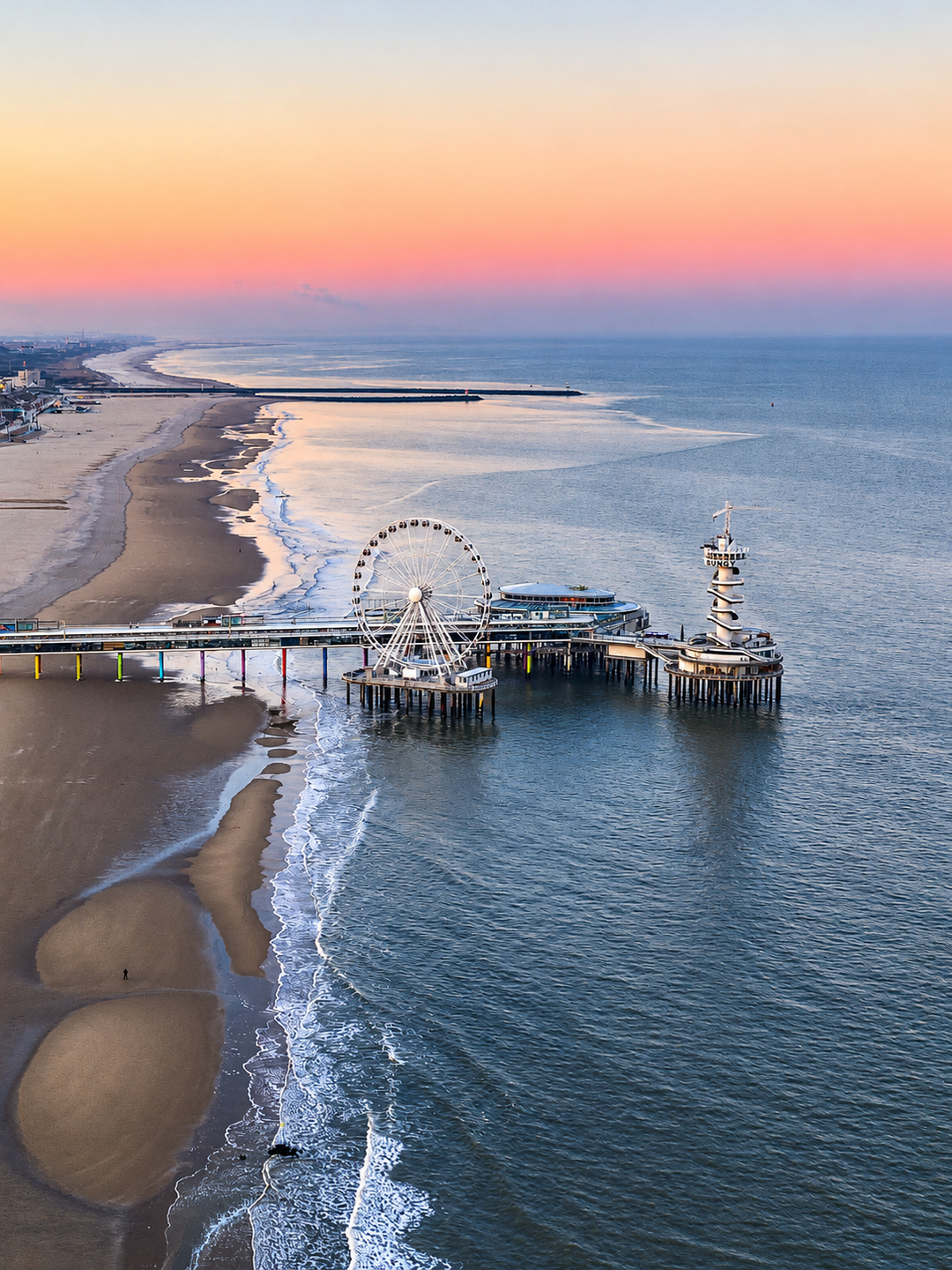
The coastal district of Scheveningen is a great place for a beach break close to the city. Its sandy shoreline stretches alongside a long promenade lined with waterfront restaurants. The pier extends out over the sea, with a Ferris wheel at its far end.
The Hague is also worth visiting for its shopping arcades and streets lined with independent boutiques. The Passage stands out for its ornate facade and glass roof, while Denneweg is one of the oldest and most atmospheric streets, with antique shops, design stores and cafes.
How long to spend: 1 or 2 days
5. Delft
Delft’s compact centre is easy to cover on foot, with canals, churches and Markt, the city’s main square. The Nieuwe Kerk (New Church) stands opposite the Town Hall and is the burial place of William of Orange.
A short walk away, the Oude Kerk (Old Church) is recognised by its leaning tower and is where painter Johannes Vermeer is buried.
The Vermeer Centrum Delft covers Johannes Vermeer’s life and work, using full-size copies of his paintings. Its central location makes it easy to visit alongside Markt and the churches.
Delft’s blue-and-white pottery, known as Delft Blue, is an important part of the city’s heritage. The Royal Delft Museum, founded in 1653, is the city’s last remaining 17th-century Delft Blue factory, where you can see the pottery-making process and historic pieces.
You can also add Oostpoort, Delft’s only surviving medieval city gate, and Molen de Roos, the city’s last remaining working windmill, to your visit.
How long to spend: Half a day to a full day
6. Haarlem
Haarlem stands out for its strong links to Dutch art and its easy access to the coast. The Frans Hals Museum holds the world’s largest collection of Dutch Golden Age paintings by Frans Hals and other artists, while the beaches and dunes around Zandvoort are a short trip away.
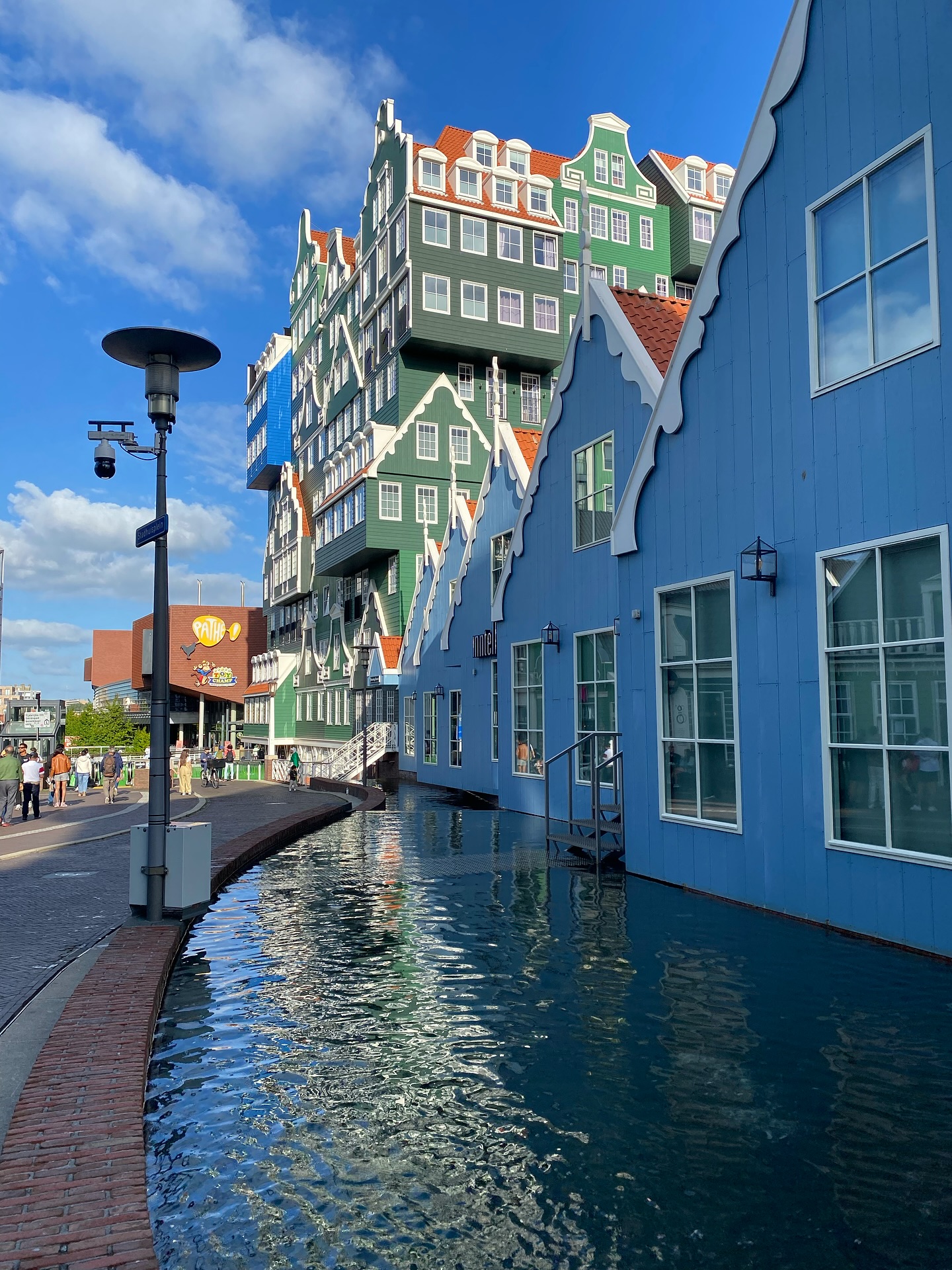
The city’s historic centre is compact and is surrounded by old buildings, cafes and the Grote or St Bavo Church, whose large interior and organ are among the city’s main sights.
Open to the public since 1784, Teylers Museum is the Netherlands’ oldest museum, with collections of fossils, minerals, scientific instruments, books, drawings and paintings.
Trains connect Haarlem directly with Amsterdam, and the historic centre is within walking distance of the main station.
How long to spend: Half a day to a full day
7. Giethoorn
Giethoorn is a beautiful village in the northeastern Netherlands, with narrow canals running through its old centre. Traditional thatched-roof farmhouses line the narrow waterways, with wooden bridges connecting the paths on either side.
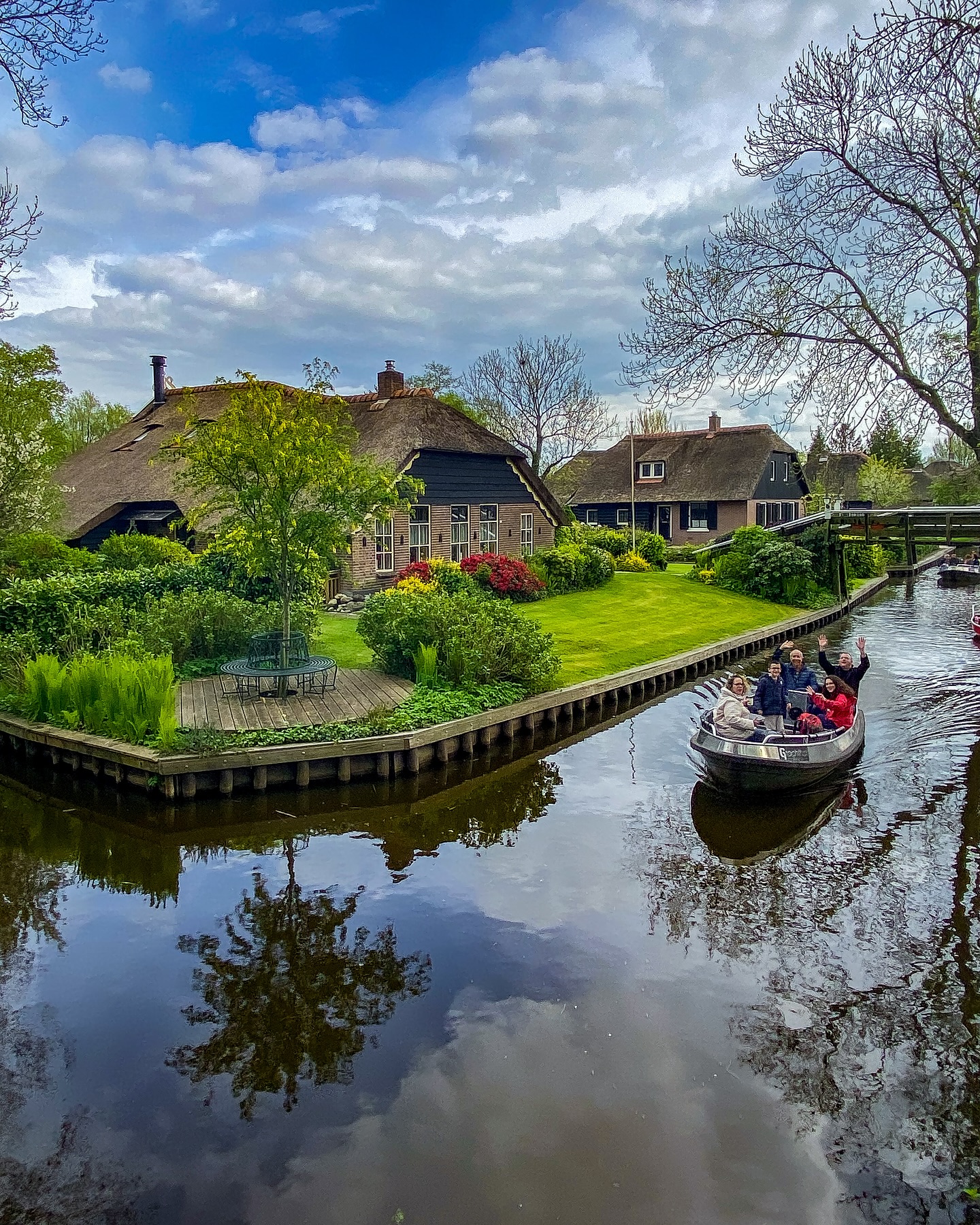
As much of the historic centre is laid out around waterways and walking and cycling paths rather than roads, visitors get around on foot, by bicycle or by boat. You can book a guided cruise or rent a small electric whisper boat to navigate the canals quietly at your own pace.
The surrounding Weerribben-Wieden National Park has a large wetland landscape of lakes, reed beds and marsh forests. You can follow walking and cycling routes through the area or take a canoe along its quieter waterways.
How long to spend: One full day or an overnight stay
8. Zaanse Schans
Just north of Amsterdam, Zaanse Schans makes an easy half-day excursion. The Zaan region was once one of Europe’s major industrial centres, with hundreds of windmills processing timber, spices, oil and paint pigments.
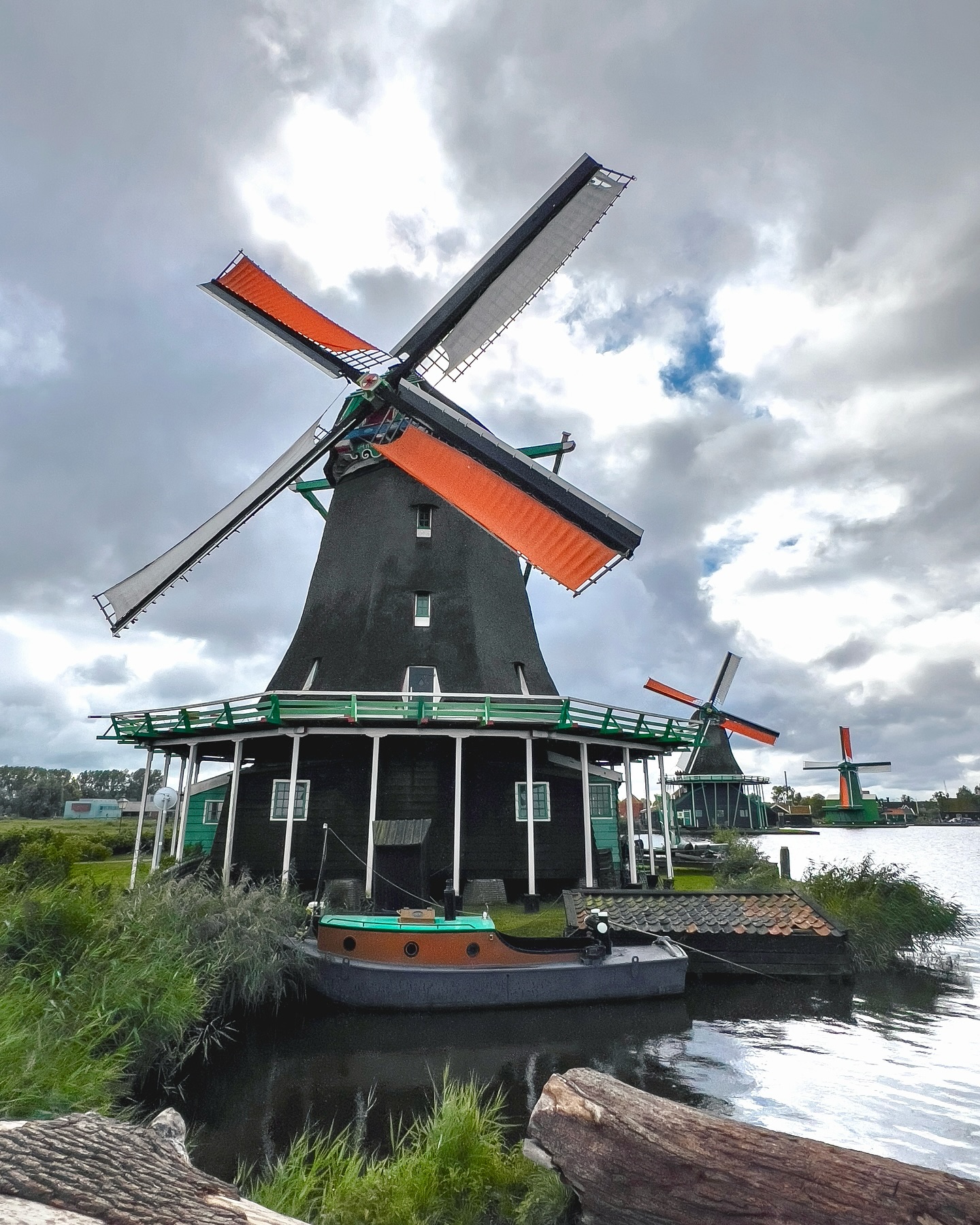
Zaanse Schans preserves a glimpse of this past through its green wooden houses, old warehouses, workshops and working windmills. Many of these buildings were moved here from other parts of the region to save them from demolition.
At De Kat, you can see how windmills were used to grind pigments for paint. At Catharina Hoeve Cheese Farm, watch a daily demonstration of the cheese-making process, sample Gouda, Edam and other varieties, and visit the farm shop.
The Zaans Museum covers the region’s industrial history, while its Verkade Experience recreates an early-20th-century chocolate and biscuit factory, with original working machines and interactive activities.
How long to spend: Half a day
9. Kinderdijk
Kinderdijk is a UNESCO World Heritage Site in South Holland, with 19 historic windmills forming part of a wider water-management system.
The mills, dykes, pumping stations and surrounding polders show how the Dutch managed water in low-lying areas and protected land from flooding.
The visitor area has two museum windmills, Nederwaard and Blokweer, where you can see how miller families lived and worked.
The Wisboom Pumping Station showcases the historical shift from pure wind power to mechanical automation, while De Fabriek has an introductory film and exhibition about the area’s water-management system.
You can also take a boat trip along the waterways or walk and cycle along the dykes and canals. You need a ticket to visit the locations. The All-In ticket covers the museum windmills, boat tour, Wisboom Pumping Station and De Fabriek exhibition.
How long to spend: Around two to three hours for the main visitor route.
10. Keukenhof Gardens
Keukenhof Gardens in Lisse is one of the main seasonal attractions in the Netherlands. It is the garden you have often seen in postcards and calendars, with landscaped displays of tulips, daffodils, hyacinths and other spring bulbs.
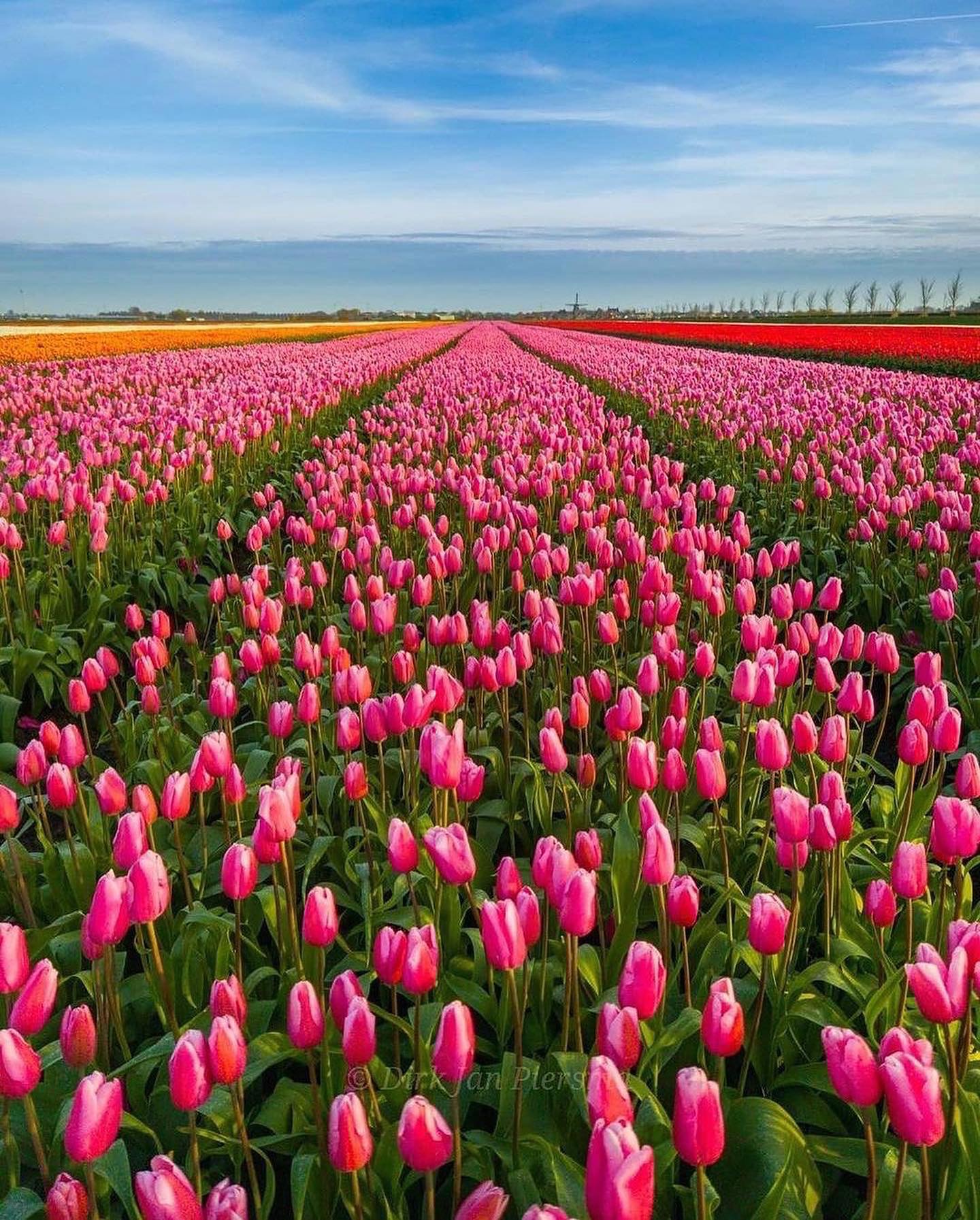
The indoor pavilions also host additional flower exhibitions. Keukenhof opens only during spring; in 2027, the gardens will be open daily from 18 March to 9 May, with tickets available through the official website.
Flowering depends on spring temperatures and the natural blooming cycle. Early in the season, crocuses, daffodils and hyacinths may be more visible, while later weeks bring different tulip varieties into bloom.
Check Keukenhof’s flowering updates before choosing your travel dates, as the exact displays vary each year.
How long to spend: Around 3 hours; half a day for a relaxed visit.
11. Maastricht
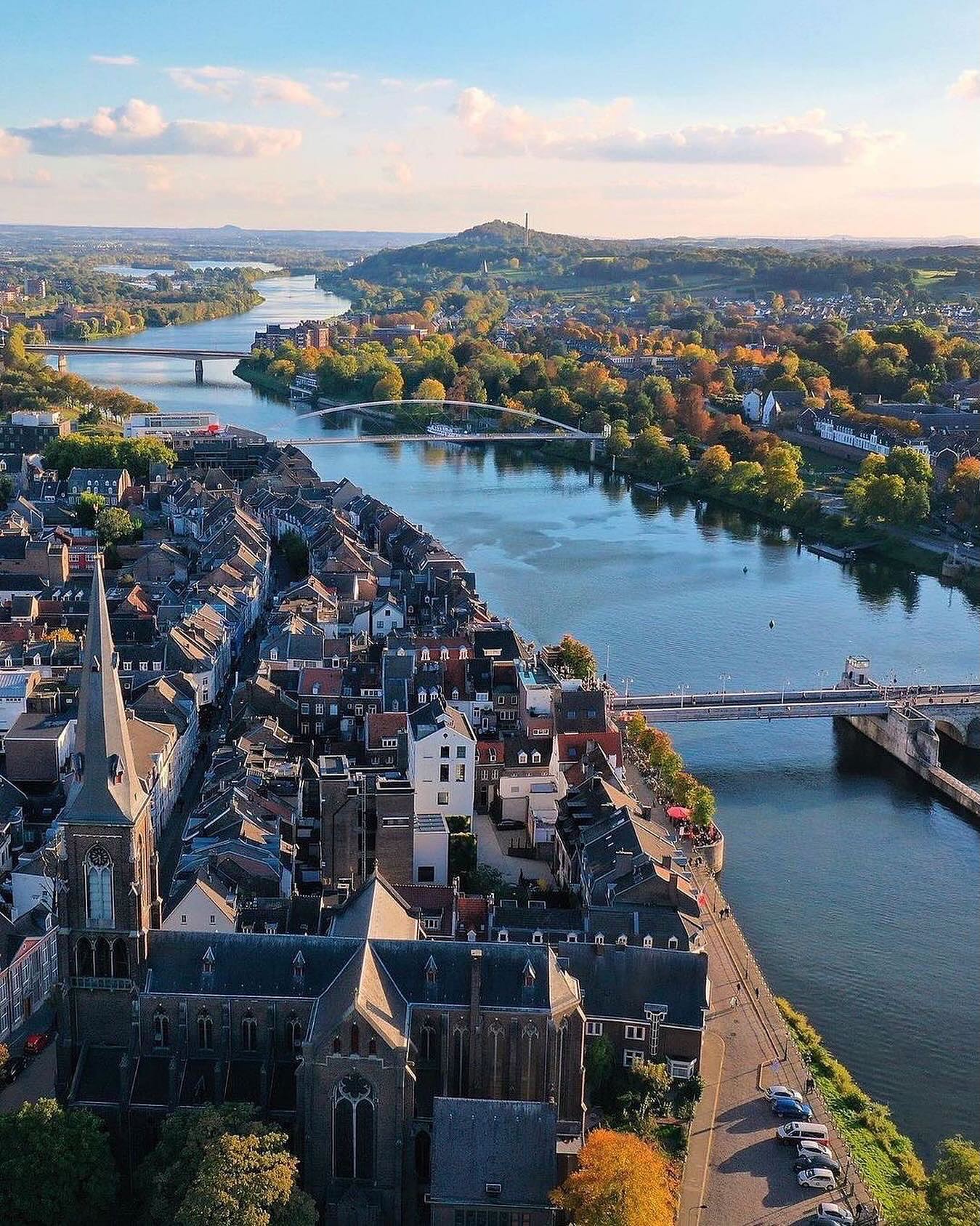
Maastricht is one of the oldest cities in the Netherlands, situated in Limburg in the south of the country, close to the Belgian and German borders.
Its history goes back to Roman times, when a settlement grew around a bridge the Romans built across the River Meuse, and traces of this period remain beneath the historic centre.
The Museum Cellar Derlon, beneath Hotel Derlon at Onze-Lieve-Vrouweplein, preserves a pre-Roman cobbled path, the remains of a possible Roman sanctuary and sections of a late-Roman fort, including part of its western entrance gate and fortification walls.
Vrijthof is one of Maastricht’s main squares, bordered by the Basilica of St Servatius and St John’s Church. A short walk away, the Markt (Market Square) has the city’s 17th-century Town Hall at its centre, with cafes and restaurants around the square and market stalls on Wednesdays and Fridays.
A 13th-century Dominican church near the Markt now houses Boekhandel Dominicanen, a bookshop set within the church’s original Gothic interior, with a cafe in the former altar area.
Two other important medieval landmarks are the Helpoort, the Netherlands’ oldest surviving city gate, and the 13th-century Saint Servatius Bridge, the country’s oldest surviving stone bridge.
How long to spend: 1-2 days
12. Texel
Texel is the largest of the Dutch Wadden Islands, with beaches along the North Sea, dune landscapes, villages and nature reserves. The TESO ferry connects Den Helder and Texel year-round, with a crossing time of about 20 minutes.
A large part of the island’s western side falls within Dunes of Texel National Park, which includes dunes, woodland, heathland and tidal marshes.
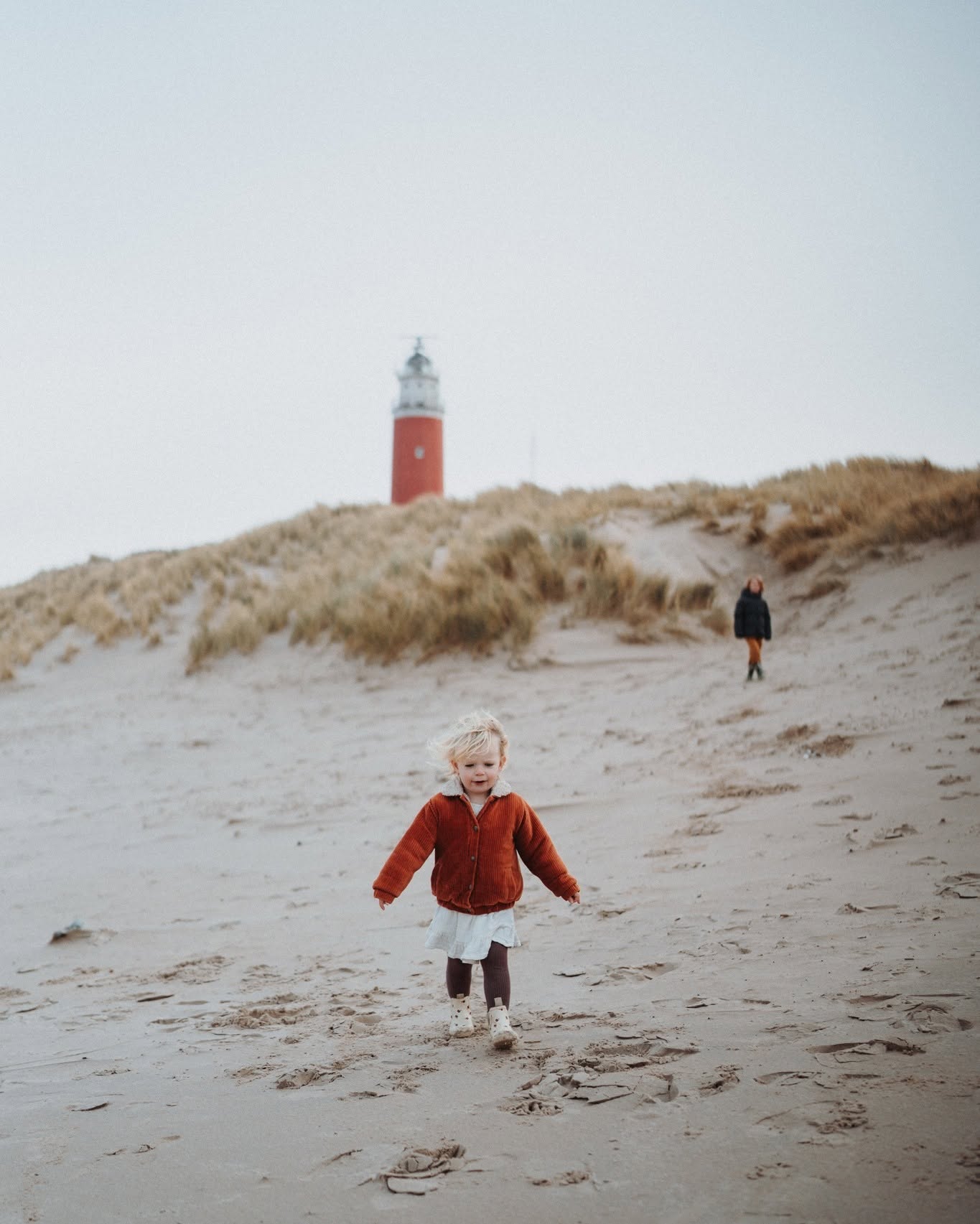
Texel has more than 140 kilometres of cycle paths, including trails through the national park’s dunes and woodland and routes connecting villages with the coast.
De Slufter is one of Texel’s distinctive nature reserves, where seawater flows through an opening in the dunes and regularly floods the marsh. Only the southern section is freely accessible to visitors, while much of the reserve serves as a breeding and resting area for birds.
At Texel’s northern tip, the 1864 Eierland Lighthouse has a viewing gallery, with World War II bullet holes still visible on its walls.
Ecomare has a seal sanctuary and sea aquarium, while Museum Kaap Skil in Oudeschild covers the island’s maritime history through shipwreck finds and fishing displays.
How long to spend: 2-3 days
Conclusion
Together, these destinations cover much of what the Netherlands has to offer, from historic cities and traditional windmills to flower gardens, nature reserves and coastal landscapes.
You could spend your days visiting Amsterdam’s museums, Rotterdam’s architectural landmarks, the historic centres of Delft and Maastricht, or The Hague’s royal and cultural attractions.
Day trips to Giethoorn, Zaanse Schans and Kinderdijk add countryside stops, while Keukenhof and Texel bring picturesque gardens and island landscapes into the itinerary.
You can contact Dimaak Tours to put together an itinerary covering the best of the Netherlands.
FAQs About Places to Visit in the Netherlands
1. What are the best places to visit in the Netherlands for a first-timer?
Amsterdam, Rotterdam, Utrecht, The Hague and Delft give first-time visitors a good introduction to the Netherlands. They cover Dutch history, museums, architecture and city life.
You can add Zaanse Schans or Haarlem as shorter excursions, and if you are planning to visit during spring, include Keukenhof Gardens.
2. Which places in the Netherlands are worth visiting for art and history?
Amsterdam is home to the Rijksmuseum, the Van Gogh Museum and the Anne Frank House, covering Dutch art, the life of Van Gogh and wartime history.
The Hague has two notable art museums: the Mauritshuis, which houses Vermeer’s Girl with a Pearl Earring, and Escher in the Palace, which displays more than 120 prints playing with perspective and optical illusions.
In Delft, you can learn about Johannes Vermeer and the city’s Delft Blue pottery, and for Roman and medieval history, add Maastricht and Utrecht, with their archaeological remains, old churches and historic buildings.
3. Where can you see traditional Dutch windmills?
Zaanse Schans and Kinderdijk are two of the major places to see traditional Dutch windmills. Zaanse Schans has working windmills such as De Kat, used to grind paint pigments, while Kinderdijk’s 19 historic windmills form part of a centuries-old water-management system.
4. When is the best time to visit Keukenhof Gardens?
Keukenhof is open only during spring, usually from mid-March to early May. In 2027, the gardens are scheduled to open from 18 March to 9 May.
