


Planning a trip and wondering about the best places to visit in Cambodia? You’re not alone; most travellers want to see the country’s most famous landmarks while also discovering a few hidden gems. With so many Cambodia tourist places to choose from, ancient temples, floating villages, bustling cities, and pristine islands, it can feel overwhelming to decide where to start.
To make your trip easier, we’ve compiled a guide to the top places to visit in Cambodia.
Whether you’re looking for things to see, fun activities, or simply want to soak in the most relaxing places, this list covers it all. By the end, you’ll know exactly what to visit in Cambodia to make your trip unforgettable!
Must See Places in Northwestern Cambodia
Northwest Cambodia is the most popular region, with Siem Reap as its main attraction. This is the primary gateway to witness the grand Angkor Wat temples, observe millions of bats flying at the same time, and take unique rides, such as the bamboo train.
Angkor Wat Archaeological Park
This masterpiece of human history is one of Cambodia’s famous places to visit. Magical, mesmerising, grand, and deeply reflective are the words used to describe this place by its visitors.
Angkor Wat is a Hindu-Buddhist temple built in the 12th century by King Suryavarman II. The temple’s complex engineering resulted in weathered stone towers that created the best silhouettes over centuries.
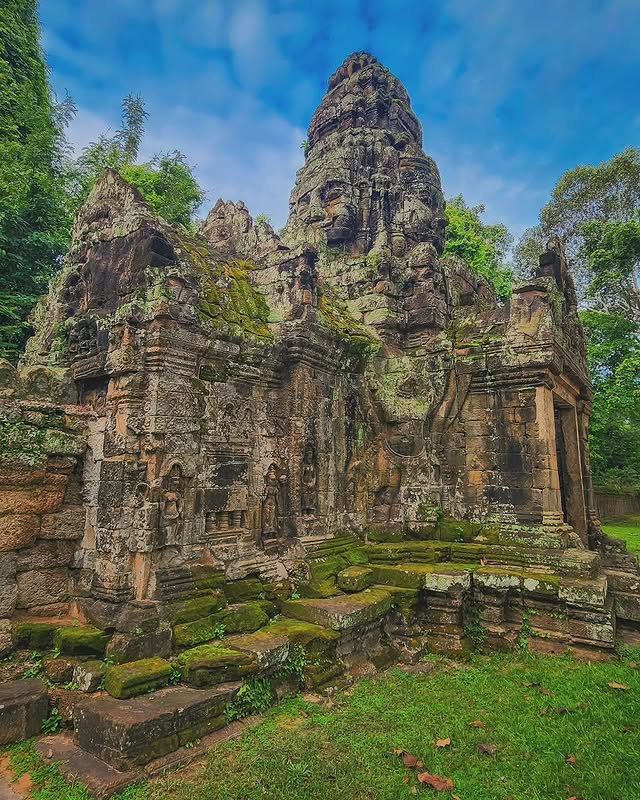
The archaeological park of Angkor Wat is truly massive, with thousands of temples spanning over 400 acres. It is Cambodia’s biggest attraction! The park can be explored on foot; however, given Cambodia’s heat, it’s best to stick with bicycles, cars, and tuk-tuks.
One day is definitely not enough to explore the temple land. That’s why the Cambodian government sells tickets for multiple days, as a ‘Temple Pass’.
Note: The tickets can be purchased offline at the entrance of the temple or online at Angkor Enterprise, a government-run portal. Tickets bought on any other website will not be accepted.
- Timings: 5:00 am to 5:30 pm
- Cost: 1 Day – ₹3258 ,3 Days- ₹5460,7 Days- ₹6341 (Free for kids below the age of 12)
Bayon Temple (Temple of Faces)
Located in the archaeological park of Angkor Wat, this ancient temple was originally named Banyan Temple by French colonists; over time, locals adapted it to Bayon.
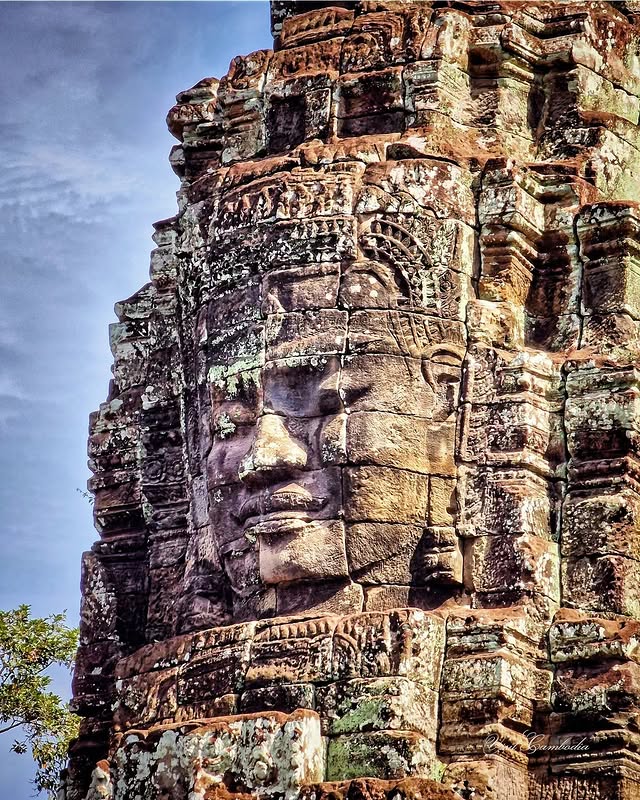
Featuring 54 towers, each with multiple face carvings, totalling 216 faces. The faces look small from the ground level, but they are pretty huge when you stand next to them.
Experts are not entirely certain what the Bayon faces depict, as they appear to be a blend of divine figures.
According to UNESCO, ‘These monumental faces have been interpreted over time as representations of Brahma, Shiva, Buddha, or the Bodhisattva Lokesvara, to whom the temple is partly dedicated. Some scholars also consider them to be portraits of King Jayavarman VII himself, overseeing his creation through the ages’.
Bayon has a compact, multi-levelled structure with three main tiers symbolising Mt Meru, the mythical centre of the universe in Hindu and Buddhist cosmology.
People today describe the faces as ‘trippy’ due to their eerie smiles, but as we now know, they are gods.
- Timings: 7:30 am to 5:30 pm
- Cost: Entry with the Angkor temple pass
Ta Prohm (Tomb Raider Temple)
Ta Prohm is another temple in the Angkor park, made worldwide famous for its appearance in Angelina Jolie’s 2001 movie, ‘Lara Croft: Tomb Raider’. Making it into the ‘places to visit in Cambodia’ list!
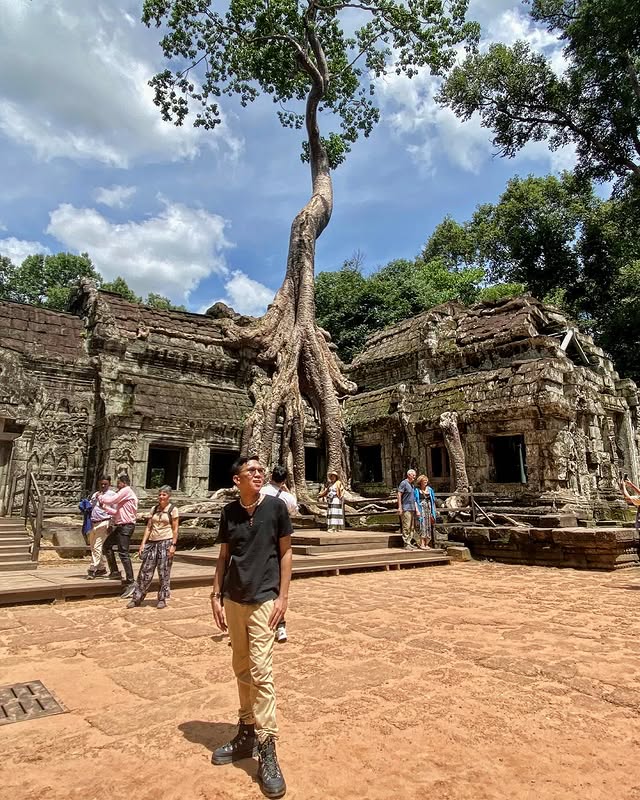
Built in the 12th century as a grand monastery and a university for monks. However, after the fall of the Khmer Empire, this temple was abandoned, and trees began to take over. Today, it is a temple with a forest growing within it.
It appears that the forest is slowly swallowing the temple, and it feels like you are in a lost world. The enormous roots of the trees and moss covering those ancient stones will give you chills. The reason it was left in its original state is to show visitors the discovery experience of early explorers in the 19th century.
- Timings: 7:30 am to 5:30 pm
- Cost: Entry with the Angkor temple pass
Banteay Srei (Lady temple)
Located 30 km from Angkor Wat is the charming temple of Banteay Srei. This temple is one of the earliest masterpieces to be built during the Khmer Empire, dating back to the 10th century. Making Banteay Srei much older than Angkor Wat itself!
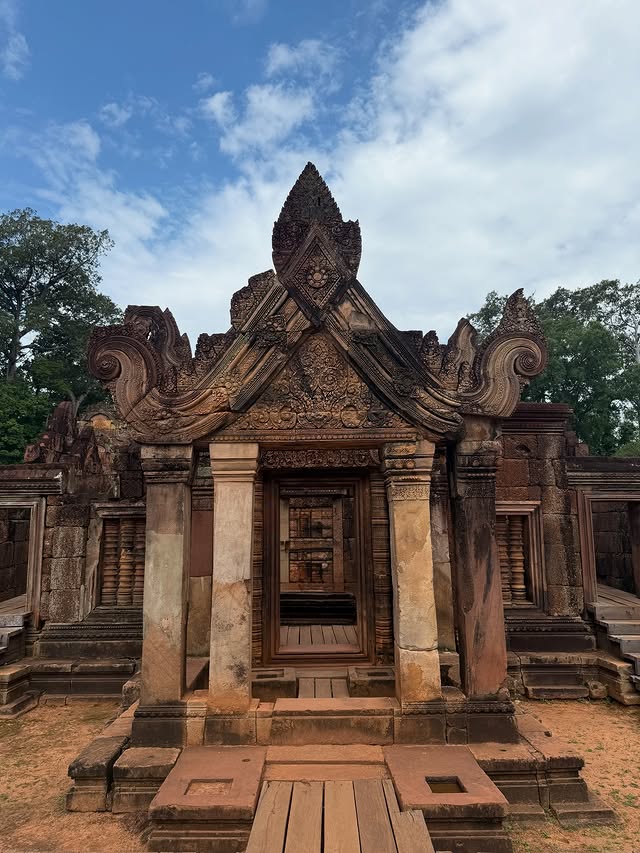
The temple is built not by a king but by a scholar and courtier named Yajnavaraha, a Brahmin counsellor to King Rajendravarman II, and that’s why it’s on a smaller scale. However, the significance of this temple is not reflected in its scale but rather in its stunning craftsmanship.
Originally dedicated to the Hindu god Shiva, the temple symbolized spiritual devotion through both its religious imagery and artistic detail. The intricate bas-reliefs and carvings are among the finest of Khmer art, featuring three-dimensional floral motifs and mythological scenes (especially from the Ramayana)
The carvings are incredibly detailed and small; it looks as if only the hands of a woman could handle such delicate carvings.
And also, the temple is filled with statues of woman deities, which also leads to the name being called ‘Citadel of Women’, ‘Lady Temple’, and ‘Pink Temple’. However, the ‘pink’ comes from the pink sandstone used to build this temple.
- Timings: 5:00 am to 5:30 pm
- Cost: Entry with the Angkor temple pass
Angkor National Museum
A well-laid-out, air-conditioned museum that tells the story of the Khmer civilisation, their architecture, religion, and even their traditional clothing. It features statues of Hindu gods, cultural tapestries from other Asian countries, and a remarkable representation of the Buddha.
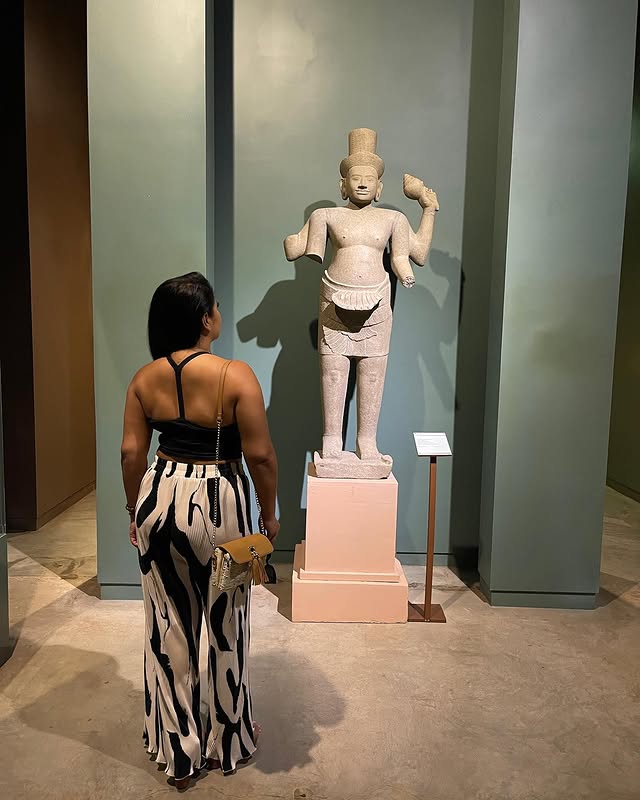
The ‘1000 Buddha gallery’ is the most famous room in the entire museum. It features depictions of the Buddha statues in various poses, and the museum provides explanations for the meaning behind each one. All of these statues were sourced from all across Asia and even Africa.
Note: Visit this place before visiting any other temples in Angkor Wat to understand the history better!
- Timings: 8:30 am to 6:00 pm
- Cost: Adult- ₹1054 + ₹439 (Optional audio book), Child (6-11 years) – ₹527 + ₹439
Party at the Pub Street
Like party areas in any famous tourist destination, Pub Street is a street lined with pubs, restaurants, and bars. This nightlife hub in Siem Reap was once a residential area but now provides employment to hundreds of Cambodians and entertains its visitors.
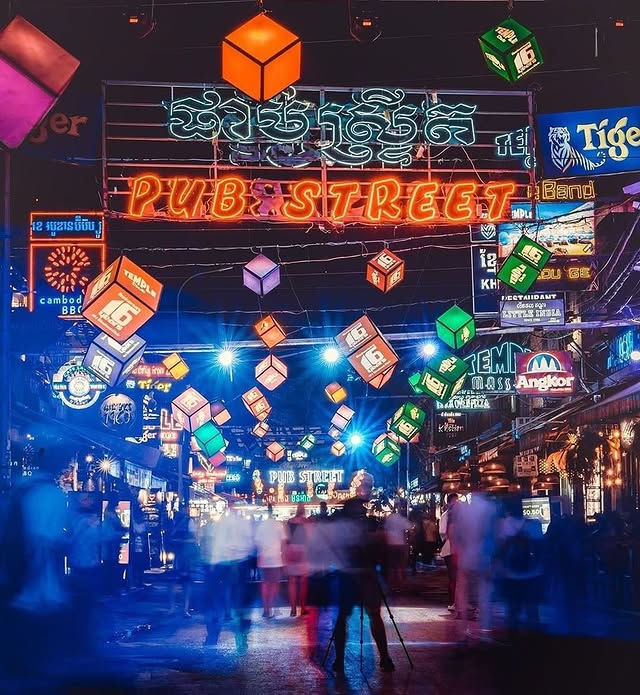
It’s technically no longer just a street but an area, and it’s officially known as ‘Street 8’. As the sun goes down, the place becomes active and lively. Apart from pubs, the street also has street food and souvenir shops.
Walk around the area and choose a bar that matches your vibe. However, if you are looking for recommendations, ‘Bar 43’ and ‘Asana Old Wooden House’ have the best cocktails!
Tip: Make sure to try out the Angkor beer, a Cambodian lager!
Ride on the Bamboo Train
Bamboo trains of Battambang are a popular activity for visitors, part of everybody’s ‘things to do in Cambodia’ bucket list. Super beloved that even travellers are drawn, even those travellers who typically avoid crowded attractions.
It is locally known as the “Norry” or “Nori”. To understand its popularity, we need to understand its history first.
During the Khmer Rouge era, the whole nation’s infrastructure was destroyed, leaving people with no means of transport. So, the locals had to improvise and build these carts with a bamboo platform to sit on, and they were attached to a motor.
After the rogue, people began using motors from other vehicles to create simple yet functional bamboo vehicles for transporting goods from one village to another. The train runs at a speed of 40-50 kmph.
Also, there are two variants. The ‘old train’ and the ‘new train’. Old trains are the original ones built by the locals, while the new one is operated by a private company with a more modernised approach (like leather seats on the train cart).
The ride usually lasts about 20 minutes each way on a 7 km route, with fares generally around $5 per person. Visitors enjoy the open-air feeling as they pass through rural villages, rice paddies, and scenic landscapes.
Note: Some locals convince you that the ‘old train’ is no longer operational. However, that is a scam to push the pricier ‘new train’.
- Timings: 9:00 AM – 5:00 PM
- Cost: ₹438 for 30 minutes.
The Killing Caves of Phnom Sampeau
Approximately 15 kilometres from Battambang, the Phnom Sampeau caves are situated on a small hill with a dark past associated with the Khmer Rouge era.
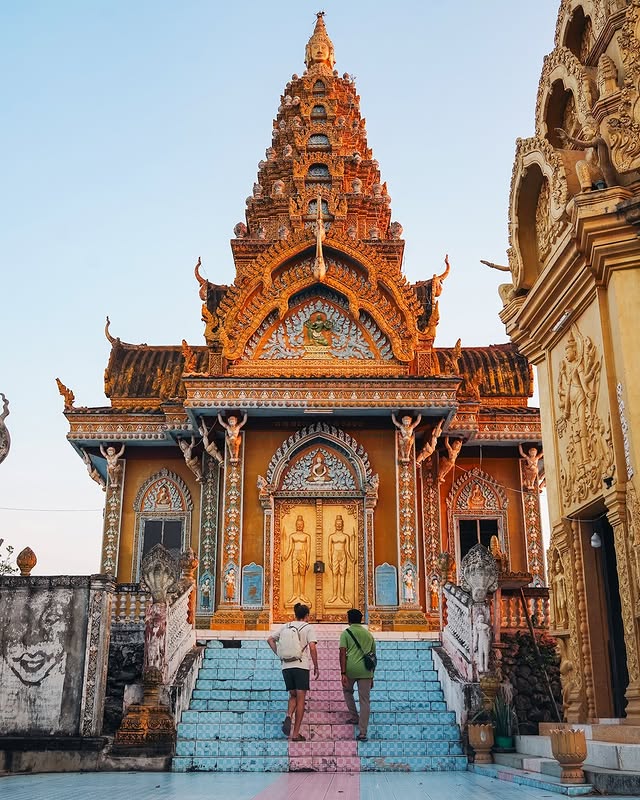
People were executed on top of the hill, and their bodies were dumped into those caves. The skulls are stored in glass boxes as a brutal remembrance of Pol Pot’s regime.
At the caves, visitors find a golden reclining Buddha statue symbolising peace amid the tragedy, located beside the glass-walled memorial, which houses skulls and bones of the executed victims.
Khmer rogue on one side, but tourists also visit these caves to witness the wrinkle-lipped free-tailed bats. From the bat view spot, you can see millions of bats flying out of the caves at dusk to hunt. There are so many of them, it literally takes a good 30 minutes for all of them to fly out!
This viewpoint features several street shops that sell cold drinks, snacks, and beer. Grab a seat, sip on some beer, and witness the bats!
Bonus: A family in the Phnom Sampeau region takes care of the caves. They apparently visit the interiors of the caves at night to clean and use the faeces of the bats as a fertiliser!
- Timings: 7:00 AM – 5:00 PM
- Cost: ₹264
Top Places to Visit in Northeast Cambodia
Northeast Cambodia is a region characterised by a unique blend of geographical features and cultural diversity. From elephants to dolphins and waterfalls to forests, it forms part of Cambodia, which is worth visiting. The part then gradually merges into the eastern highlands that extend into neighbouring Laos and Vietnam.
Kayak with Dolphins
Kratie (also known as Kracheh) is one of the laid-back towns located along the Mekong River in Cambodia. Tourists often skip the east side of Cambodia, as it lies far off the beaten path. Sure, it takes some extra effort to reach there, but once you reach the chill river town, you’ll have enough space to take it all in.
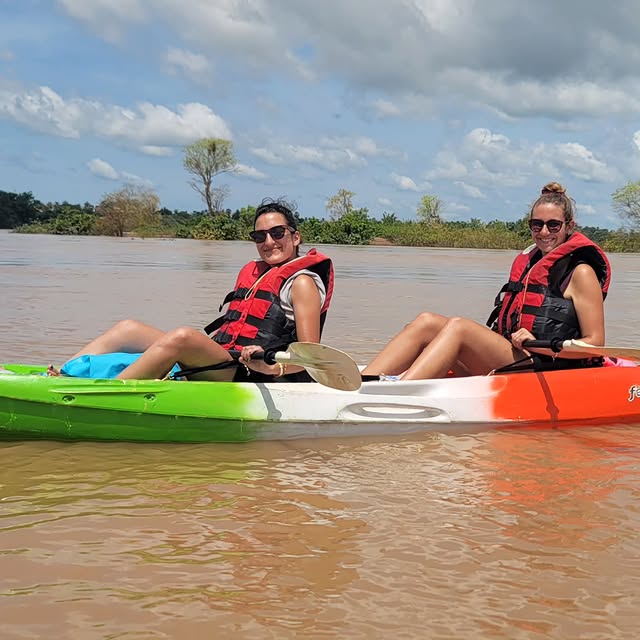
The highlight of the town is that this section of the Mekong River is home to pods of Irrawaddy dolphins. Those playful creatures can be spotted from a boat or, by popular means, from a kayak. Almost everyone who gets on these boats and kayaks has witnessed dolphins. Visitors even report seeing about a dozen dolphins within just an hour.
The river is quite broad. Even an island spanning 10 km in length and 3 km in width is located at the river’s centre. The River Island is interesting, as its size varies depending on the water level in the river.
The island is mainly famous for its paddy fields, and yes, you can also find homestays with home-cooked meals. Those meals will typically include bamboo sticky rice, egg, pork, and pickled vegetables.
Bicycle rentals are available on the island. Imagine yourself cycling next to those paddy fields in the rural part of Cambodia! Definitely worthy to add to your travel stories!
Bousra Waterfalls
Located in the Mondulkiri province, this three-tiered waterfall is Cambodia’s absolute favourite! You need to walk through the woods to reach the waterfall; despite that, it is well commercialised.
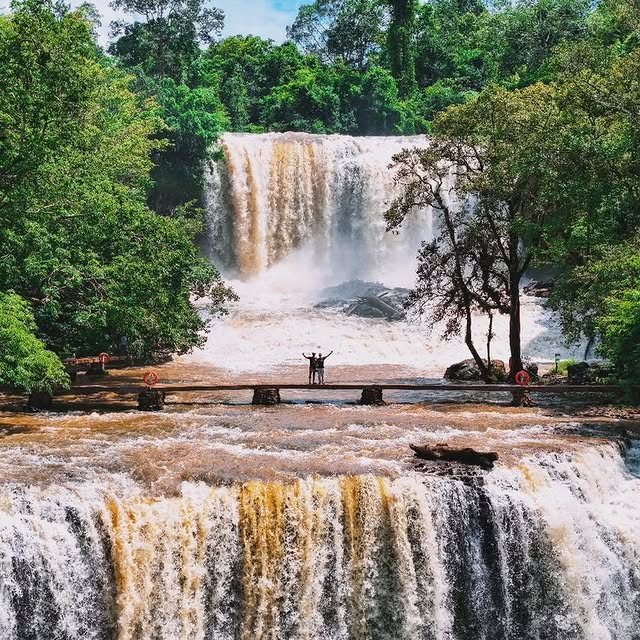
Huts by the water make it possible to take a plunge, swim while eating, or sip cold beer! The waterfall itself is pretty clean and broad, accommodating a decent number of people.
Another exciting part of the waterfall is that there are wooden stairs behind those cafe huts, which will lead to the top of the waterfall.
Additionally, if you’re feeling tipsy enough, you can try on the traditional Khmer outfit and take pictures pretending to be the king or queen!
Surrounding Bousra is dense tropical forest rich in birdlife and other wildlife, adding to the area’s natural charm and appeal for hiking and nature walks. Visitors can hike around the waterfall and explore scenic trekking routes nearby that range up to 25 km in length.
- Timings: 7:00 am to 5:00 pm
- Cost: ₹219
A Day with the Elephants
Tucked away in the eastern side of Cambodia, Mondulkiri is known for its dense forests, waterfalls, farms, and, especially, its elephants.
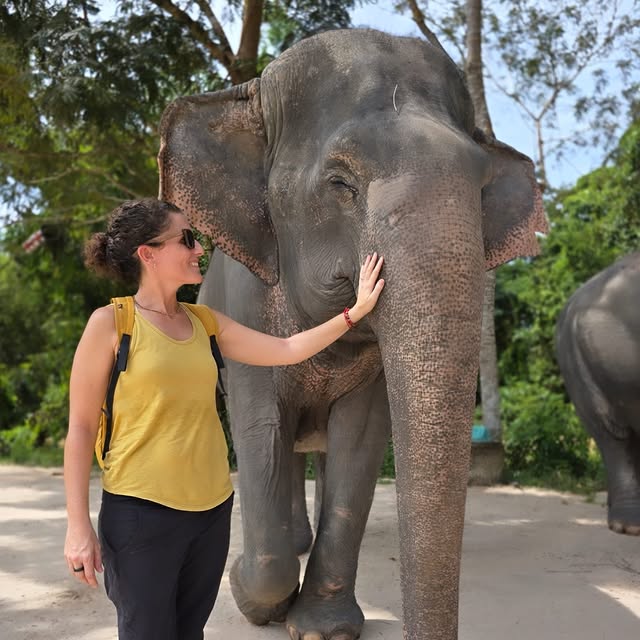
Mondulkiri is home to around 350 wild elephants and 41 domesticated elephants. The domesticated elephants also include those rescued from logging, farming, or even circuses. Today, they live freely in ethical sanctuaries, safe spaces where elephants are never chained, forced to work, or made to perform.
Ethical sanctuaries allow the animals to roam freely in a large forest area. Visitors can feed and bathe the elephants at some of the organisations, but none of these NGOs will let you ride the elephants. However, it’s definitely a must-visit, as you can get real close to those friendly mammals.
Additionally, all the money from visitors goes towards the well-being of the elephants and the local community that takes care of them.
Sanctuary recommendations
Note: Each sanctuary has its own entry fees, activities, and visiting hours, so it’s best to check their official websites for details before planning your trip.
Best Places to Visit in Central Cambodia
Central Cambodia is the heart of the nation, blending history, culture, and modern life. It is home to Cambodia’s capital, Phnom Penh, surrounded by fertile plains, ancient temples, and rivers that have shaped Cambodia’s story for centuries.
Royal Palace and Silver Pagoda
How can one visit Phnom Penh and miss the most legendary spot in the city? The official residence of the King of Cambodia, the Royal Palace, was built in the 19th century by King Norodom I, and it’s one of the most renowned places in the city.
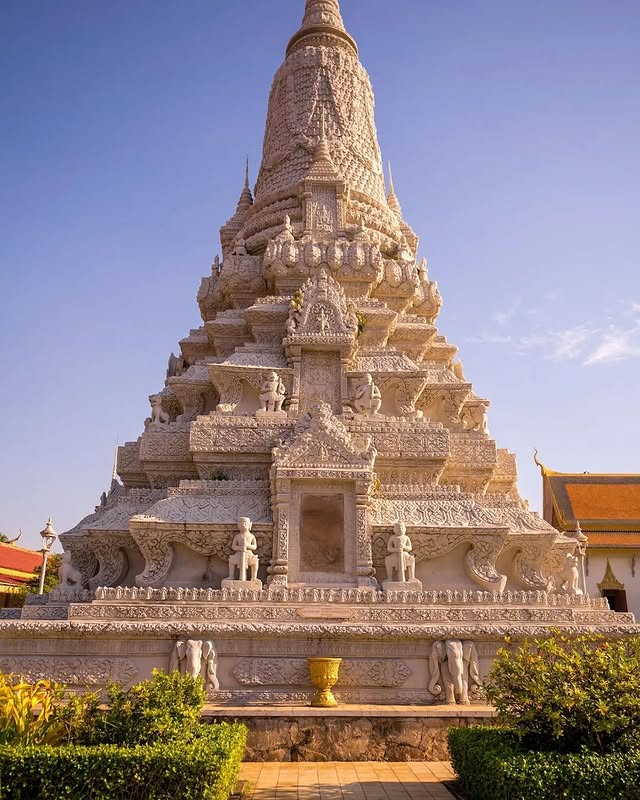
From well-built Khmer architecture with a subtle touch of French colonial design, this structure is something unusual but a shining symbol of Khmer royalty.
Once inside, you will find a series of other buildings, including the Throne Hall, which is used for royal ceremonies and coronations.
Exploring deeper into the palace grounds, you’ll find the infamous Silver Pagoda, named for its floor completely paved with 5000 silver tiles. Inside, you can spot a rare emerald Buddha statue and a life-size golden Buddha statue embedded with multiple diamonds.
Note: If you are lucky, you might be able to witness a local gathering, singing traditional and spiritual songs.
- Timings: 8:00 am to 5:00 pm
- Cost: ₹881
Tuol Sleng Genocide Museum and Choeung Ek Killing Fields
The Tuol Sleng Genocide Museum (ex-detention centre) tells the story of the heartbreaking history of the brutal Khmer Rouge regime.
- The building showcases the original prison buildings and cells, including preserved torture rooms and interrogation chambers. Thousands of black-and-white photographs of prisoners who passed through S-21.
- Personal belongings and artefacts recovered from detainees.
- Paintings by survivor Vann Nath depicting the horrors of imprisonment.
Pol Pot ruled Cambodia from 1975 to 1979 under the idea of communism. In his just four years of dictatorship, he demanded that people work on agricultural farms. This resulted in millions of agricultural labourers and enemies dead, either by execution, overwork, or starvation.
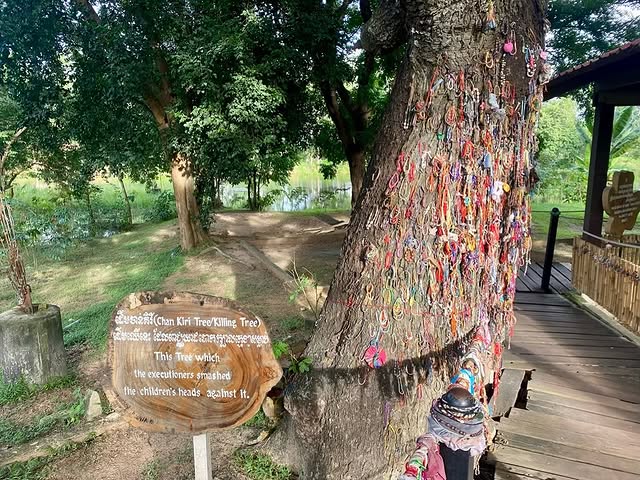
All the people who were arrested for disobeying the orders, including those who were educated, were sent to the Tuol Sleng prison. After the government ran out of prison cells, these people were taken to the Choeung Ek Killing Fields for mass execution.
Today, we can see a large stupa and a pit with hundreds of skulls and bones of the poor victims. The killing field is just about a 20-minute drive from the museum. Often ignored, but trust me, it is one of the most important places to visit in Phnom Penh.
- Timings: 8:00 AM – 5:00 PM
- Cost: Entry with an audio guide – ₹440 (Audio guide highly recommended),Just entry – ₹264
Wat Phnom Temple
Wat Phnom is not only the oldest but also the tallest religious structure, standing at about 88.5 ft high in Phnom Penh!
According to local legends, the temple was founded by an elderly woman who discovered four Buddha statues that had been washed up by a flood onto her property. She placed those shrines on a hill, which is known as ‘Phnom’ in Khmer. And that was the beginning of the beautiful city of Phnom Penh.
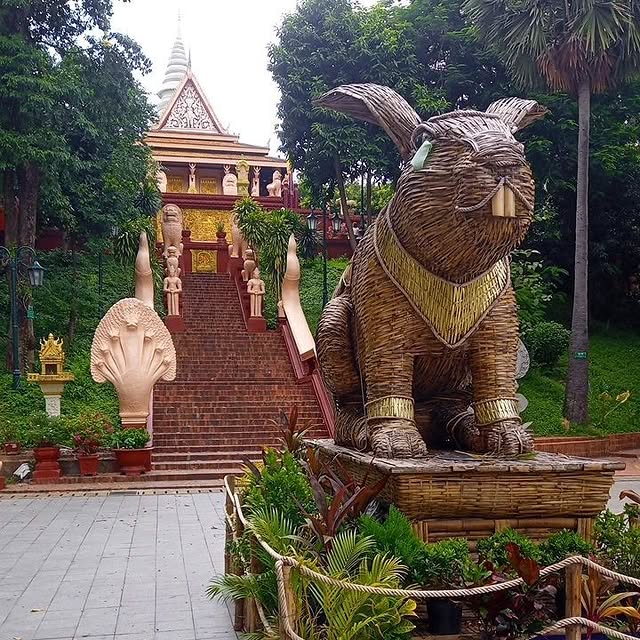
The stupa at Wat Phnom also enshrines relics thought to include Buddha’s hair, making the site a revered pilgrimage destination.
Walls inside the temple are covered with murals depicting Jataka tales (stories of the Buddha’s previous lives) and scenes from the Reamker, the Khmer version of the Ramayana epic.
Fun fact: The locals in the city believe that Wat Phnom will curse you with a breakup if you visit the temple with your lover. So, you know what to do.
- Timings: 7:00 AM – 7:00 PM
- Cost: ₹87
Central Market
Want to shop and eat like a local? Then head to Phsar Thmey, better known as the central market. An indoor bustling market that you need to visit during your time in Phnom Penh. The market has several individual sellers offering clothes, jewellery, accessories, and even a haircut at one of the on-site salons.
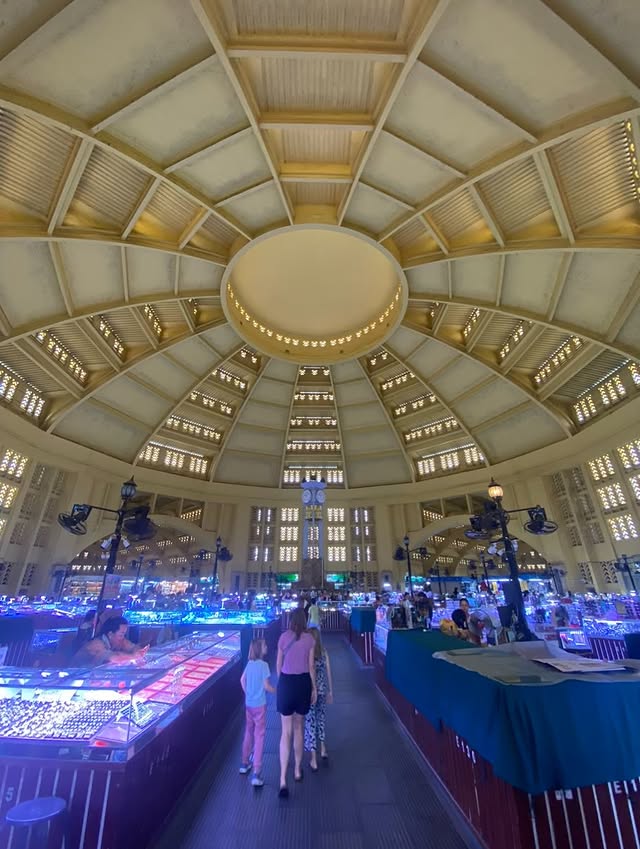
Tired after shopping? Now, you can head to the other side of the market that sells vegetables and fruits and has mazes of street food stalls selling authentic Khmer food.
And if you had scrolled Instagram or YouTube before heading to Cambodia, you might’ve heard about durian, a smelly but tasty fruit. It is a must-try fruit in Cambodia and other Southeast Asian countries.
Note: Make sure to put on the plastic gloves so that the smell of fruit doesn’t stick to you by mistake. Its acquired smell can be very different to people who are not used to it.
Riverside Promenade
Starting from the Royal Palace, this walkable stretch, located right next to the Tonle Sap River, is a 3 km-long sidewalk lined with rows of palm trees, open areas, and more.
Roamed for a long time? Need rest? No worries, you’ll come across plenty of seating places to watch the boats pass by. If that’s not enough, the rows of cafes and restaurants just across the street will help you with your rumbling stomach.
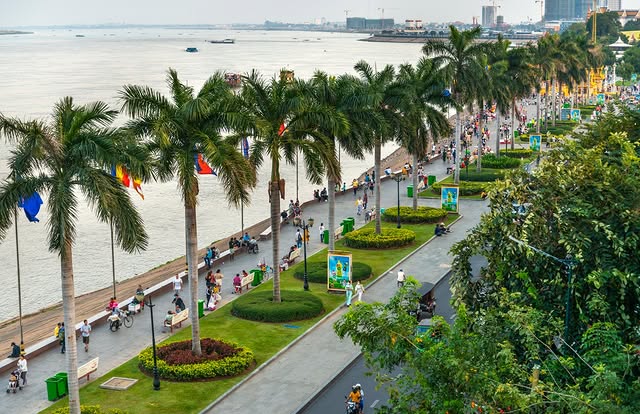
Evenings are the perfect time to see the city’s kids, elderly, and fitness freaks come alive at this place. You can see them playing, jogging, or just chatting during sunset. The promenade is commonly referred to as Sisowath Quay. Near the promenade, visitors can witness the confluence of 3 rivers: the Mekong, Tonle Sap, and Bassac, a natural and symbolic focal point of Phnom Penh.
Bassac Lane
Cheap beers, affordable food, and a nightlife? If that sounds like a plan after a long day, then Bassac Lane is your spot. The cosy alleyways, quirky bars, and fun karaoke bars, along with good food, cocktails, and fun.
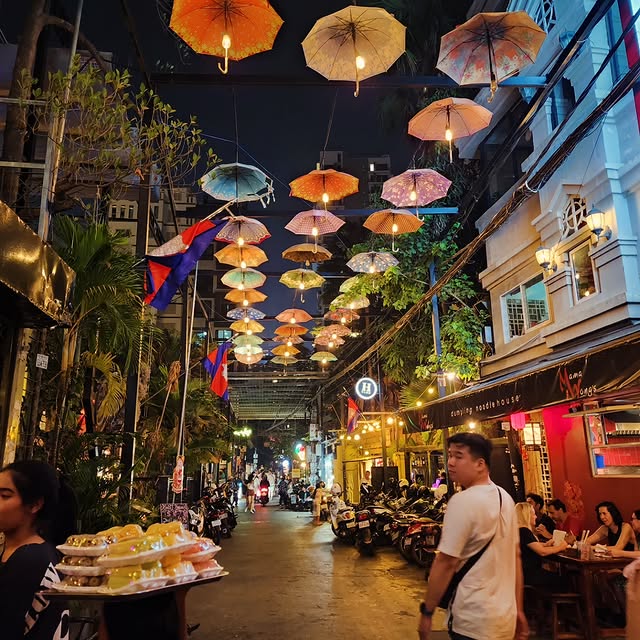
Recommendations include Sora, Groovy Room, and Battbong History (the pub’s door is a Coke machine).
Note: Park your vehicle at the end of the street, remember to get a ticket, and start strolling on those neon lanes.
Floating Villages of Kampong Chhnang
Kampong Chhnang is a town on the banks of the Tonle Sap River. The whole province is known as the ‘Pottery Capital of Cambodia’.
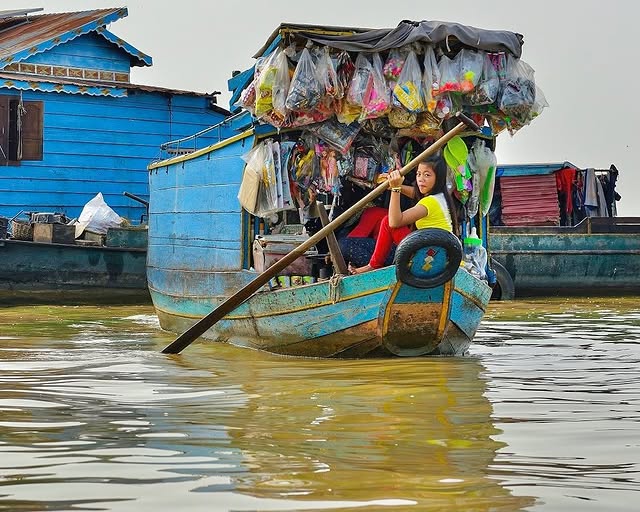
The province has a long tradition of clay craftsmanship, with families who have been making pottery for generations. Unlike the wheel pottery you see elsewhere, villagers here still use traditional hand-building techniques that have been passed down for centuries.
The town, in particular, has a spot on the river which is home to hundreds of Vietnamese fishermen. They live in clusters of houses that are lashed together and anchored on the river. As you pass through the village, you can see how the locals go on with their lives on those floating docks.
To reach this unique village, hire a tuk-tuk from downtown Kampong Chhnang and go to the riverside. Then, you’ll find tourist boats that will take you to the floating village. Beware of inflated boat prices; bargaining is essential.
Tip: Around 2000 INR is a fair price for 2 people for a 2-hour boat ride to the floating village.
Must-visit Attractions in Southwest Cambodia
Southwestern Cambodia is a region characterised by diverse landscapes, including rugged mountain ranges, dense tropical forests, and a narrow coastal strip along the Gulf of Thailand.
Cardamom Mountains
Cambodia has rainforests, and the Cardamom Mountains are the ones! Located in the south of Cambodia, stretching all the way to Eastern Thailand! These mountains are named after the abundant growth of cardamom in the region. Their elevation reaches up to 5,900 ft!
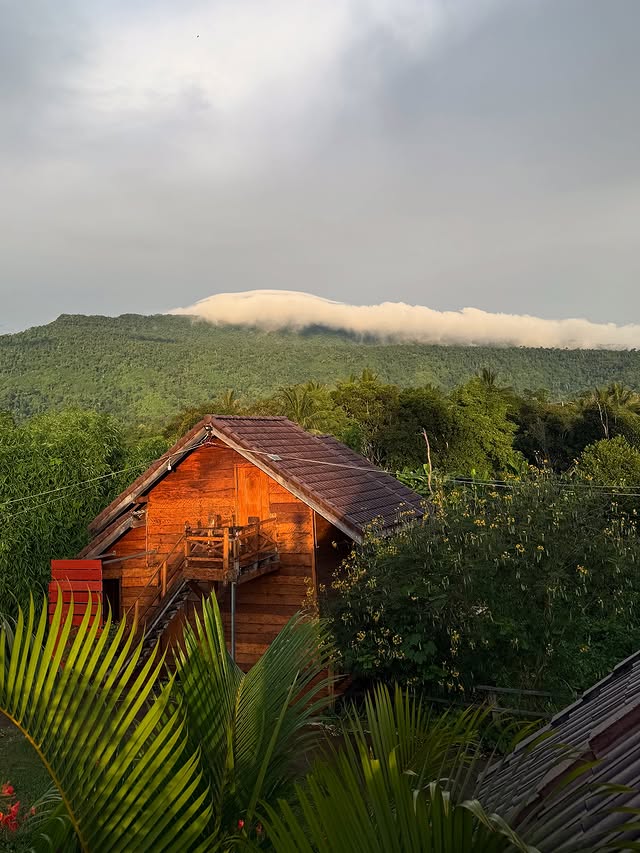
A trip here guarantees an adventurous jungle getaway! The region is home to remote villages and vast national parks like Chi Phat and Botum Sakor, where you can set off on guided hikes through thick forests. You will be guided by locals who know the forest inside and out.
Along the way, you’ll stumble upon natural wonders such as the Tatai Waterfall, perfect for a refreshing plunge before continuing your trek.
However, if you are going on a trip to unwind, then stay at an eco-lodge overlooking the mountains. It is one of the cool places to visit in Cambodia, for both the weather and vibe!
Islands of Koh Rong / Koh Rong Sanloem
Koh Rong and Koh Rong Sanloem are the islands situated in the Gulf of Thailand. They are both popular tourist destinations in Cambodia.
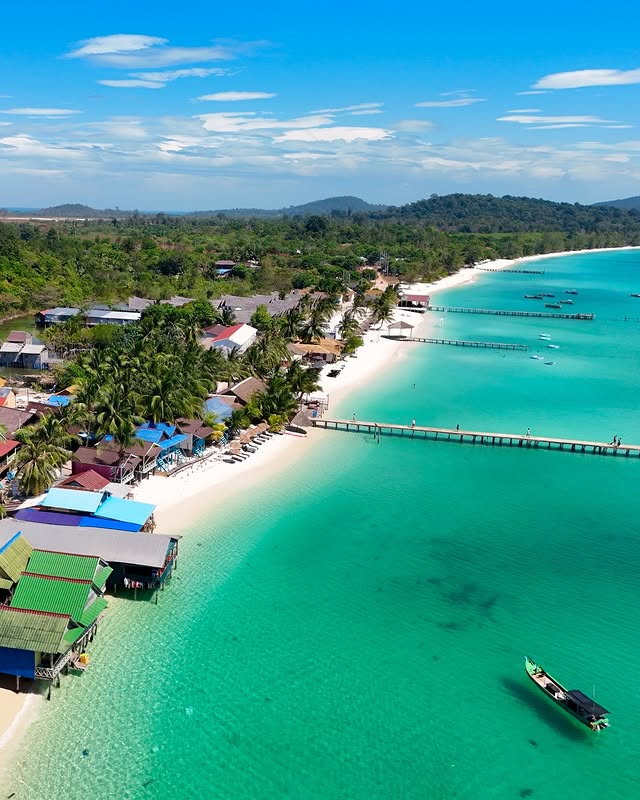
The islands have beaches like those in the Caribbean, with stretchy white sands, shallow waters, all-night clubs, and a laid-back atmosphere. After days in mainland Cambodia, exploring back-to-back temples, a getaway to a tropical paradise would be appreciated.
The only way to reach these islands is by water. Multiple ferries start from Sihanoukville and take about 45 minutes to reach Koh Rong. From there, it’s another 45 minutes to 1 hour to reach Koh Sanloem.
Conclusion
From ancient temples that feel like a lost world to beaches rivalling popular islands and even Cambodia’s own mini rainforest, this country truly has it all!
This blog focuses on the best places to visit in Cambodia, but as a traveller, you’ll also want to know about essentials like visas, the best time to visit, and more.
And when you’re ready to plan your trip, just reach out to Dimaak Tours, and we’ll craft the perfect itinerary for you!
FAQs Places to Visit in cambodia
1. Which is the most popular tourist destination in Cambodia?
Hands down, the Angkor archaeological park is the most popular tourist destination in Cambodia, attracting millions of tourists a year. The main Angkor temple and the temples surrounding it are quite famous.
2. How to get from Phnom Penh to Siem Reap?
The three ways are to either fly, take a bus or hire a taxi.
A non-stop flight might take an hour with a charge of approximately 8000 INR by AirCambodia.
Travel by bus can be done by booking tickets in local companies like Vetairbus, Camboticket, and 12Go. The trip will take about 6 hours, and the cost will be around 800-2000 INR.
If you prefer taxis, the cost varies widely. Prices depend on the type of vehicle, whether it’s a private or shared ride, and, of course, your bargaining skills with local drivers.
