

Key Takeaways:
|
Just southeast of Bali lies Nusa Penida, the largest and most rugged of the three Nusa Islands. With towering limestone cliffs, secluded beaches, turquoise waters and untouched nature, Nusa Penida has earned its place among Indonesia’s best islands and has become increasingly popular with travellers from around the world in recent years.
While many travellers visit on a day trip from Bali, Nusa Penida has far more in store than can be seen in a few hours. By spending 2-3 days, you can get around the famous spots as well as the remote regions.
This guide covers the best things to do in Nusa Penida, including what to expect, when to visit, and practical tips to help you make the most of your trip.
6 Best Things to Do in Nusa Penida
1. Visit Nusa Penida’s Best Beaches
The coastline is the main reason travellers visit Nusa Penida. Unlike many popular beaches in Bali, several of Nusa Penida’s beaches require steep hikes down rugged cliffside trails, making them feel more remote and untouched.
Kelingking Beach
Kelingking Beach is the most famous spot in Nusa Penida, which lies along the island’s southwestern coast.
The viewpoint overlooks a limestone cliff that resembles a Tyrannosaurus Rex and a narrow strip of the white-sand beach far below. Many come here solely for the view, but if you are physically prepared, you can hike down to the beach.
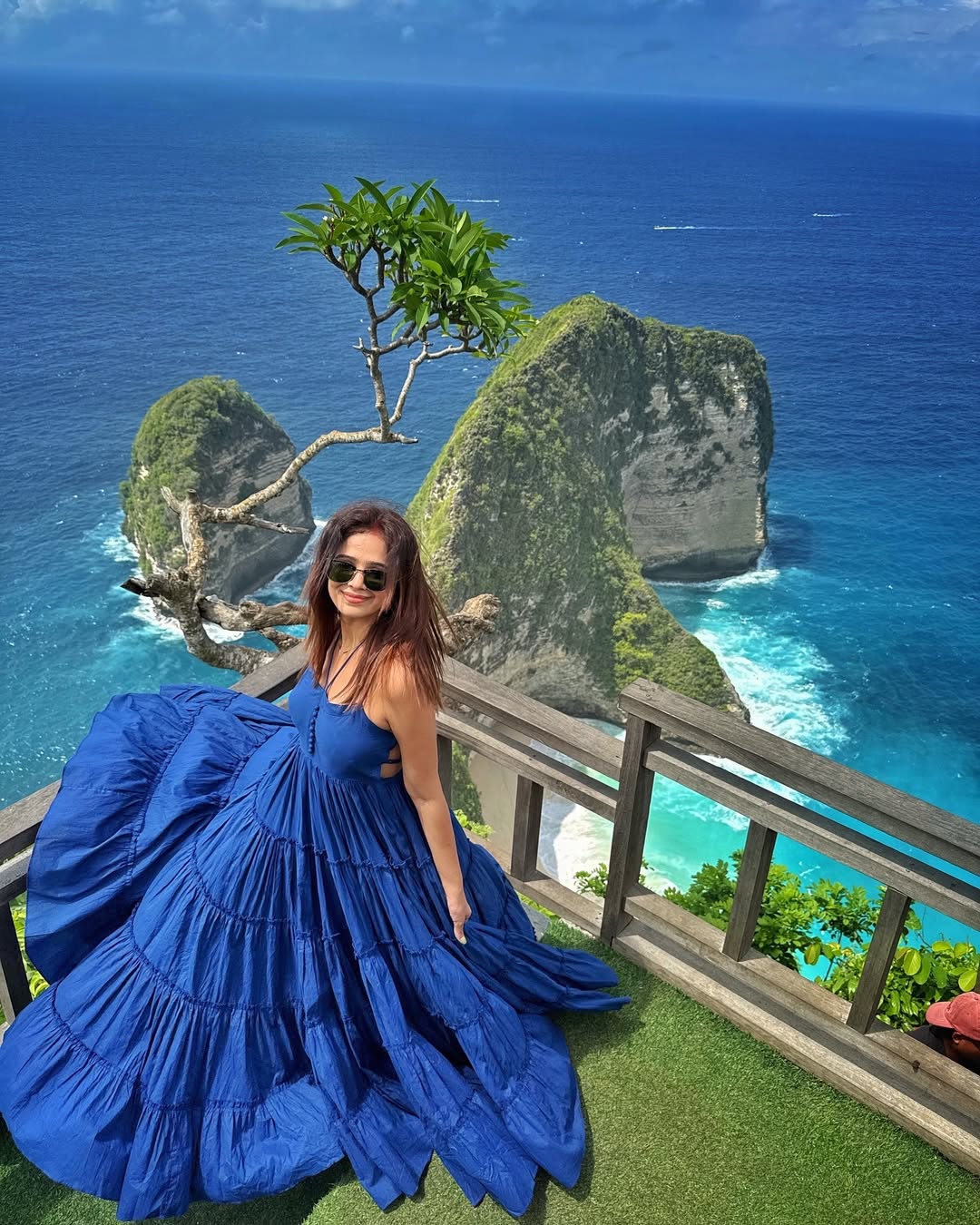
The trail follows the ridge of the cliff and includes uneven stairs, rope-assisted sections, and narrow pathways. The hike is steep and demanding, requiring extra caution, especially in wet conditions.
Visit early in the morning or late in the afternoon to have fewer crowds and softer lighting for photos. You can watch powerful waves crash against the shoreline, but swimming is not allowed for the same reason.
Diamond Beach
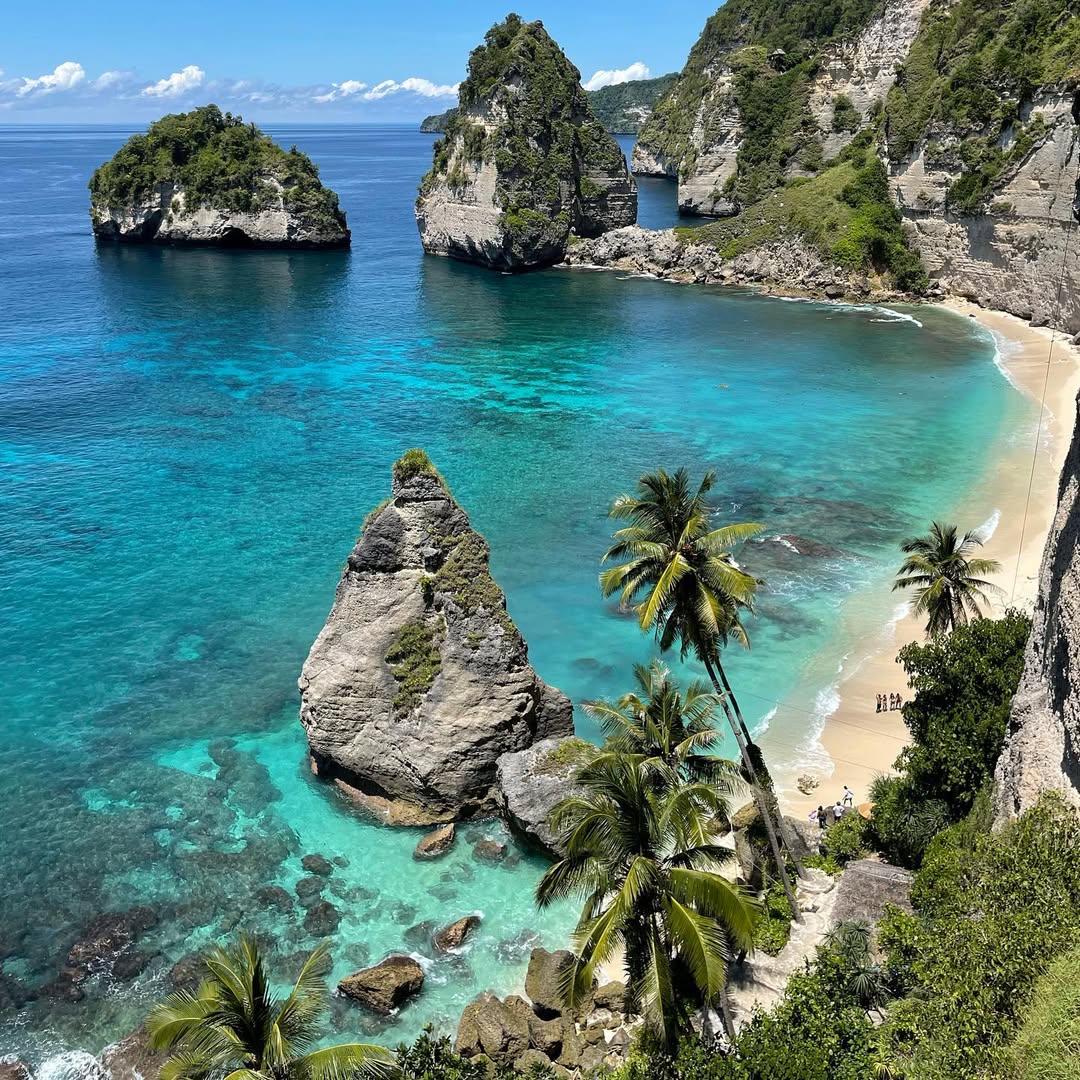
Diamond Beach lies on the eastern coast of the island, and its name comes from the limestone pinnacles rising from the ocean just offshore.
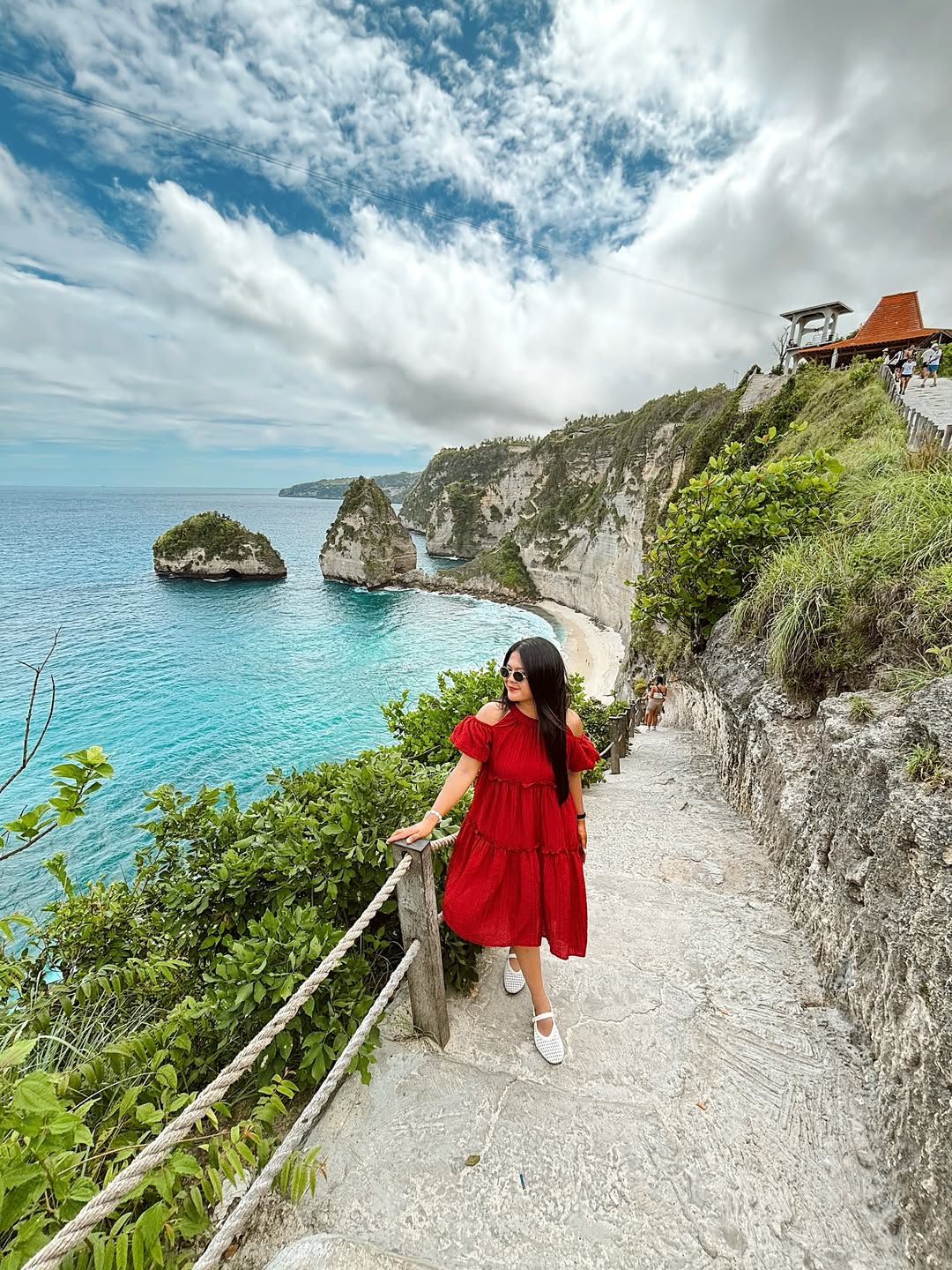
The carved staircase descends through the cliffs and leads to a beautiful stretch of white sand and clear blue water. The stairs themselves are famous for taking photos from and are generally easier to climb up and down.
Try to visit early in the morning to catch the sunrise and avoid the crowds. You can relax on the beach and enjoy the coastal scenery, but swimming is usually not allowed.
Atuh Beach
Atuh Beach sits on the eastern side of the island and shares the same cliffside parking lot with Diamond Beach.
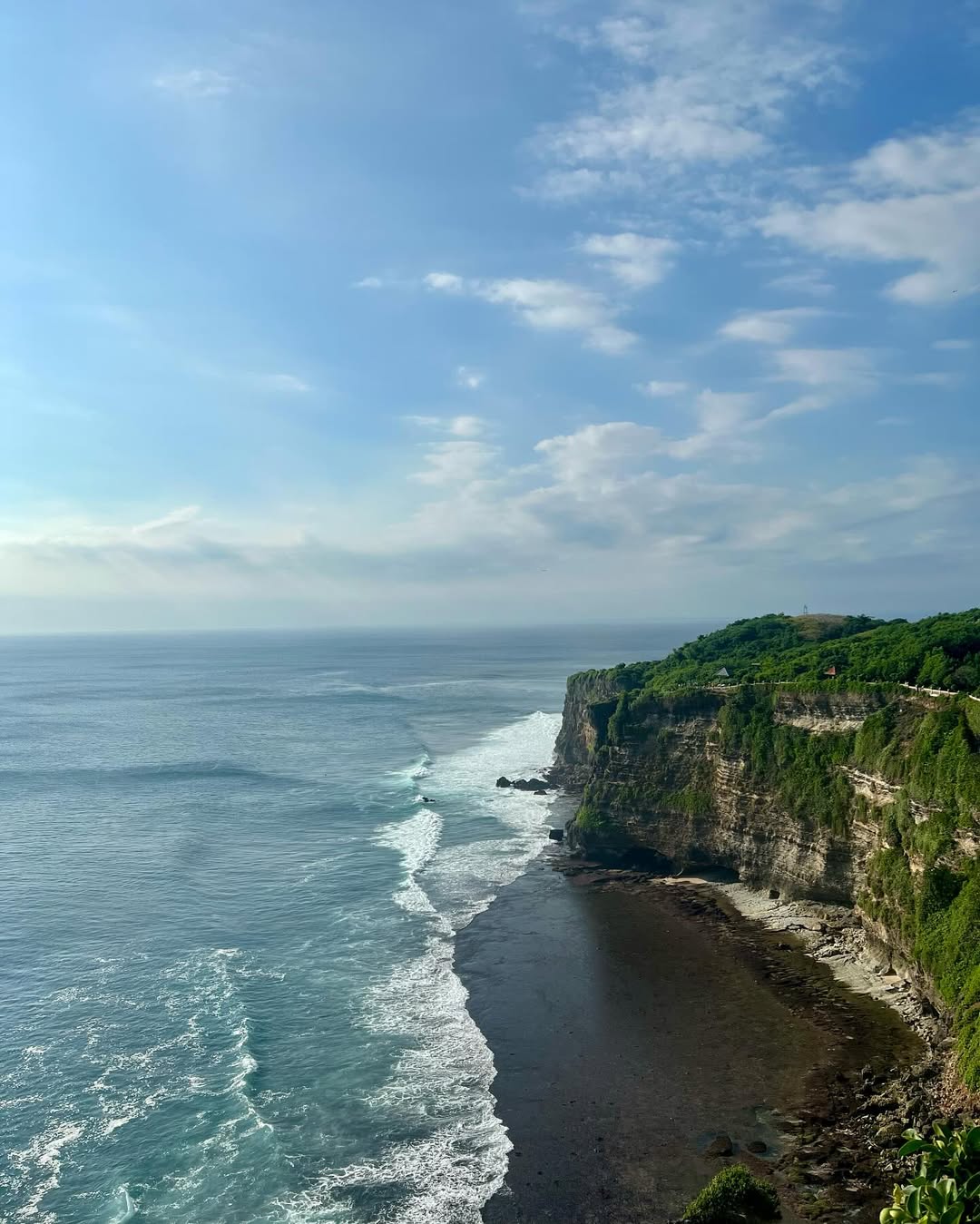
High cliffs and offshore rock formations surround the beach, creating a peaceful setting for swimming and sunbathing. The beach is suitable for swimming during low tides and calm weather conditions.
Broken Beach
Despite its name, it is not a traditional beach. Instead, it is a circular cove formed by a collapsed sea cave, which remains connected to the ocean through a massive stone arch.
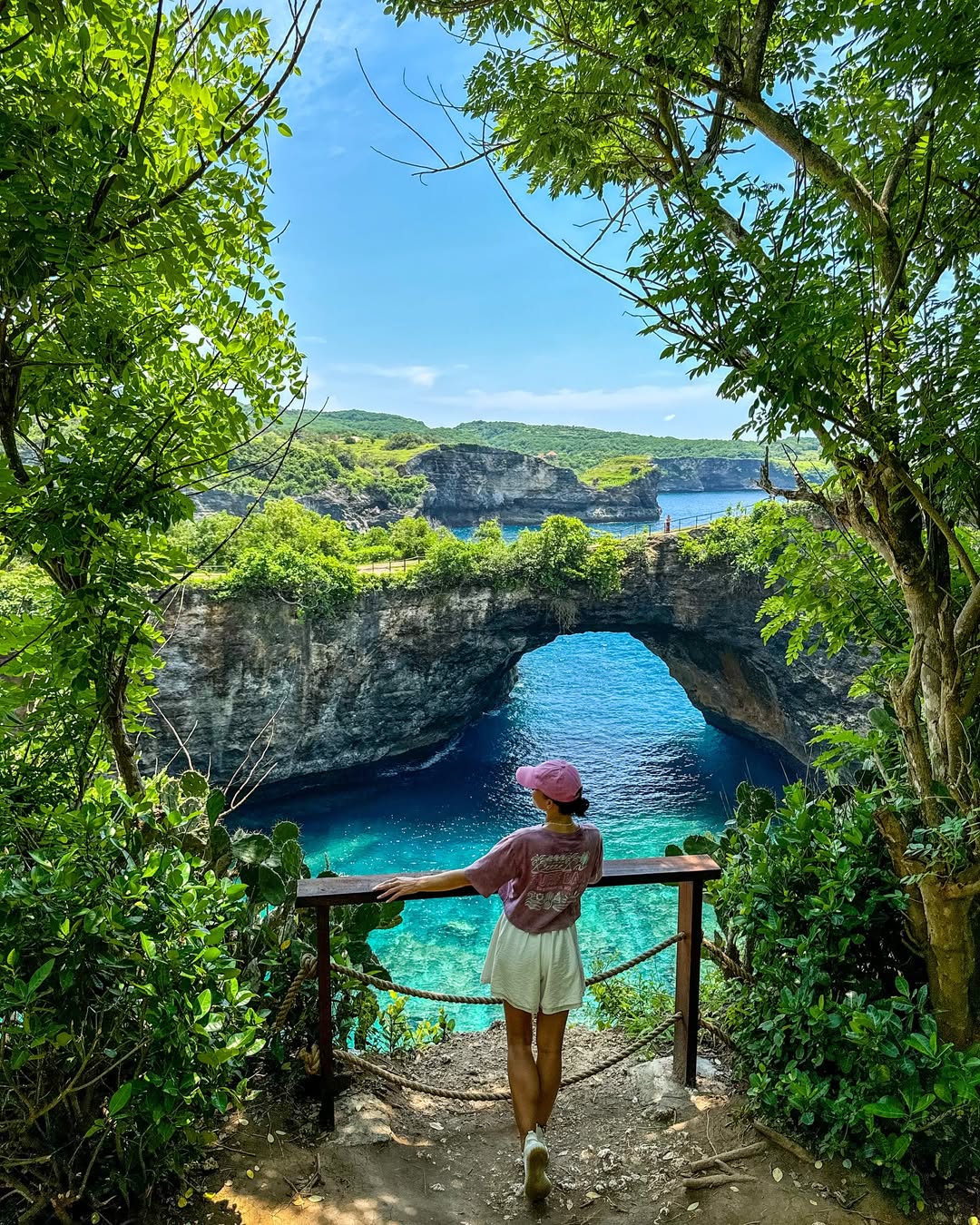
You can walk around the clifftop, watch the waves flow in and out, take photos and keep an eye out for manta rays as they occasionally glide into the cove.
Angel’s Billabong
Angel’s Billabong is a tidal pool formed by ocean erosion along the southwestern cliffs of Nusa Penida. The pool’s edge overlooks the open ocean, creating the illusion of an infinity pool.
The waves regularly wash over the edge, but during low tide the water clears, forming a calm, glassy pool revealing the textures and colours of the rock beneath. It’s a great spot for photography.
Note: Ocean conditions can change quickly. Powerful waves may sweep over the rocks without warning, especially during high tide or rough seas. Follow local safety advice and stay out of the pool when conditions are unsafe.
Pandan Beach
Located beyond Crystal Bay, Pandan Beach remains a quieter beach on the island. Reaching it requires a short hike over a hill from Crystal Bay, which helps keep visitor numbers relatively low.
You can relax at the beach away from the crowds, take photographs of the surrounding coastline, and swim in calm conditions.
Note: To reach Nusa Penida’s beaches, you’ll need to descend steep cliffside trails with uneven steps, limited handrails, and slippery sections. Wear steady footwear, avoid rushing, and allow enough time and energy for the climb back up, which is often more challenging than the descent.
2. Snorkel with Manta Rays and Tropical Marine Life
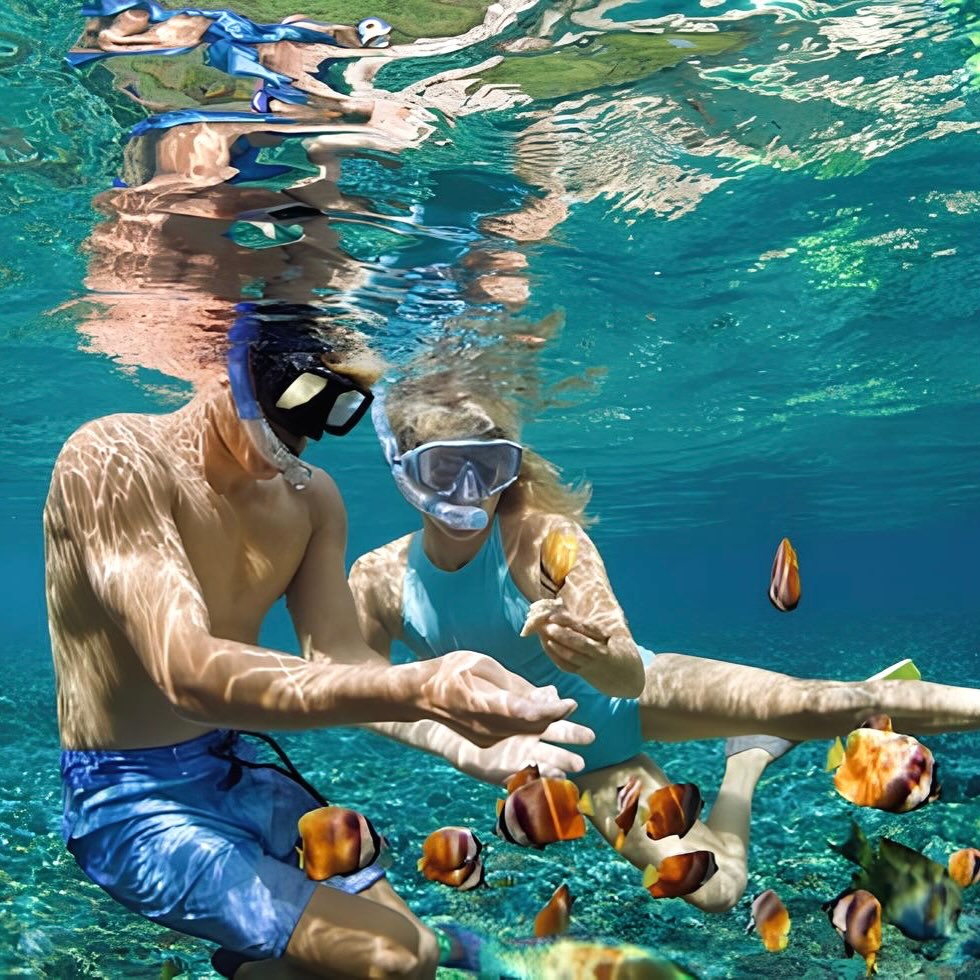
The waters surrounding Nusa Penida are part of a protected marine ecosystem and are considered among the best places to snorkel in Bali. The area has healthy coral reefs, clear waters, and diverse marine life, including manta rays, sea turtles, and reef fish.
Manta Point
Manta Point is the island’s most famous snorkelling spot and is popular for regular sightings of reef manta rays. Manta rays are gentle creatures which can grow to impressive sizes. You can spot them gliding gracefully through the water.
You can reach Manta Point only by boat. Because it lies in the open ocean, conditions can be more exposed, and currents are often stronger than at some other sites around Nusa Penida.
Gamat Bay
With coral gardens and great underwater visibility, Gamat Bay is a favourite among snorkelers and divers. You can see colourful coral reefs and tropical fish.
Crystal Bay
Crystal Bay is one of the most accessible beaches on the island. Its calm waters make it a popular spot for swimming, sunset viewing and snorkelling.
Crystal Bay has rich underwater ecosystems and colourful marine life. The bay is suitable for both beginners and experienced snorkelers and is the departure point of many snorkelling tours.
Toyapakeh Reef
Toyapakeh is one of the best reef systems around Nusa Penida. The area has healthy coral formations and an abundance of tropical fish. The reef is popular with both experienced snorkelers and divers.
Note: The best time for snorkelling is during the dry season, typically from April to October, when the water is usually clearer, and the sea is calmer. And choose morning tours for the smoothest conditions.
3. Swim in Natural Pools of Tembeling Beach
Lying along the southwest coast, Tembeling Beach is a unique inland experience in Nusa Penida. The area feels remote and largely untouched.
Reaching it involves a drive through a narrow, steep road followed by a short walk through the forest. The journey itself is part of the attraction.
Tembeling has two main areas: a natural freshwater pool surrounded by rock walls and forest, and a small, hidden beach facing the open ocean.
The combination of forest terrain and rugged coastline makes it a unique place to relax. You can swim in the natural pools, walk through the forest trails, and explore the secluded beach.
The road to the trailhead is rough and steep, so it is best to take a local scooter taxi unless you are a confident rider. It is this remote, challenging journey that keeps the crowds away, leaving you with a peaceful, secluded spot to swim and relax.
4. Experience Nusa Penida’s Best View Points
From cliff-edge lookouts to rolling green hills, Nusa Penida has unique landscapes to explore.
Thousand Islands Viewpoint and the Rumah Pohon Treehouse
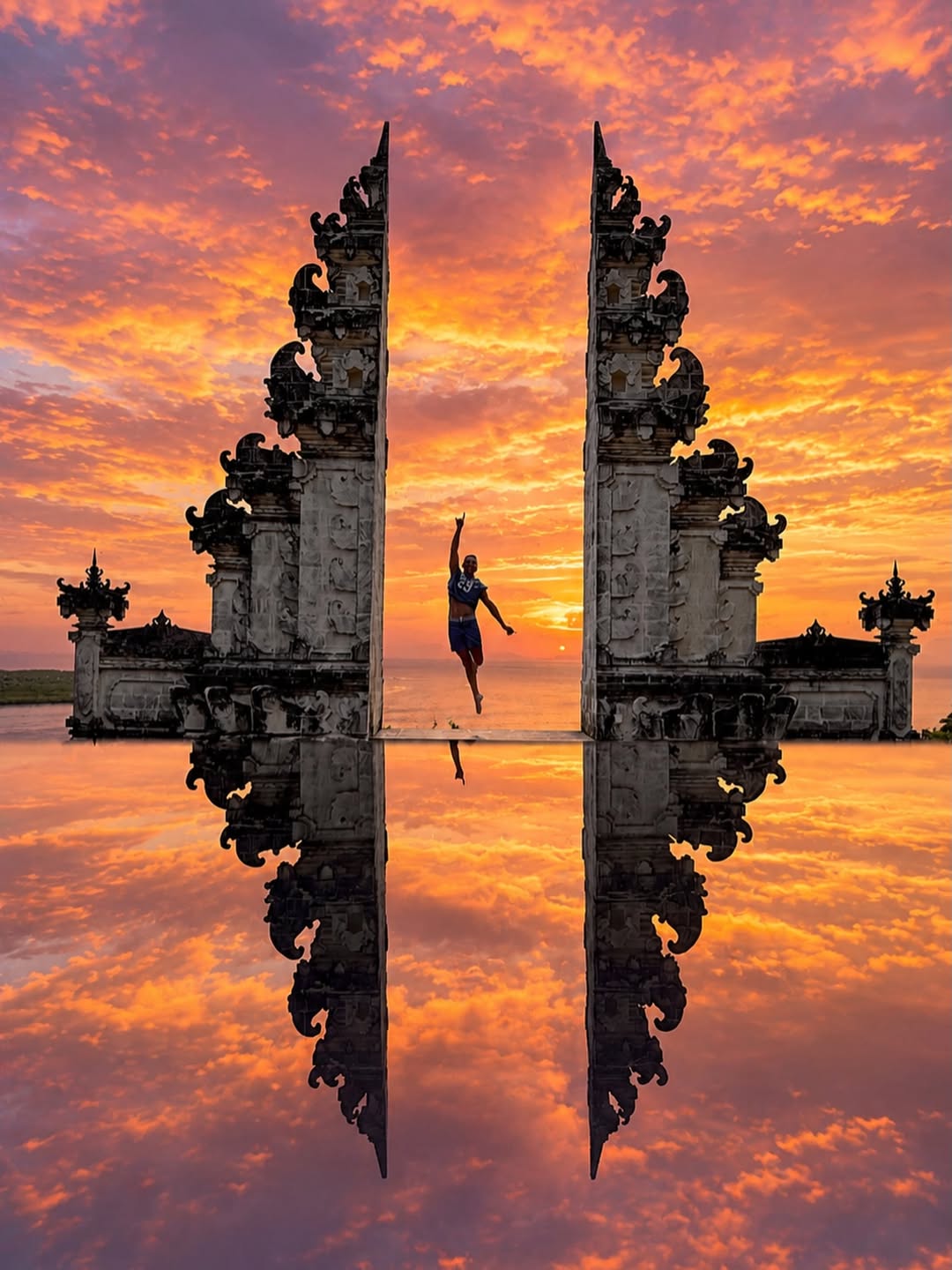
Lying on the far east coast of the island, Thousand Islands Viewpoint overlooks several offshore rock formations scattered across the ocean.
Built on the cliff edge, Rumah Pohon Treehouse is a famous photography spot in Nusa Penida. You can take photos on the tree house platform for around 75,000 IDR (approx. 400 INR). Visit during sunrise to catch great photos and avoid crowds.
Teletubbies Hill
Teletubbies Hill is a completely different landscape from the island’s coastline. The expanse of smooth, rounded limestone mounds covered in grass creates a peaceful environment that contrasts with Nusa Penida’s rugged cliffs.
The hills are most beautiful during and shortly after the rainy season, when the grass is lush and green.
Banah Cliff Point
At Banah Cliff Point, you can view the Indian Ocean and the Banah Rock arch that looks like a doughnut emerging from the ocean.
It is particularly popular with photographers seeking a quieter alternative to the island’s busiest viewpoints. Visiting late in the afternoon is best for sunset viewing and photography.
5. Visit Temples and Cultural Sites
Nusa Penida is not only about natural beauty. The island also has a rich spiritual heritage deeply connected to Balinese Hindu traditions, with sacred sites that provide a quieter alternative to some of the most visited Bali temples.
Goa Giri Putri
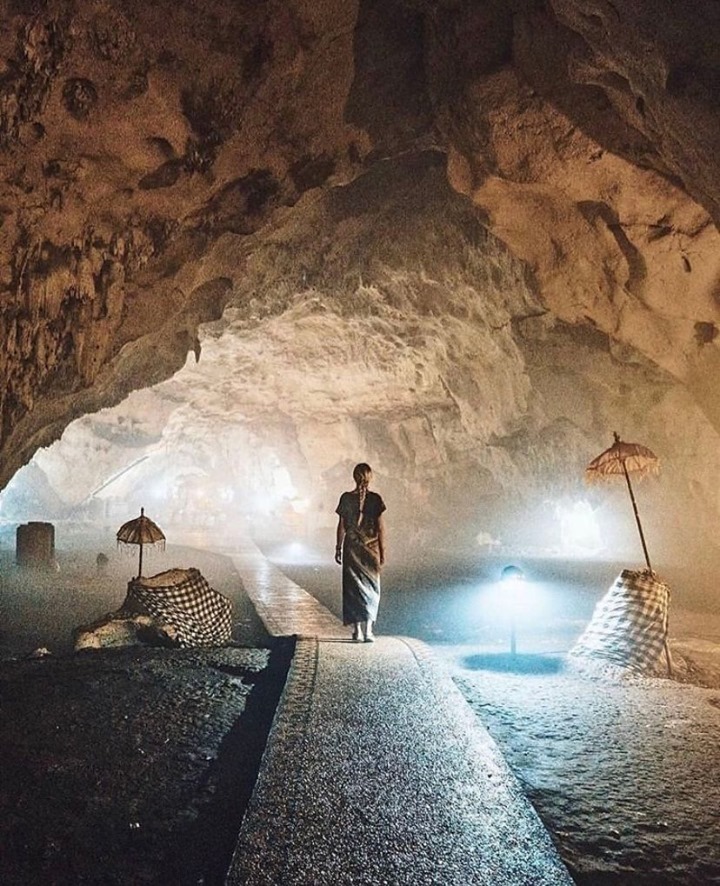
Goa Giri Putri is one of the island’s most remarkable temples. Visitors enter through a narrow opening in the rock before emerging into a vast cave with shrines and places of worship. The experience feels very different from visiting a traditional temple.
Pura Tunjuk Pusuh Temple
Pura Tunjuk Pusuh is a hilltop temple in Desa Tanglad, southeast Nusa Penida. The temple provides panoramic views of the eastern coastline and lush inland forest.
Unlike many popular temples in Bali, Pura Tunjuk Pusuh receives relatively few visitors. And you’ll get to see local Balinese villagers conducting intimate rituals and prayers.
The Car Temple
Pura Paluang, or the Car Temple, is an unusual shrine in Bunga Mekar, on the western side of the island, close to Kelingking Beach.
Unlike traditional Balinese temples, this temple’s altars are shaped like cars, including a Volkswagen Beetle and a Suzuki Jimny, sculpted from white sandstone and cement. And the origin and meaning of these car-shaped altars remain a local mystery.
Pura Dalem Ped
Pura Dalem Ped is considered to be the most powerful temple on the island. The temple complex consists of five distinct shrines and courtyards rather than a single building.
Note: When visiting temples in Nusa Penida, dress modestly and wear a sarong and sash when required. Respect worshippers and ceremonies, follow local guidance on restricted areas, and avoid loud conversations or disruptive behaviour.
6. Island Hopping Across the Nusa Islands
Many travellers combine Nusa Penida with visits to the nearby islands of Nusa Lembongan and Nusa Ceningan. Fast boats connect the islands, making day trips simple and affordable. Boats leave throughout the morning and take about 10-15 minutes, typically costing around 50,000 IDR each way.
Nusa Lembongan
Smaller but more developed than Nusa Penida, Nusa Lembongan has a relaxed atmosphere and easier roads. Here are some places you can visit in Nusa Lembongan:
- Devil’s Tear: It’s a coastal tidal pool, and when waves crash violently against the cliffs, they send massive plumes of sea spray skyward, making it a great spot for nature photography.
- Dream Beach: Swimming is unsafe due to strong currents, but the beach remains a popular spot for relaxing and photography.
- Panorama Point: An easily accessible clifftop lookout, where you can view Jungutbatu Bay and Mount Agung in the distance.
- Mangrove Forest: You can have traditional boat tours along the island’s mangrove forest.
Nusa Ceningan
From Lembongan, you can reach Nusa Ceningan via the Yellow Bridge, which you can cross on foot or by scooter. The island has rugged coastal scenery and a quieter atmosphere in store. Here are some of the places you can visit in Nusa Ceningan:
- Blue Lagoon: A turquoise cove surrounded by cliffs, which is highly photogenic.
- Secret Point Beach: A peaceful beach suitable for swimming and relaxing.
- Mahana Point: Popular for cliff jumping, surfing, and sunset views.
Nusa Penida Travel Tips: How to Get There, Get Around and Plan Your Stay
Here are the basic things to know before you visit Nusa Penida:
How to Get There
- Fast boats from Sanur, Padang Bai, Kusamba, and Serangan connect Bali to Nusa Penida.
- The crossing takes around 30-45 minutes and costs between 1,50,000 and 2,50,000 IDR (approx. 800-1300 INR) one-way.
- Choose the arrival pier closest to your accommodation. Banjar Nyuh (west coast), Sampalan (northeast) and Buyuk (north) are the island’s main ports, which receive most fast boats from Bali.
How to Get Around the Island
- Scooters are widely available and give flexibility for independent travel. But many roads are steep, narrow, and uneven, and require solid driving skills. But if you are not confident enough, hire a private driver.
- Fuel up before heading to remote areas, as petrol stations are limited outside the northern coast.
Planning Your Stay
- Nusa Penida has accommodation options including traditional wooden bungalows, cliffside villas, and beachfront resorts, suitable for different budgets.
- Stay for at least two days to cover both the east and west coasts.
Cash and Connectivity
- Carry enough cash, as card payments are not widely accepted and ATMs can be limited or unreliable.
- Mobile signals can be patchy in remote areas, so download offline maps before heading out.
Conclusion
Nusa Penida is a distinct island destination in Indonesia, shaped by dramatic cliffs, quiet beaches, clear waters, and cultural spots that set it apart from mainland Bali. The island is best suited to travellers interested in adventure, photography, and marine life.
A day trip covers only a small part of the island. Plan to spend at least two to three days visiting key viewpoints and beaches without rushing, and make the journey more balanced and complete. You can contact Dimaak Tours to seamlessly add Nusa Penida to your Bali Itinerary.
FAQs About Things to Do in Nusa Penida
1. When is the best time to visit Nusa Penida?
The best time to visit Nusa Penida is during the dry season, from April to October. The weather is reliable, the island’s rough and unpaved roads are safer to navigate, and underwater visibility is at its best for snorkelling and diving. The cliffside stairs and walking paths are also dry, making them easier and safer to climb.
2. How many days do you need in Nusa Penida?
Plan to spend at least 2-3 days, which provides enough time to visit the major attractions on both the east and west coasts, enjoy snorkelling or scuba diving, and experience the island at a relaxed pace.
3. How long does it take to travel to Nusa Penida from Bali?
A fast boat is the most convenient and popular option for travelling from Bali to Nusa Penida; it usually takes around 30-45 minutes, though timing varies by port. A way cheaper public ferry option is also available, but it takes around 60-90 minutes.
4. Can you visit Nusa Penida without a tour?
Yes, you can visit Nusa Penida independently without a tour. Simply book a fast boat ride from Bali, and once you arrive in Nusa Penida, you can get around the island by renting a scooter or hiring a private driver.
