


Key Takeaways
|
Malaysia is one of those countries where you don’t have to spend hours hunting for a good place to eat. You step out of your hotel, walk a few metres, and find a hawker stall with a variety of dishes.
Malaysia has three major food cultures: Malay, Chinese, and Indian. For Indians, Malaysian food is easy to adapt to because many dishes use familiar spices such as turmeric, cumin, coriander, and curry leaves.
Another advantage is that there are a good number of Indian restaurants in Malaysia. However, Malaysian cuisine itself is easily enjoyed by most Indians.
From noodles, rice dishes, noodle soups, and fried flatbreads to shaved ice desserts, these are some of the most famous Malaysian street foods you must try.
10 Most Famous Malaysian Street Foods
Street food is one of the biggest highlights of visiting Malaysia. Whether you are sightseeing in Kuala Lumpur, Penang, Malacca, or planning a relaxing island stay in Langkawi, you will find delicious local dishes across the country.
1. Nasi Lemak
- Ingredients: Coconut milk rice, sambal chilli paste, fried anchovies (ikan bilis), roasted peanuts, soft-boiled egg, pandan leaves, and cucumber. Add-ons: fried chicken, beef rendang, fried fish.
- Approx. Cost: 120 – 160 INR.
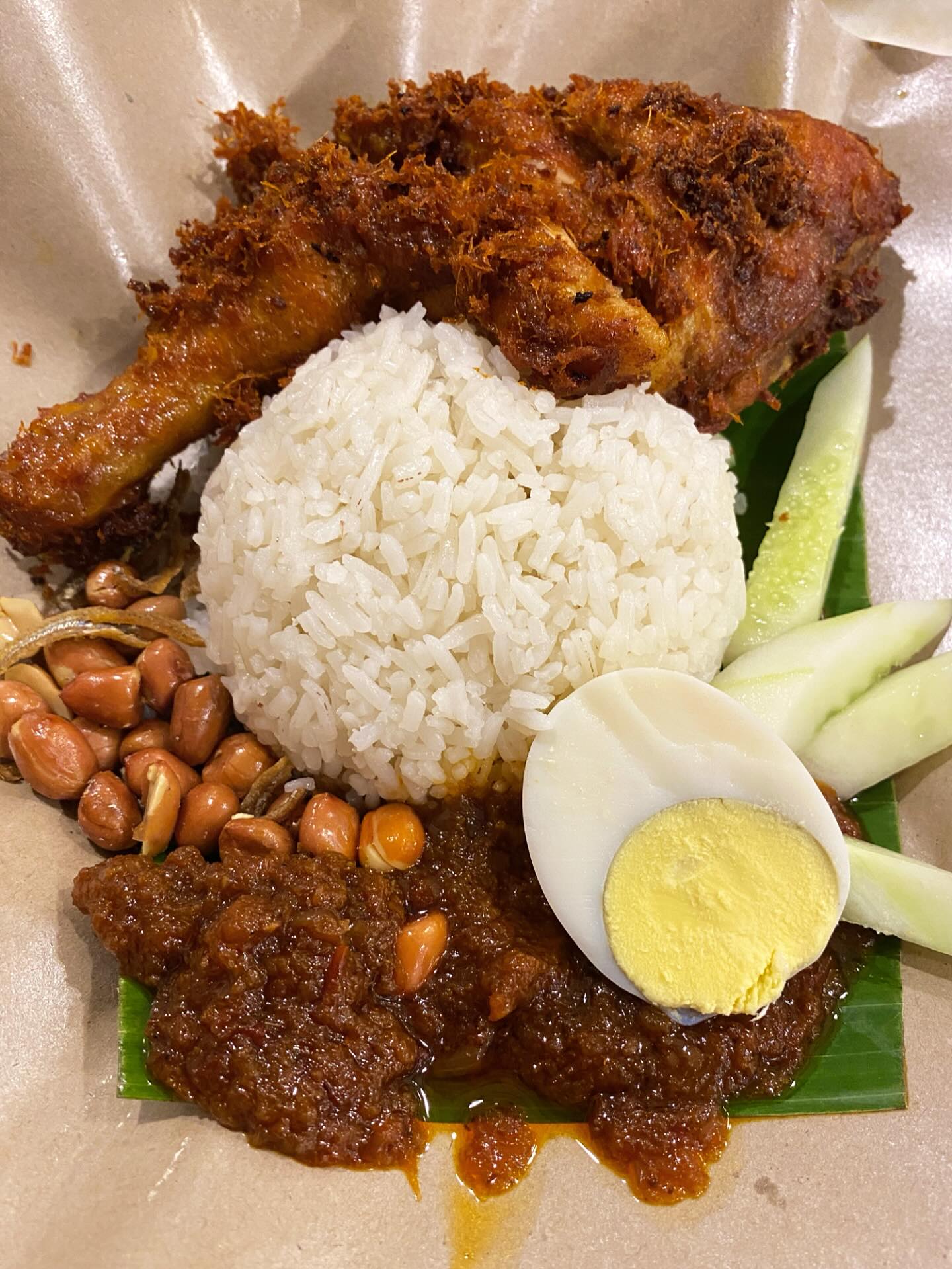
Malaysia’s national dish, Nasi Lemak, is the first thing you should try when you arrive. Malaysians eat this for breakfast, but today you will find it at hawker centres, food courts, roadside stalls, and restaurants throughout the day.
The basic version consists of coconut rice served with sambal, fried anchovies, roasted peanuts, a boiled egg, and sliced cucumber. If you prefer any add-ons, you can request them, which include chicken, beef rendang, or fried fish.
The sambal is the main highlight in this dish. It is spicy, slightly sweet, and much thicker than most chilli sauces.
2. Char Kway Teow
- Ingredients: Flat rice noodles (kway teow), dark soy sauce, eggs, bean sprouts, Chinese sausage (lap cheong), prawns, blood cockles and lard (pork fat).
- Approx. Cost: 200 – 260 INR.
Char Kway Teow is a stir-fried flat rice noodle dish. It is very famous for being made over a very high heat in a well-seasoned wok. The high temperature produces wok hei, a smoky flavour that simply can’t be made at home.
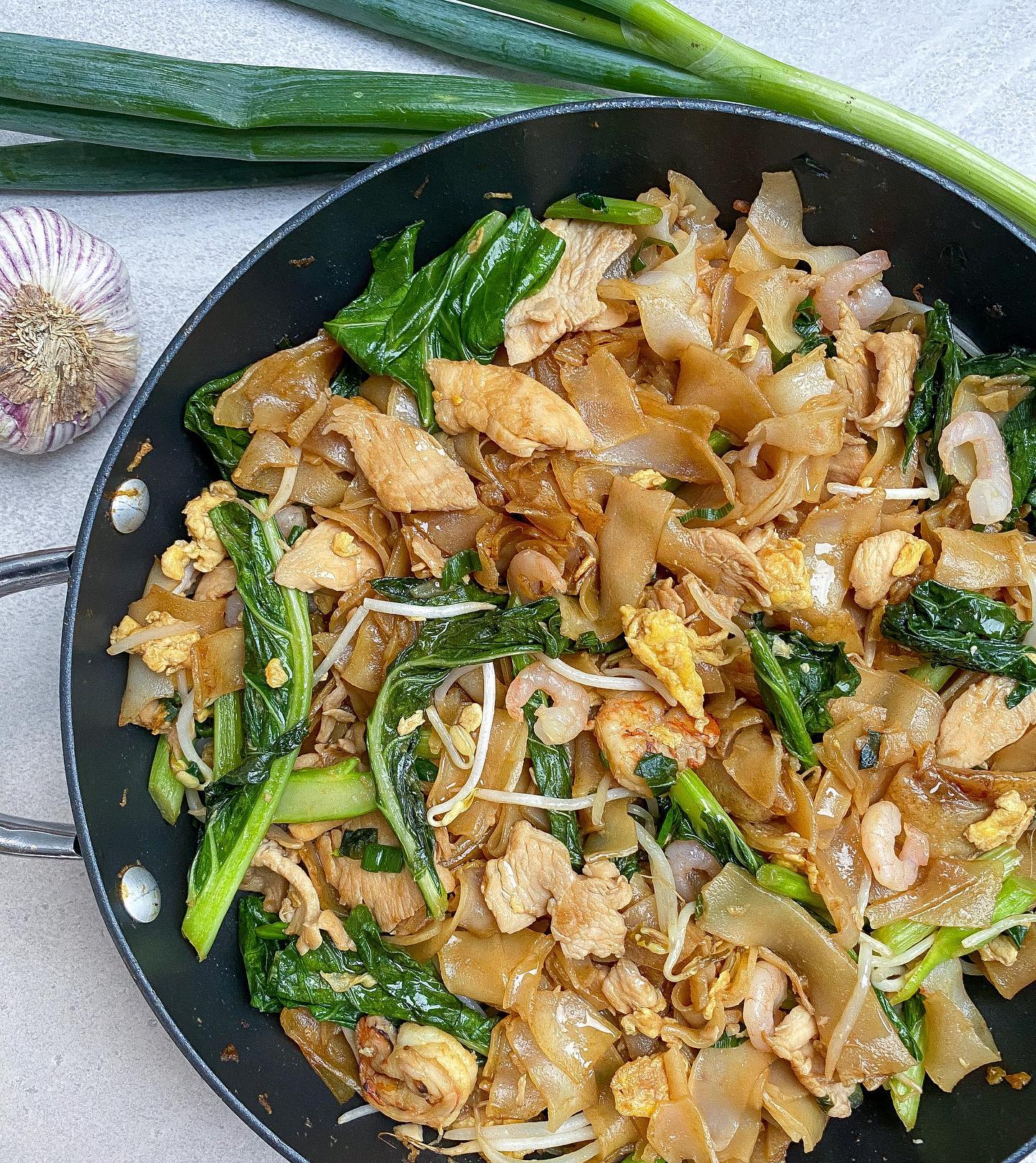
The Char Kway Teow in Penang is famous across Malaysia and is considered the best version in the country.
The dish has Chinese origins with Hokkien and Teochew immigrants who settled in Penang. In the 19th century, they made the dish a cheap, high-calorie meal that labourers could afford.
3. Laksa
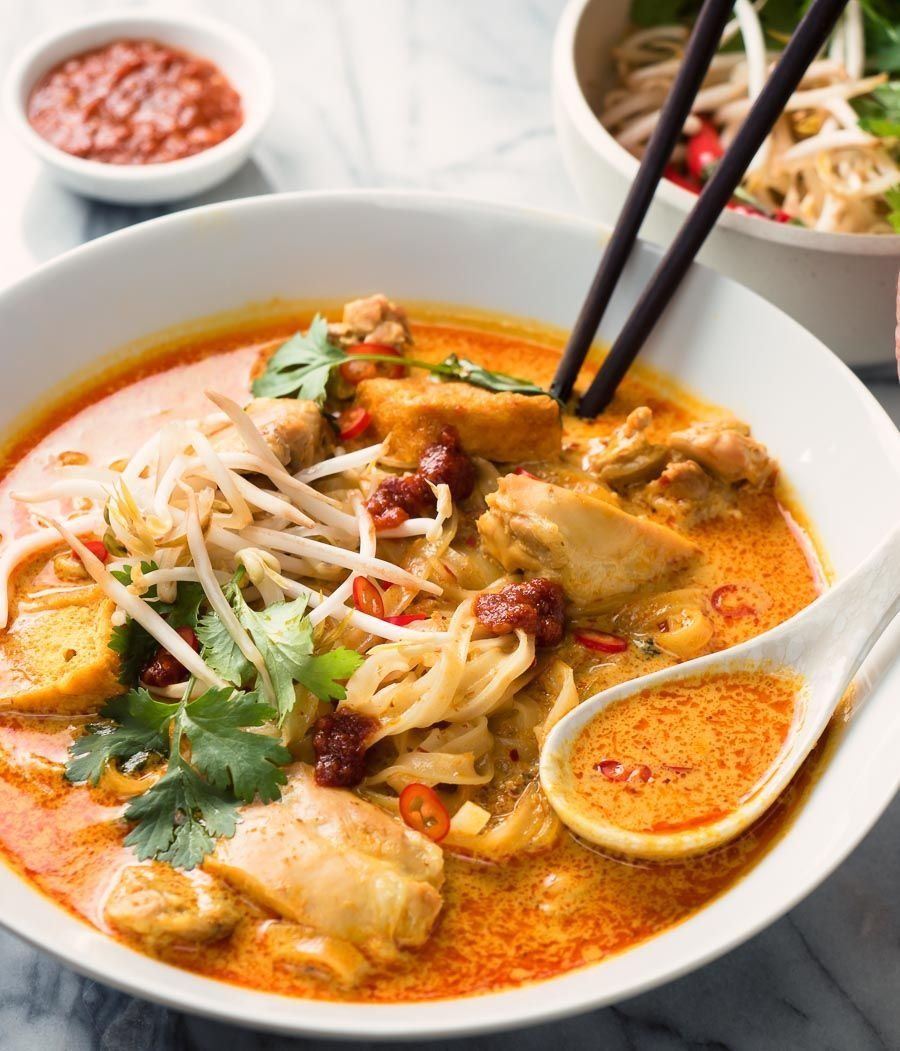
- Ingredients: Curry Laksa – Coconut milk broth, curry paste, rice noodles, tofu puffs, bean sprouts, hard-boiled egg, cockles or prawns, chicken. Asam Laksa – Fish-based tamarind broth, thick rice noodles, shrimp paste (belacan), pineapple, onion, torch ginger flower and cucumber.
- Approx. Cost: 230 – 280 INR.
Laksa is a spicy noodle soup. The two most famous variations are Penang Laksa (Asam Laksa) and Curry Laksa, and they taste totally different.
Penang Laksa uses a fish-based, tamarind broth, sour, tangy, and slightly pungent, with thick rice noodles, shrimp paste, onions, and pineapple.
Curry Laksa uses a coconut milk broth with deep yellow curry flavour, topped with tofu puffs, bean sprouts, and chicken or prawns.
Curry Laksa suits Indian palates more as it has less fishy flavour. The coconut curry broth is close to a South Indian curry with noodles.
4. Satay
- Ingredients: Marinated chicken, mutton, or beef on bamboo skewers, turmeric, lemongrass, and coriander. Served with: peanut sauce, compressed rice cake, cucumber and raw onion.
- Approx. Cost: 45 – 70 INR per stick.
Satay is a meat dish where the meat marinated in turmeric and lemongrass, skewered, and grilled over charcoal. Then it is served with a thick peanut sauce (kuah kacang), rice cakes (ketupat), sliced cucumber, and raw onion.
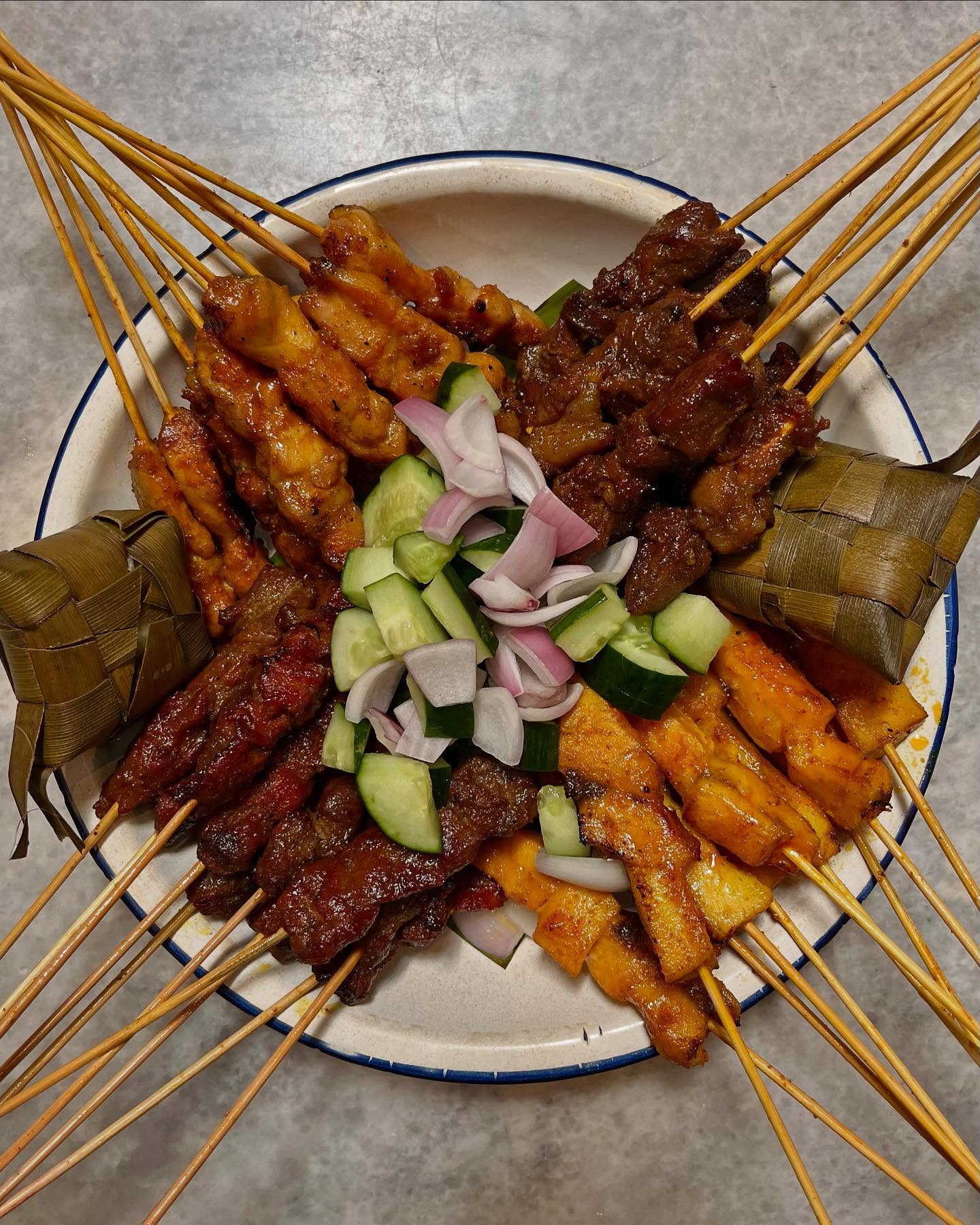
Malaysian satay differs from Thai satay. The marinade is heavier on turmeric and lemongrass, and the peanut sauce is thicker and more spiced.
One interesting fact is that Kajang, a town 25 – 30 km from Kuala Lumpur, is known as the Satay Capital of Malaysia. In 1917, a Javanese immigrant named Haji Tasmin bin Sakiban and his brother Rono began selling skewered meat in Kajang, carrying it on their shoulders.
5. Roti Canai
- Ingredients: Wheat flour, ghee, water, salt. Served with: dhal curry, fish curry, or chicken curry. Variations: Roti Telur (with egg), Roti Bawang (with onion), Roti Pisang (with banana).
- Approx. Cost: 60 – 80 INR.
Roti Canai is one of the most popular breakfast foods in Malaysia. It is a flaky, layered flatbread made from wheat flour and ghee. It is similar to parotta, as it is stretched and folded by hand.
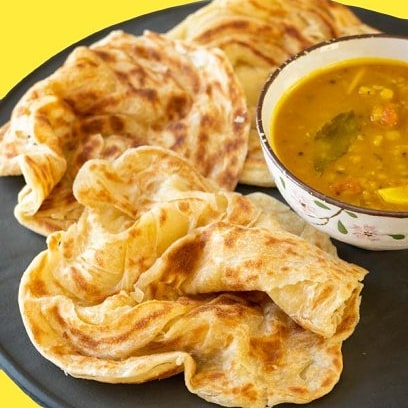
It is cooked until the outside is crispy and the inside is soft and layered. It comes with dhal and fish or chicken curry on the side for dipping.
The dish arrived in Malaysia with Tamil Muslim traders and immigrants from South India. For anyone from Tamil Nadu or Kerala, the first bite of Roti Canai will feel immediately familiar.
6. Hokkien Mee
- Ingredients: KL version – Thick yellow wheat noodles, dark soy sauce, pork belly, prawns, squid, bean sprouts, eggs, lard and garlic. Penang version – Prawn broth, rice noodles and yellow noodles, prawns, pork ribs, hard-boiled egg, kangkong (water spinach), sambal.
- Approx. Cost: 250 – 330 INR.
Hokkien Mee varies by city. In Kuala Lumpur, thick yellow wheat noodles are cooked in dark soy sauce until the liquid reduces and the dish becomes slightly sweet and glazed. It is then topped with pork belly, prawns, squid, and crispy lard.
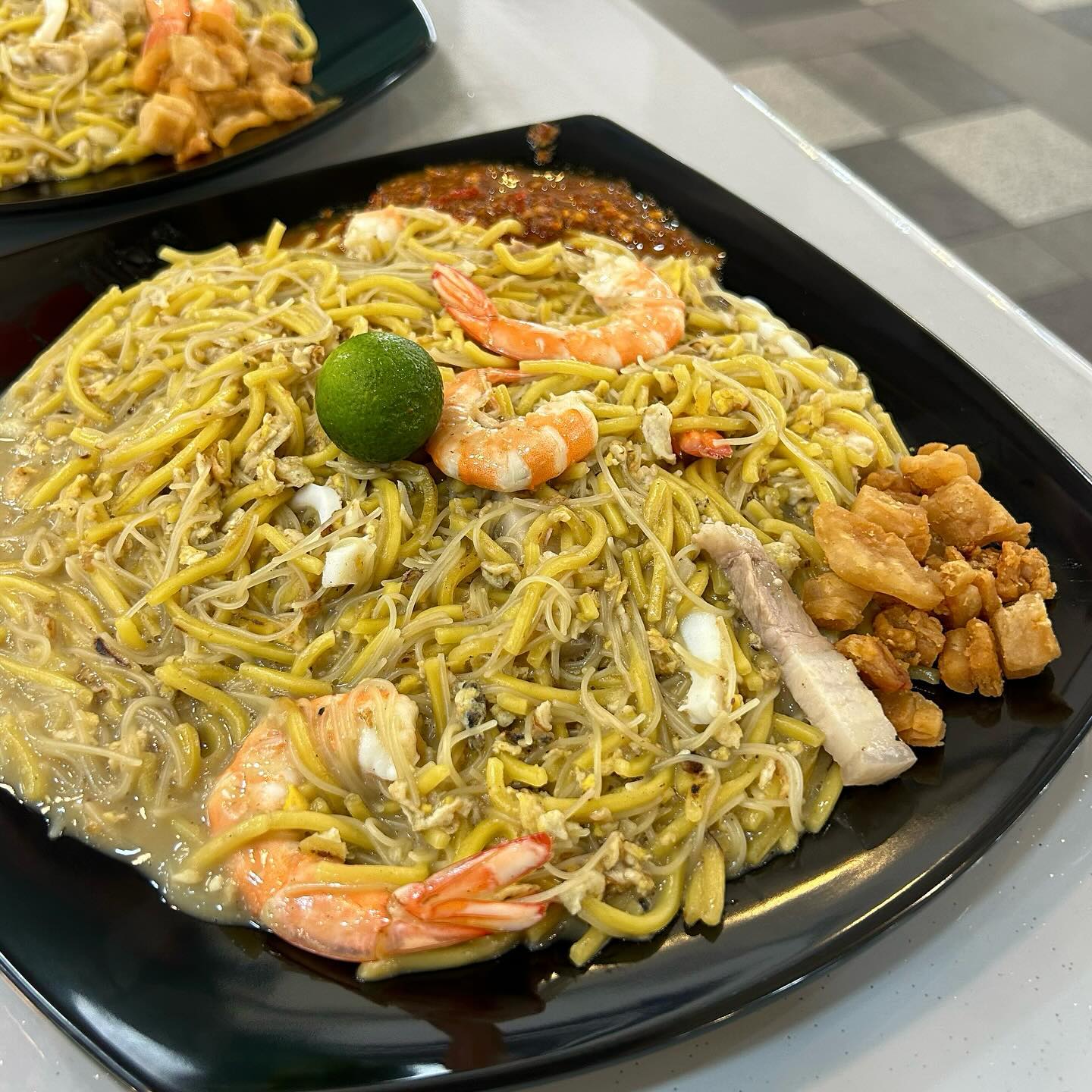
In Penang, Hokkien Mee is a completely different dish, a prawn broth soup with a reddish base, topped with noodles, prawns, pork ribs, egg, and kangkong.
7. Nasi Goreng
- Ingredients: Day-old rice, belacan (shrimp paste), soy sauce, chilli, garlic, egg, spring onion. Served with: fried egg, prawn crackers, sliced cucumber and pickled vegetables.
- Approx. Cost: 200 – 260 INR.
Nasi Goreng is Malaysian fried rice and one of the most-ordered dishes at hawker centres because it is fast, filling, and widely available. It is cooked in a wok over high heat with soy sauce, belacan (fermented shrimp paste), chilli, garlic, and egg, then topped with a fried egg and served with prawn crackers and sliced cucumber.
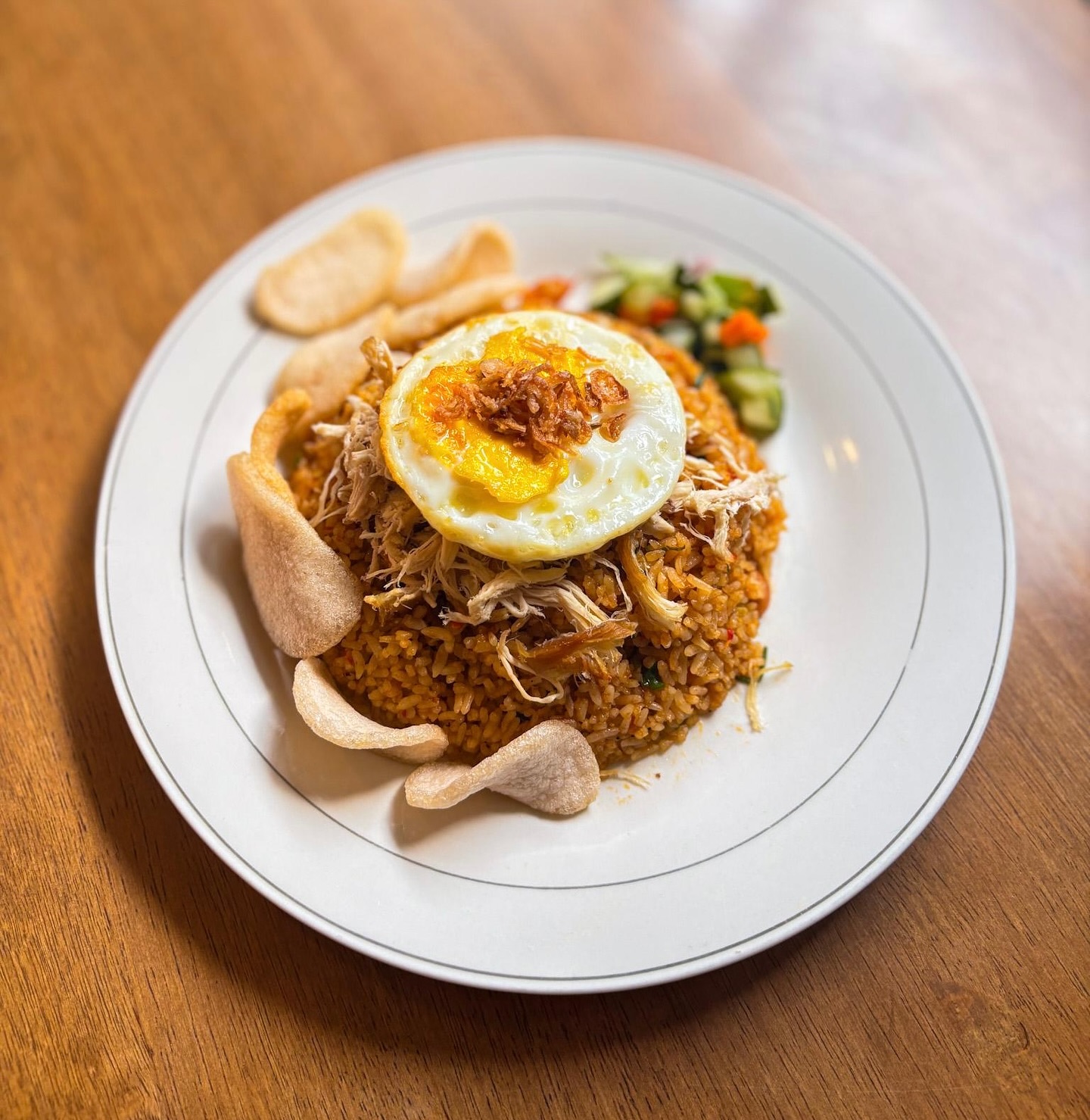
In Nasi Goreng Kampung (village fried rice), they use raw chilli and dried anchovies rather than heavy soy. Nasi Goreng Pattaya is a fried rice that’s completely wrapped inside a flat omelette.
The belacan is what makes it Malaysian: a slightly pungent, more savoury flavour that adds a layer of flavour that Indian fried rice does not have.
8. Cendol
- Ingredients: Shaved ice, pandan-flavoured green rice flour jelly (cendol), coconut milk, Gula Melaka (palm sugar syrup).
- Approx. Cost: 70 – 130 INR.
Cendol is Malaysia’s most popular cold dessert. One bite of it can lift your mood after hours of shopping in Malaysia’s crowded markets in hot weather.
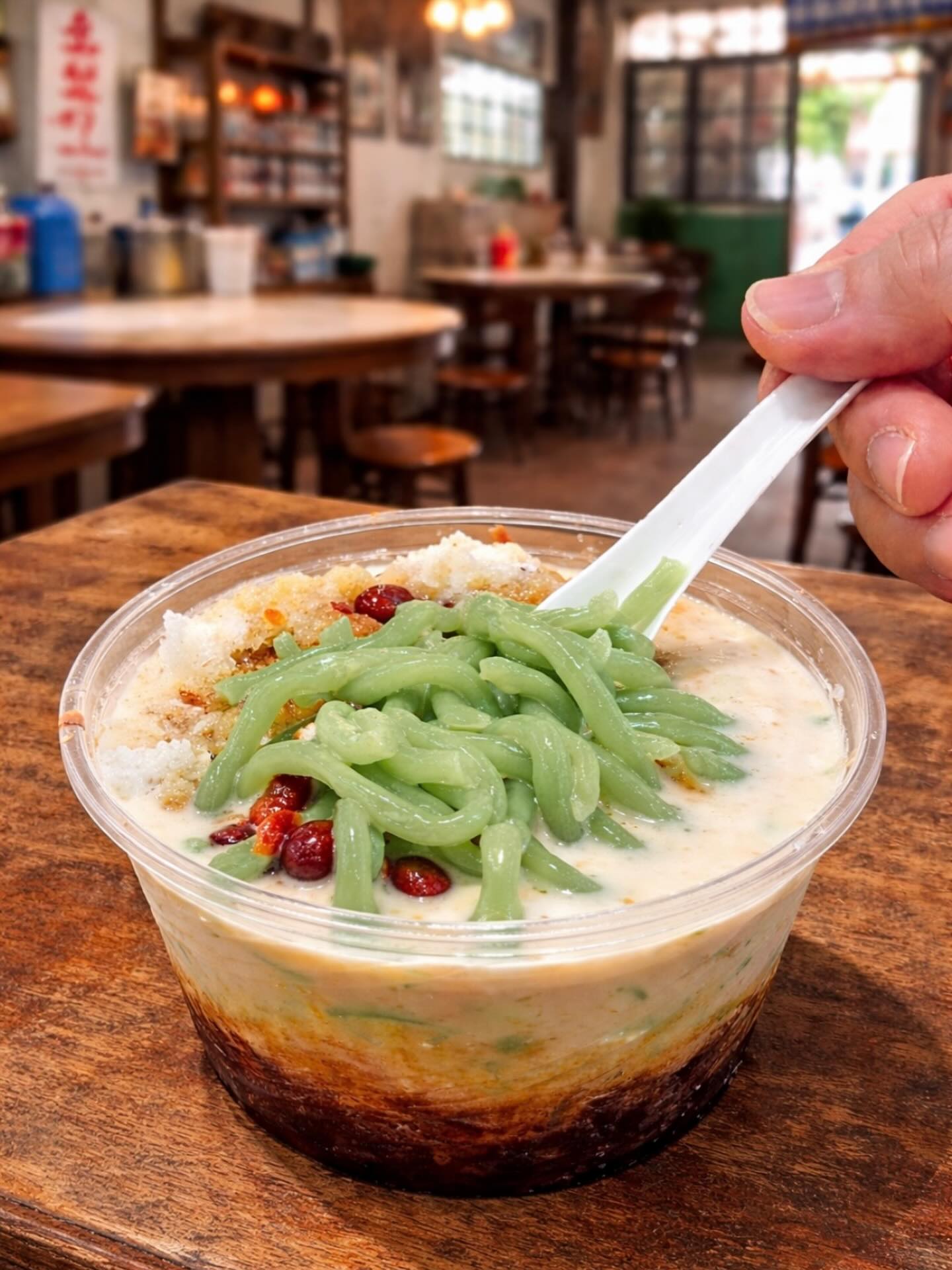
It is a bowl of shaved ice with pandan-flavoured green rice flour jelly strips (the cendol), coconut milk, and thick Gula Melaka (palm sugar) syrup added on top. The green jelly strips are slippery and slightly chewy.
However, many things are added to Cendol these days, such as red beans, jackfruit, tapai, lupis, and even durian.
9. Apam Balik
- Ingredients: Wheat flour batter, crushed roasted peanuts, white sugar, sweet corn. The thick version adds butter or margarine inside.
- Approx. Cost: 50 – 90 INR.
Apam Balik is a folded Malaysian pancake sold at night markets and is almost always made fresh in front of you. They pour batter onto a round griddle, wait for the edges to crisp, add the filling and fold it in half.
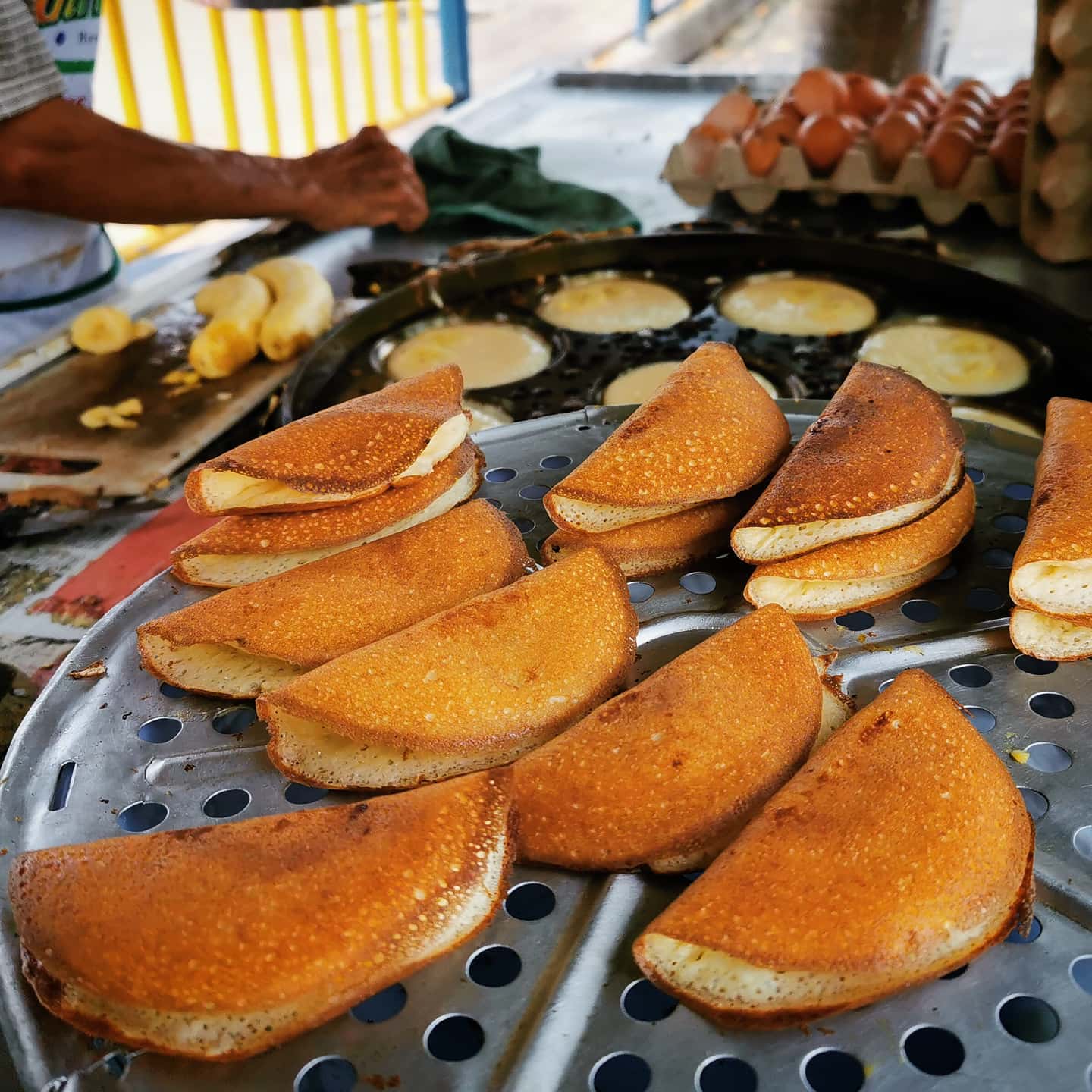
There are two versions of Apam Balik in Malaysia. The thin, crispy version (Apam Balik Nipis) is popular in Kuala Lumpur, made in large, crepe-style circles and folded with the filling inside.
The thick version (Apam Balik Tebal) is more bread-like, similar to a thick pancake, and popular in Penang. However, both have the same filling. It is one of the few sweet snacks in Malaysian street food you can safely eat without asking for the ingredients, as it is purely vegetarian.
10. Bak Kut Teh
- Ingredients: Pork spare ribs, star anise, cinnamon, cloves, fennel seeds, garlic, black or white pepper, dark soy sauce. Served with steamed rice, youtiao, tofu, mushrooms and Chinese tea.
- Approx. Cost: 430 – 490 INR.
Bak Kut Teh, also known as “meat bone tea,” is a slow-simmered pork rib soup made with star anise, cinnamon, cloves, fennel, garlic, and pepper, served with rice, youtiao (fried dough sticks), tofu, and a small pot of strong Chinese tea on the side.
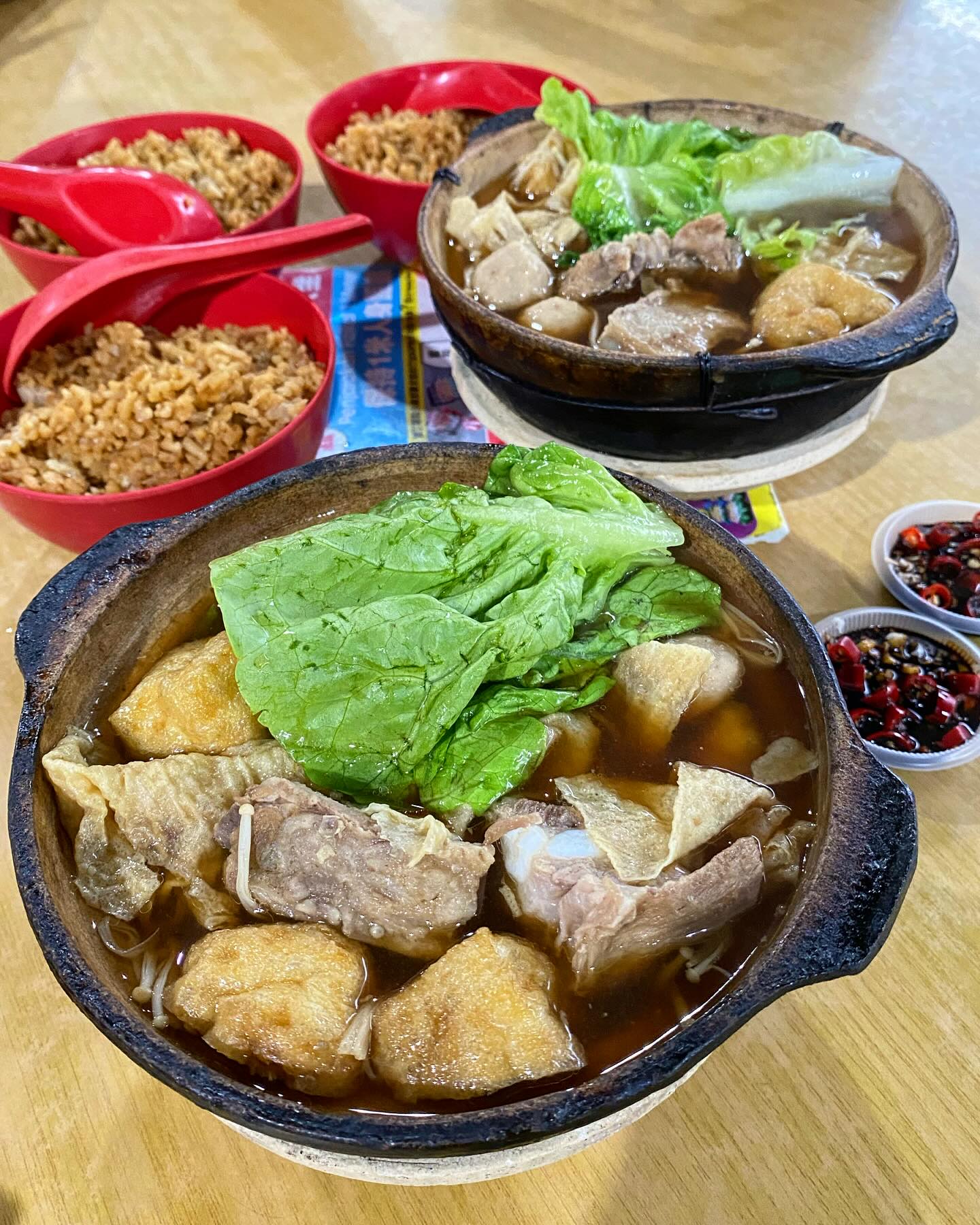
This is a pork dish, so there is no traditional vegetarian version. If you don’t eat pork, skip it.
The dish originated in Klang, a port city 38 km from Kuala Lumpur, where Hokkien Chinese immigrants developed it primarily to support the health of port labourers in the early 20th century.
Tips for Indians Eating Malaysian Street Food
Halal and non-halal: Malay food stalls and mamak restaurants are halal. Chinese hawker stalls use pork and lard in several dishes. So, always look for the green Halal Malaysia certification displayed at the stall before ordering.
Save money: Eat only at local hawker centres and avoid dining in bars, mid-range restaurants, or malls in Malaysia if you are a budget traveller.
Vegetarian options: Roti Canai with dhal, Cendol, Apam Balik, Nasi Goreng without belacan, and vegetarian versions of Char Kway Teow and Laksa are the most reliable choices. Indian vegetarian banana leaf rice restaurants are common in Kuala Lumpur, Penang, and Ipoh.
Cash: Carry cash in smaller denominations like MYR 10 and MYR 50, as some vendors rarely have change, and it slows the process.
Spice level: Say “kurang pedas,” which means “less spicy,” when ordering to reduce the heat. In some dishes, sambal is usually served on the side, so you can control how much you add.
UPI payments: You can make easy, cash-free QR payments in Malaysia with apps like DuitNow. However, a few small stalls accept only cash, so don’t rely on UPI.
Conclusion
Malaysia is one of the easiest countries in Asia for Indians to enjoy local food. The use of spices, rice, curries, and flatbreads makes it easy to adapt, while Chinese and Malay influences add completely unique flavours.
In any city you visit in Malaysia, you will find its own regional specialities. Plus, all these places have reasonably priced food. From Nasi Lemak and Char Kway Teow to Laksa, Satay, and desserts like Cendol, every meal offers a different taste of Malaysian culture.
So, if you are visiting Malaysia for the first time, contact Dimaak Tours. We will help you plan your trip with exciting activities and suggest the best food to try and where to find it. For repeat visitors, Malaysia tour packages offer different city combinations, and we can customise them based on your interests.
FAQs on Malaysian Street Food
1. Is street food in Malaysia vegetarian-friendly?
There are vegetarian options such as Roti Canai with dhal, Cendol, Apam Balik, vegetarian Laksa, and vegetarian Char Kway Teow. Always ask whether shrimp paste, anchovies, or meat stock is used and make sure that they can customise the dish before ordering.
2. What is the most famous Malaysian street food?
Nasi Lemak is Malaysia’s national dish and the country’s most famous street food. It consists of coconut rice served with sambal, peanuts, cucumber, boiled egg, and optional add-ons like fried chicken or beef rendang.
3. How much does Malaysian food cost?
Most street food dishes cost between 2 and 20 MYR (approximately 47 – 469 INR). Desserts and snacks are usually cheaper, while seafood dishes can exceed 400-500 INR.
4. Where is the best place to eat street food in Malaysia?
The best places for food in Malaysia include Jalan Alor in Kuala Lumpur, Gurney Drive and Chulia Street in Penang, Jonker Street Night Market in Malacca, and Concubine Lane in Ipoh.
