


|
Key Takeaways:
|
Kazakhstani cuisine is strongly influenced by the country’s nomadic past, where food and hospitality were centred around livestock.
A key part of this food culture is ‘tört tülik mal’, which refers to the four main types of meat: beef, horse, camel, and lamb. These ingredients form the base of many traditional dishes, including the national favourite Beshbarmak and other hearty meals.
Vegetarian travellers need not worry; Kazakhstan is more visitor-friendly than it may seem, with customisable dishes and several meat-free options available.
From fermented drinks to fresh bread and local desserts, this guide covers Kazakhstan’s culinary experience.
Kazakhstan Food Categories
Kazakhstani cuisine revolves highly around meat, bread and dairy-rich products. Meanwhile, plant-based ingredients are limited but do exist.
To understand the Kazakhs’ culinary heritage deeply, this guide is organised into four categories
- Non-vegetarian/signature meat dishes
- Classic meat dishes that can be customised to vegetarian
- Vegetarian Items
- Snacks, Sweets, and Treats
Kazakhstan’s Famous Food with Meat
Meat is central to Kazakh cuisine due to the nomadic heritage. Ancestors needed enough calories to keep moving and surviving in the Kazakh weather. That’s why horse, beef and lamb meat can be found in traditional Kazakh dishes.
1. Beshbarmak
Kazakhstan’s national dish is Beshbarmak, and it is one of the locals’ favourites.
Sorpa is a traditional boiled meat broth, typically prepared with lamb or horse meat, flat pasta sheets and vegetables. Then, it is freshly served in a bowl called a ‘kese’.
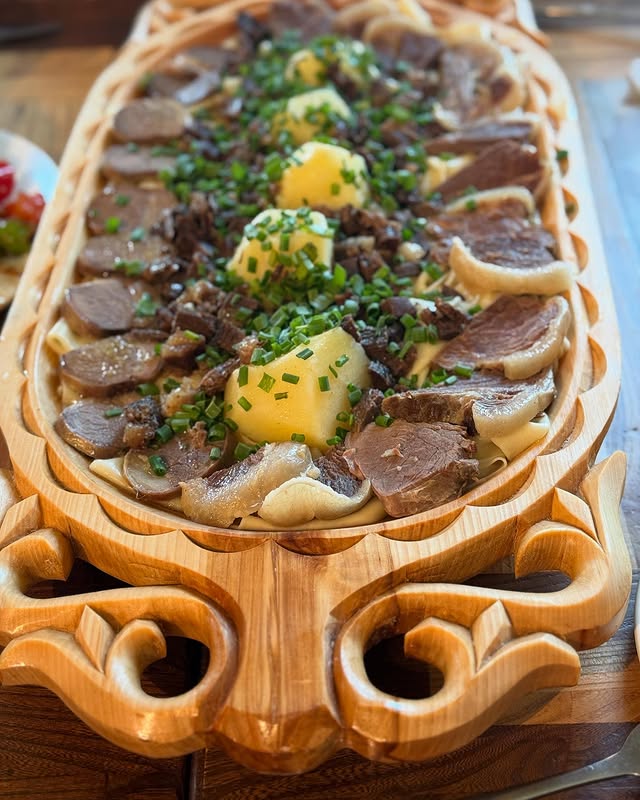
This dish is also known as “Five Fingers”, referring to the way it is traditionally consumed.
Tip: This dish is an acquired taste. It may take time to appreciate, but once it clicks, it becomes deeply addictive.
2. Kazy
A dish that is reserved mostly for festive occasions.
Kazy is the chunky rib meat of a horse made into a traditional sausage. Typically, it is enjoyed from a large plate on a table, surrounded by family and friends. The sausages are cut into 1 cm pieces, which are eaten as small bites.
The cut pieces are also added on top of Beshbarmak to complete the dish.
Fact: Central Asians do not eat the horses they ride. Special horses are bred particularly for food.
3. Koktal
If you are looking for a variety other than red meat, Koktal is perfect, as it is made with fish.
Koktal is a simple fish recipe made using the ‘sazan’, a type of wild carp fish species.
Sazan is split into two parts, then seasoned with salt, pepper, and mayonnaise before stacking up with onions, garlic, and capsicums (bell peppers).
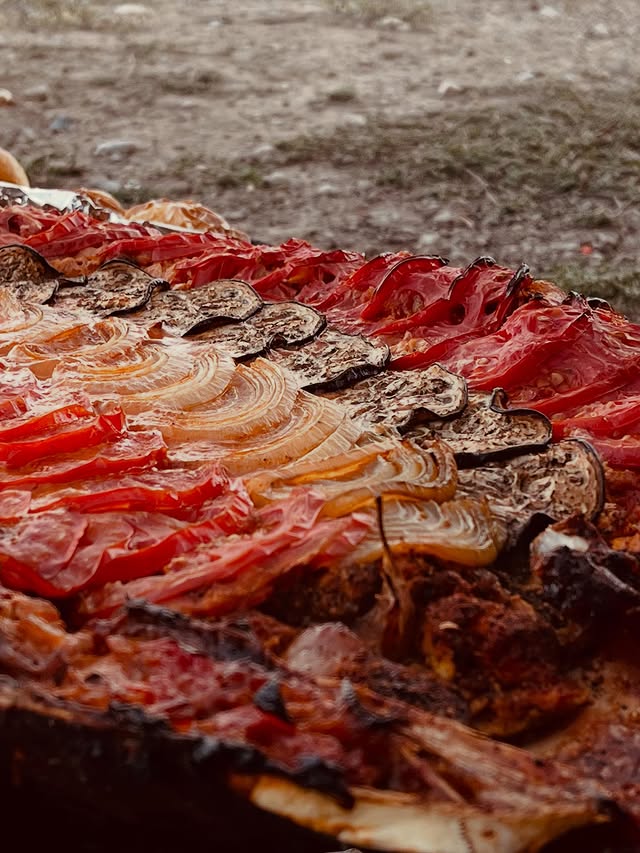
Once it is ready, the fish as a whole will be cooked on a metal smoker. As the meat absorbs the rich juices from the vegetables and spices, this dish will get the perfect consistency and taste perfect.
4. Shashlik
Shashlik is similar to Western-style barbecue grilling.
Shashlik is a grilled meat (chicken, lamb or beef) dish, skewered and cooked on a manual smoker called ‘mangal’, a steel stand which can be filled with coal and wood for combustion.
It’s a popular activity for picnics outdoors and a famous street food, especially in Almaty!
5. Kuurdak
Kuurdak is a dish that is traditionally made by cooking fatty cuts of lamb or beef in their own fat. Today, common cooking oils are often used instead.
As it cooks, spices, onions and potatoes are roasted along with the meat to bring out the flavours and get nutrients.
Classic Meat Dishes That Can Be Customised to Vegetarian
Vegetarian and vegan food will be sparse in Kazakhstan, but that doesn’t mean vegetarians will struggle. You just need to be clear with instructions (use Google Translate) while customising dishes.
1. Laghman
Also known as ‘Lagman Noodles’, it is a Kazakh dish made with thick hand-pulled noodles with spicy, stir-fried vegetables and meat such as lamb or beef.
Lagman can also be vegetarian-friendly as it already uses plenty of vegetables and seasonings, so the meat can be easily swapped for mushrooms, tofu, chickpeas, or even extra veggies like carrots, eggplant, and bell peppers.
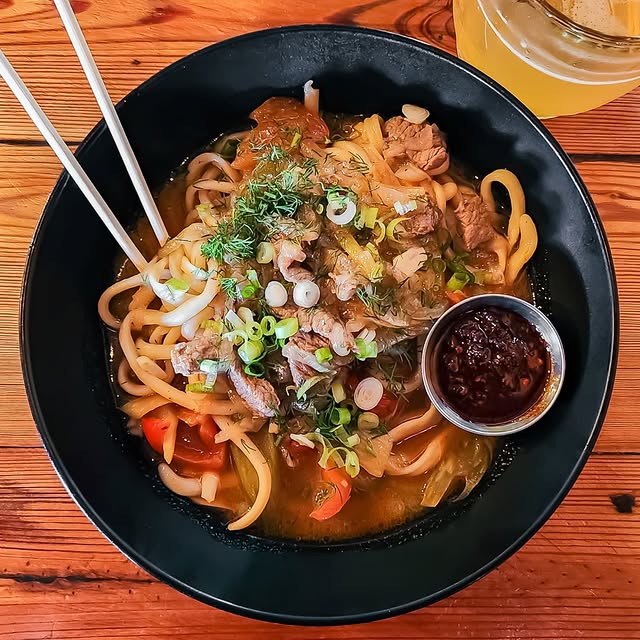
It’s popular among visitors for its bold flavours, and it is customisable into a vegetarian dish!
2. Plov
Kazakhstan’s widely recognised rice dish is Plov. Lamb or beef is lightly fried in a large pot, followed by vegetables such as onions, garlic, and a generous amount of carrots.
Next, a handful of rice is layered over the meat and vegetables, allowing the heat to be trapped. After a few minutes, the entire mixture is combined as the dish is served.
As a familiar, customisable vegetarian option, this rice dish is a popular choice for tourists seeking less adventurous meals.
Tip: Even if you request a cook/host for a meatless dish, they often just remove the meat from the rice. Also, most plov is cooked in meat fat. Clearly express your needs to be served pure vegetarian food.
Pro Tip: Use the app called ‘Happy Cow’ to find out vegetarian and vegan options globally, including in Kazakhstan.
3. Manti
Kazakh manti are dumplings made with flour, eggs, seasonings, vegetables and minced meat, either lamb or beef. They are steamed in water in a special steamer. Later, it is served with spiced butter, sour cream and sometimes chilli oil.
Preparing manti is labour-intensive work, and that’s why people usually make it a group setting of friends and families.
4. Samsa
Commonly compared to the ‘Samosas’ of India, Kazakh Samsa has its own differences.
Samsas use a flaky pastry similar to samosas, but they are baked in traditional ovens instead of being deep-fried. Additionally, samsas are filled with minced meat (typically beef) and onions, replacing the potatoes found in samosas.
Kazakh Samsas are also 2 times bigger than a samosa, making them a light meal or a satisfying snack.
However, they can also be filled with cheese and onions for a vegetarian and a vegan option, respectively.
Kazakhstan’s Famous Vegetarian Food
Traditional Kazakh vegetarian options are limited to breads and fermented drinks.
1. Breads
Bread is a staple food found in most countries, with each region having its own unique variations. Some variations of Kazakhstan are the Tandyr Nan, Tohax and Shelpek.
- Tohax – Also known as ‘Toquash’, this flatbread can be identified by the prominent inward dent on it after baking on a pan or on the open heat.
- Shelpek – Similar to India’s ‘Poori’, Shelpek is a fried flatbread, but thicker than poori.
- Tandyr Nan – Dough is kneaded into a flatbread, stamped with a special tool called ‘Chekich‘ for designs, and then baked in a clay oven known as ‘Tandyr.’ The result is not just bread but art.
The breads are usually paired with meat dishes. However, for veg options, you can also pair it with black tea, dairy products and even jam.
2. Kumys and Shubat
Both Kumys and Shubat are fermented milk from the mare (female horse) and camel, respectively.
Traditionally, kumys and shubat are made by adding sour milk to fresh, raw milk. This was done to increase the milk’s shelf life. However, due to the fermentation process, it develops a slight alcoholic content of 1-2%.
- Kumys – Light, tangy and slightly fizzy with foam on top.
- Shubat – Heavier, sour smell and taste with lumps on top.
Kumys and Shubat provide vitamin C, proteins and other nutrients. They help with digestion and boost the immune system.
Tip: Although vegetarian dishes in Kazakhstan are extremely limited, you can visit Indian restaurants for veg-friendly food.
Recommendation: The Eastern Gate in Almaty and Toktem in Astana.
Kazakhstan’s Famous Desserts and Snacks
Something easy to eat, snack bites, was essential for the nomads while travelling to gain instant energy.
What once started as food for the road has now become a big part of Kazakh hospitality. These traditional sweets and snacks are usually served with tea for guests and enjoyed as easy, everyday finger food.
1. Baursak
These pieces of fried dough, typically made from flour, yeast, and butter, are available in a variety of shapes, including spheres, triangles, and squares.
They are commonly served as a substitute for bread and are often enjoyed alongside tea. If you are invited to a Kazakh house, they are the core snack.
Baursaks have a light texture and a subtle balance of sweet and savoury. Often compared to plain donuts, but baursaks are less dense than donuts.
2. Zhent
A high-calorie snack made with ground toasted millets and sugar, later put together and bound with full-fat butter, along with some dry fruits.
Zhent tastes slightly sweet, nutty, buttery and crumbles down in your mouth. Some variations cover them with chocolate, making them even more appealing.
3. Kurt
Kurt/Qurt/Kashk are tiny white balls made from the fermented milk of cows, goats, horses and camels. Kurt’s taste and texture are sour, dry and hard.
They are also packed with protein and calcium, making them a perfect healthy snack for kids and older folks.
4. Chak-Chak
Fried rice puffs, shaped into small cakes, are coated in honey syrup, making them crunchy, sticky, chewy and sweet.
Traditionally, this sweet was used as a welcome snack for guests at celebrations like weddings. And it became popular for its 3-month shelf life, making it a nomadic-friendly snack.
5. Irimshik
A classic Kazakhstani sweet made from boiled fermented milk is Irimshik. A natural, slightly sweet caramelised flavour is developed in the process despite adding no sugar.
The dish can be consumed immediately after preparation while it is soft, or saved until it has hardened, and it is commonly served with tea.
Conclusion
If you are a first-time visitor to Kazakhstan, no doubt that the country will impress you with the tall mountains, endless steppes, grand canyons and more. And when it comes to food, the experience can be just as memorable, depending on your taste preferences.
Kazakhstan is rewarding for meat lovers who crave different types of meat dishes like Beshbarmak and Shashlik.
Vegetarians have fewer options to choose from. Request for customisation on meat-based dishes like Lagmans and Manti. Vegetarians can enjoy Kazakhstan’s excellent breads and fermented dairy drinks.
While leaving, along with Kazakh souvenirs, don’t forget to try out the Kazakhstani snacks and get some back home with you!
FAQs on the Kazakhstan famous food
1. What is the most popular food in Kazakhstan?
Beshbarmak is the most popular, and in fact, it is the national food of Kazakhstan. It is made up of horse meat boiled in meat broth along with flat pasta.
2. What is the famous sweet of Kazakhstan?
Zhent and Qurt are the two famous desserts of Kazakhstan. Zhent is made with ground millets, sugar and butter and is slightly sweet. Whereas, qurt is a ball of fermented livestock milk which tastes sour.
3. Does Kazakhstan have vegetarian or vegan food?
Yes, Kazakhstan has vegetarian food, but it is difficult to find. Most of the restaurants/homestays will serve meat, as it is a vital part of Kazakhstan’s food, but customising can be done.
When it’s difficult to find pure-vegetarian or vegan options, Indian restaurants often prove to be handy.
4. Which meat is famous in Kazakhstan?
‘Tört tülik mal’ in Kazakhstan refers to a concept of four types of traditional livestock meat used for survival, which includes horse, camel, cow and sheep.
In these four, the horse and camel are saved mostly for festivities and celebrations. Meanwhile, beef and lamb are consumed on an everyday basis.
