


Key Takeaways:
|
Imagine walking along a tranquil beach in the Maldives, where each step causes the sand to emit a striking blue glow. It is truly remarkable.
While the Maldives is renowned for its romantic atmosphere, luxury resorts, and breathtaking sunsets, it offers much more.
These bioluminescent beaches in the Maldives make the country an excellent destination for families seeking a unique experience.
The best time to see a glowing beach in the Maldives is between June and October, particularly during a new moon when the night sky is at its darkest. This is when the bioluminescent display is at its most impressive.
Bioluminescent Beaches in the Maldives
After sunset, certain beaches in the Maldives are illuminated by an extraordinary blue glow. This phenomenon is not magical; it is caused by bioluminescent plankton. These microscopic marine organisms, known as bioluminescent dinoflagellates, including species such as Lingulodinium polyedrum, emit light when agitated.
Note: Understanding how to reach the bioluminescent beach in the Maldives depends mainly on which specific island you choose to visit.
Most international travellers begin at Velana International Airport in Malé; from there, transportation is split among seaplanes, domestic flights, and speedboats, depending on the destination.
Vaadhoo Island, Raa Atoll
For those seeking the renowned “Sea of Stars” experience, Vaadhoo Island is a prime destination. Visitors from around the world travel here specifically to witness the glowing beach of Vaadhoo, Maldives.
The eastern shoreline is where the blue luminescence is most vivid, at times appearing as though the Milky Way itself has met the sea.
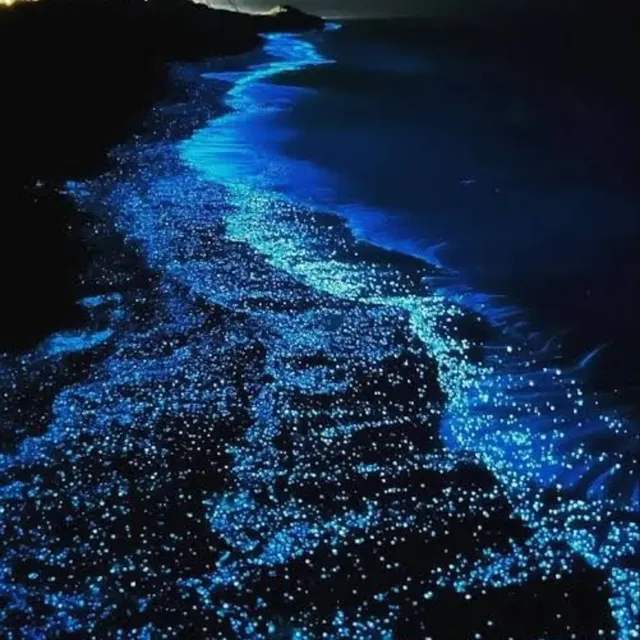
Located approximately 200 kilometres north of Malé in Raa Atoll, Vaadhoo offers guided tours to view bioluminescence. These tours typically cost around 15,000 INR per person and include a speedboat ride.
Stay Cost on Vaadhoo Island, Maldives: Approx. 8,800 to 25,000 INR per night
Note: Vaadhoo is an inhabited local island with budget-friendly guesthouses to luxury resorts.
Mudhdhoo Island, Baa Atoll
Mudhdhoo Island, located within the protected Baa Atoll Biosphere Reserve, offers a quieter yet equally beautiful bioluminescent experience.
The environment supports abundant plankton, resulting in impressive displays. The beaches here are less crowded, and the intensity of the blue glow is remarkable.
The glow here extends far into the sea, leaving trails behind swimmers and kayakers. This beach is famous for nighttime snorkelling, which can be memorable because the water’s movement illuminates it brilliantly.
Situated in the southern part of Baa Atoll, Mudhdhoo’s resorts typically begin at 35,000 INR per night, and guests can often observe the bioluminescence directly from the beach.
For those staying on nearby islands, you can take a day trip to Mudhdhoo.
- Stay Cost on Mudhdhoo Island, Maldives: Starts from approx. 1,35,000 INR per night.
Rangali Island, South Ari Atoll
Rangali Island offers a truly exceptional bioluminescence experience in the Maldives. Imagine standing on a sandbank that links two islands, brightening your evening stroll with a natural, enchanting glow.
This spot is an excellent option for couples seeking a bioluminescent photoshoot in the Maldives.
There are also other experiences to enjoy here. For those who appreciate fine dining, Rangali offers a unique opportunity: its renowned underwater restaurant has the world’s first all-glass underwater dining spot.
Reaching Rangali Island is easy, as the resort arranges all transfers for guests. You may take a scenic 30-minute seaplane journey from Malé or opt for a brief domestic flight to Maamigili, followed by a quick speedboat ride.
Stay Cost on Rangali Island, Maldives: Starts from approx. 90,000 INR per night.
Athuruga Island, South Ari Atoll
Athuruga Island offers an excellent chance to see bioluminescent beaches. Compared to ultra-luxury resorts, this smaller, more tranquil island is ideal for families or visitors seeking an authentic Maldivian experience at a lower cost.
The house reef is close to the shore, allowing guests to simply walk along the beach after sunset to see the brightest concentrations of bioluminescent plankton.
Travelling to Athuruga is convenient: a 25-minute domestic flight from Malé to Maamigili is followed by a brief 10-minute speedboat transfer.
Situated in the South Ari Atoll, Athuruga offers all-inclusive packages covering meals, activities, and the captivating, glowing beaches. This represents excellent value, particularly compared to the more extravagant resorts.
Stay Cost on Athuruga Island, Maldives: Starts from approx. 70,000 INR per night.
Kuredu Island, Lhaviyani Atoll
Kuredu Island is renowned for its expansive beaches, which offer ideal conditions for bioluminescence, particularly along the eastern shoreline where these natural displays are most vibrant.
The marine ecosystem remains strong here, ensuring that bioluminescent plankton return season after season.
Evenings on Kuredu are especially memorable, featuring options such as photography workshops, guided walks led by marine biologists, and romantic dinners set on sandbanks illuminated by the ocean’s glow.
Guests can take a seaplane from Velana International Airport, which takes approximately 40 minutes and provides exceptional aerial views. Alternatively, during unfavourable weather, you can fly domestically to Ifuru Airport and transfer to the island by speedboat.
Stay Cost on Kuredu Island, Maldives: Starts from approx. 89,000 INR per night.
Baros Island, North Malé Atoll
Baros Island is conveniently situated near the capital, making it an excellent choice for travellers with limited time who still wish to witness bioluminescence.
The island’s well-established reef supports a diverse array of marine life, including an abundance of glowing plankton.
The resort’s strong commitment to conservation ensures a thriving environment, not only for plankton but also for species such as manta rays, reef fish, and sea turtles.
Accessing Baros is especially convenient, as it is only a 25-minute speedboat ride from Velana International Airport, eliminating the need for seaplane transfers or additional flights. This proximity is ideal for those seeking a brief visit or wishing to combine their stay with activities in Malé.
Stay Cost on Baros Island, Maldives: Starts from approx. 97,016 INR per night.
Conclusion
The bioluminescent beaches of the Maldives are truly beautiful. After sunset, the shoreline comes alive with countless tiny blue lights, transforming the ocean into a scene reminiscent of a dream.
While Vaadhoo Island is the most renowned for this phenomenon, other locations such as Rangali, Mudhdhoo, and Kuredu each offer their own unique version of this remarkable natural display.
Each destination provides a distinct atmosphere; some are secluded, while others offer a livelier experience.
Whether you are celebrating a special occasion, enjoying a honeymoon, or seeking a memorable family trip, observing the sparkling waves at night is an unforgettable experience.
Photographs cannot truly capture the wonder of this event. Moreover, the Maldives offers more than just glowing waters; it is home to pristine beaches, extraordinary marine life, and exceptional hospitality.
FAQs on Bioluminescent Beaches in the Maldives
1. Where is the bioluminescent beach in the Maldives?
Vaadhoo Island, located in Raa Atoll, approximately 200 kilometres north of Malé, is the most famous site for observing this bioluminescence.
However, Mudhdhoo Island, Rangali Island, and Kuredu Island are also suitable for viewing bioluminescence.
Generally, more remote islands with minimal lights offer the best opportunities to witness the glowing shoreline.
2. What is the best time to see the glowing beach in the Maldives?
To experience the Maldives’ glowing beaches at their most vibrant, it is best to visit between June and October, with July and August offering particularly impressive displays.
Choosing to visit during the nights when there is a new moon offers the darkest sky, which will allow the glow to appear most clearly.
3. What causes beaches to glow in the Maldives?
Bioluminescent plankton cause this glowing effect on these beaches, especially by a species called Lingulodinium polyedrum.
If these microorganisms are disturbed, they initiate a chemical reaction involving a compound known as luciferin. When luciferin comes into contact with oxygen, it emits a blue-green light, serving as a form of defence for the plankton.
When large numbers of these plankton gather near the shore, the entire beach can appear to sparkle.
4. Can you swim in the bioluminescent water in the Maldives?
Bioluminescent beaches in the Maldives at night are magical for swimming. The glow is created by harmless dinoflagellates, and experiencing the illuminated water as you move is truly remarkable.
It is important to avoid using chemical sunscreens or lotions beforehand, as these substances can be harmful to the plankton. Make sure you enter the water gently to minimise disturbance.
