

Key Takeaways
|
Singapore is a year-round destination. The weather stays warm and humid throughout the year, but rain can turn up in any month. What changes, though, is the amount of rainfall from month to month.
Also, the month that works for one traveller may not work for another: a first-time visitor focused on outdoor sightseeing may choose a different month from a family travelling during school holidays or someone planning around a major event.
So, the best time to visit Singapore depends more on your travel plans than the weather.
Best Time to Visit Singapore: A Month by Month Guide
Singapore lies close to the Equator, so it stays warm and humid year-round, with temperatures around 24°C to 31°C. It receives rainfall every month and has two monsoon seasons, separated by shorter inter-monsoon periods.
First, take a look at Singapore’s monthly temperature and rainfall in 2025, based on data from the Meteorological Service Singapore:
| Month | Temperature | Total Rainfall |
| January | 24.6 – 29.5°C | Very wet – 430 mm |
| February | 24.9 – 31.2°C | Driest – 124.1 mm |
| March | 25 – 31.3°C | Wettest – 482.9 mm |
| April | 25.2 – 32.3°C | Very wet – 364.9 mm |
| May | 25.8 – 32.8°C | Moderately wet – 211.9 mm |
| June | 26.3 – 32.6°C | Drier – 126.4 mm |
| July | 26.2 – 31.9°C | Drier – 154.9 mm |
| August | 25.8 – 31.8°C | Moderately wet – 193.1 mm |
| September | 25.4 – 31.8°C | Wet – 249.3 mm |
| October | 25.8 – 32.9°C | Drier – 147.5 mm |
| November | 25.1 – 32.8°C | Moderately wet – 205.4 mm |
| December | 25 – 31°C | Wet – 294.4 mm |
Now, let’s look at what each month is like and the events and festivals you can plan your trip around:
January
Best for: Festive celebrations, cultural experiences and flexible indoor-outdoor itineraries
January falls in the wetter part of the Northeast Monsoon. Stronger monsoon winds can bring moderate to heavy rain, while afternoon showers can develop quickly. The first half of the month is wetter, with conditions becoming relatively drier towards late January and February.
Plan a mix of outdoor sightseeing and indoor attractions, and keep one or two buffer days handy in case of rain. It is a great time to experience Singapore’s cultural celebrations. Singapore Art Week takes place every January across the city’s museums and galleries.
The Hindu festival Thaipusam and Chinese New Year frequently fall in January or early February depending on the lunar calendar. Chinatown, River Hongbao and the Chingay Parade are some of the main places and events to experience Chinese New Year celebrations.
February
Best for: Outdoor sightseeing and first-time trips
February is the driest month of the year on Singapore’s long-term climate record. It falls in the later, drier phase of the Northeast Monsoon, although rain is still possible. Temperatures remain warm and comfortable enough for outdoor plans.
March
Best for: City sightseeing with a flexible itinerary
The Northeast Monsoon winds begin to give way to the inter-monsoon period towards late March. This means hot afternoons become more common, along with afternoon or evening thunderstorms.
March works well for a city-focused trip when you are prepared to shift outdoor plans around a passing shower.
Note: The March to June period overlaps with the summer school holidays in many parts of India, making this period convenient for family trips to Singapore with a mix of indoor and outdoor activities. Since flights and hotels tend to see higher demand during school holidays, booking them early is a good idea.
April
Best for: Flexible itineraries
April falls within Singapore’s first inter-monsoon period. Temperatures remain high, and afternoon or early-evening thunderstorms can develop. These showers can be heavy, but they are often short-lived, so the rest of the day can still be dry and suitable for sightseeing.
May
Best for: Flexible travel plans
May is the tail-end of the inter-monsoon period and transitions into the Southwest Monsoon. It is one of the hottest and most humid months of the year, with strong midday heat and light winds.
Sudden, heavy thunderstorms are common, usually in the afternoon, while Sumatra squalls can also bring rain and strong winds in the early morning.
The Singapore International Festival of Arts takes place in May, with theatre, dance, music and other performances held at venues across the city.
June
Best for: Shopping, cultural festivals and family entertainment
June marks the start of the Southwest Monsoon. Singapore is generally drier during this period, but short thunderstorms, heavy showers and early-morning rain from Sumatra squalls can still occur.
June also coincides with the Dragon Boat Festival, also called the Rice Dumpling Festival. It is marked by dragon boat races and the preparation of zongzi, traditional rice dumplings wrapped in bamboo leaves.
i Light Singapore is an annual light art festival you can attend in June, with illuminated art installations and programmes across areas such as Marina Bay.
July
Best for: Flexible sightseeing
July remains within the Southwest Monsoon period. Short showers and thunderstorms can occur, but Singapore’s climate is relatively drier than during the wetter part of the Northeast Monsoon.
You can attend Glow Festival by Prudential, a wellness festival usually held in July, with fitness classes, music and workshops.
August
Best for: Evening events and city breaks
As part of the Southwest Monsoon, August brings short showers and occasional sudden bursts of heavy rain and strong winds rather than completely dry weather.
Singapore celebrates National Day on 9 August with parades, performances and fireworks across the city. The Singapore Night Festival also typically happens in August, although its dates may extend into September in some years.
September
Best for: City sightseeing and events
September is also part of the Southwest Monsoon, but the season begins to wind down towards the end of the month. Short showers remain possible, and weather conditions can vary from day to day.
The Singapore Grand Prix, a Formula 1 street race held around the Marina Bay Street Circuit, is usually scheduled for September or October. But check the current F1 calendar before planning your trip.
October
Best for: Indoor attractions and family holidays
October is the start of Singapore’s second inter-monsoon period, which runs through November. Afternoon and early-evening thunderstorms are common, and rainfall generally increases as Singapore moves towards the wetter Northeast Monsoon.
Note: With Puja holidays, Deepavali, and Christmas falling between October and December, this is a highly festive and popular window for families travelling from India to Singapore.
November
Best for: Cultural trips and festive experiences
Expect frequent short-lived afternoon and evening thunderstorms in Singapore during November.
Deepavali is celebrated in November, with Little India becoming a major focus of the celebrations. The date varies each year.
December
Best for: Christmas, family holidays and year-end celebrations
December brings the Northeast Monsoon and more frequent rainfall. Periods of stronger monsoon weather can bring widespread rain, especially in the first half of the month.
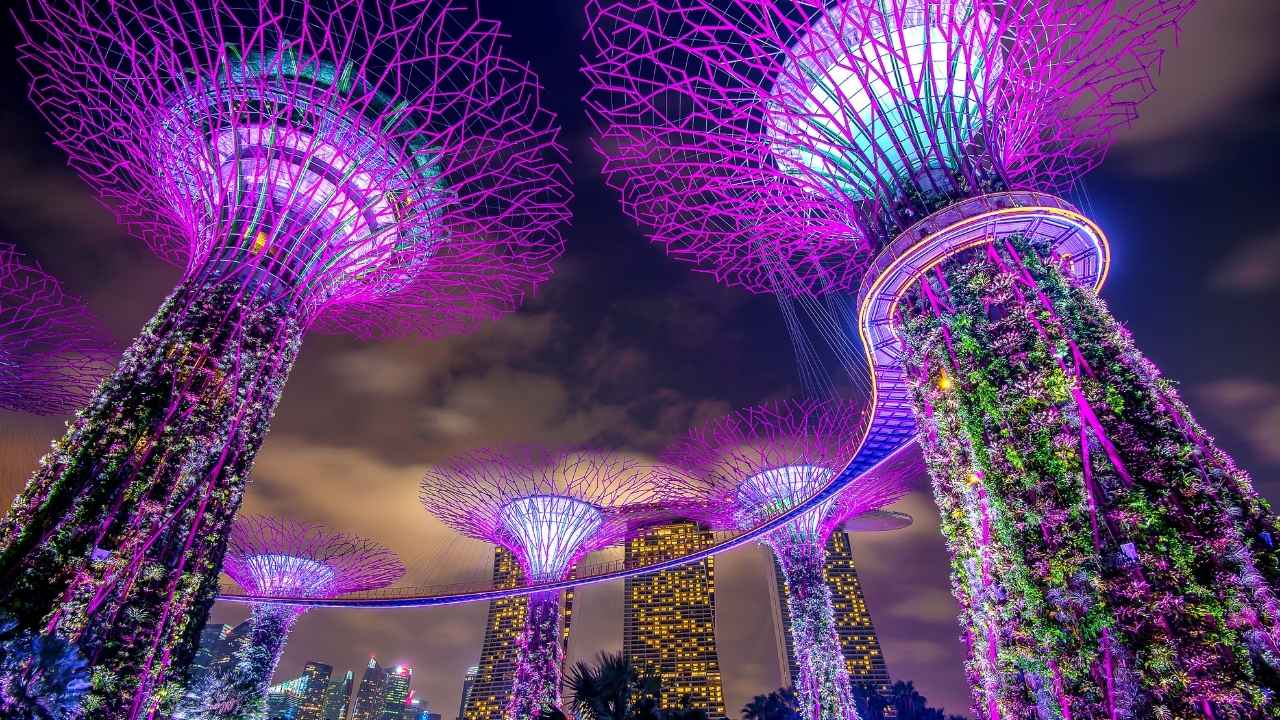
It is also one of Singapore’s main festive periods. Orchard Road lights up with Christmas decorations, while Christmas Wonderland at Gardens by the Bay is part of the year-end celebrations.
What to Pack for Singapore?
No matter when you visit Singapore, pack for warm weather, humidity and sudden rain.
- Lightweight, breathable clothes such as cotton or linen shirts, tops, trousers, shorts and dresses
- A light layer such as a thin cardigan or sweater for heavily air-conditioned malls, hotels and other indoor spaces
- A compact umbrella for sudden rain showers
- A lightweight rain layer, if preferred, for extra protection during rainy periods
- Sunscreen for daily use and a cap, hat or sunglasses for extra sun protection
- Comfortable walking shoes for sightseeing
- Modest clothes that cover the shoulders and knees when visiting religious places
- A slightly dressier outfit for restaurants, bars or establishments with a formal dress code
- A small day bag to carry your umbrella, sunscreen and a light layer while sightseeing
Conclusion
So which month should you choose? No single month works for every Singapore trip. The city stays warm throughout the year, but rainfall varies quite a bit between months.
February can be a great month to visit Singapore for drier weather and more outdoor plans. For travellers from India, school holidays and festive breaks may also play a part in deciding when to go.
Singapore’s annual calendar also brings Chinese New Year, cultural festivals, National Day, night events and the festive season, giving you more reasons to plan around a particular month.
A little planning around weather, events and bookings can make the trip much easier to manage. For help planning your Singapore trip from start to finish, contact Dimaak Tours.
FAQs About the Best Time to Visit Singapore
1. When is the best time to visit Singapore?
For the driest weather, visit Singapore in February. October to December work for planning around Puja, Deepavali and Christmas holidays. These periods can see higher demand, so plan your trip early and keep your itinerary flexible around the weather.
2. What is the best time to visit Singapore from India with family?
Families from India can plan a Singapore trip around school and festive holidays. The March to June period overlaps with summer holidays in many parts of India, while October to December also has major festive breaks. Keep the weather in mind when choosing your travel dates.
3. Which is the driest month to visit Singapore?
February is Singapore’s driest month. Rain is still possible, but conditions are generally more suitable for outdoor plans.
4. When is the best time to visit Singapore for festivals and events?
That depends on which event you want to see. January and February are good for Chinese New Year and the Thaipusam festival, while May to October has events such as the Singapore International Festival of Arts, i Light Singapore, National Day and the Singapore Grand Prix.
