


Key Takeaways:
|
The Northern Lights (Aurora Borealis) are a spectacle that feels almost otherworldly. They warp and swirl in apple green like living brushstrokes against the starry night sky.
Finland, particularly Lapland, is one of the best places to see them, with displays appearing up to 200 nights a year. But seeing them isn’t just about luck, it’s about timing, location and preparation.
If you are planning a northern lights trip from India, read on to find out the best time to visit Finland for northern lights, top places to visit, visa requirements, an approximate cost breakdown and essential travel tips.
What Causes the Northern Lights? A Quick Explanation
Legend has it that ‘revontulet’ (Finnish word for Northern Lights) are created by a magical Arctic fox: with a burning tail, it runs through the snowy woods, and the sky tends to reflect the glow.
But in scientific terms, auroras occur when charged particles from the sun travel to Earth. The Earth’s magnetic field guides those particles towards the poles, where they collide with atoms of oxygen and nitrogen, creating a glow that lights up the sky.
Around Earth’s poles, there’s a region called the Aurora Oval, where the auroras are most likely to appear. The northernmost part of Finland, that is, Lapland, entirely belongs to this auroral oval. During peak solar activity, northern lights occur every other clear night in Lapland from September to March.
Best Time to See Northern Lights in Finland: Month-by-Month Guide
| Month | Aurora Activity | Avg. Temperature | Daylight Hours | Snow | Crowds | Verdict |
| September | High(Autumn Equinox) | 0 to 10°C | 11-14 hrs | No | Low | Great for milder weather |
| October | High | -2 to 5°C | 8-11 hrs | Early Snow | Low – Medium | Mild weather and high activity |
| November | Moderate | -5 to -10°C | 3-7 hrs | Snow | Medium | Transition month, cloudy |
| December | Moderate-High | -10 to -20°C | 0-3 hrs | Snow | High (Christmas) | Magical but expensive, darkest month, very cold |
| January | Moderate-High | -15 to -25°C | 2-6 hrs | Snow | Medium | Nights are darker and very cold |
| February | High | -10 to -20°C | 6-10 hrs | Snow | Medium | Clearer skies, good all around |
| March | High (Spring Equinox) | -5 to -20°C | 10-13 hrs | Snow | Medium | Our Top Recommendation |
September-October: Autumn Aurora Season
September and October are the two best months to see northern lights in Finland because of the equinox effect. It allows more solar particles to interact with Earth, increasing the chances of auroras.
While the northern lights can appear at any time during dark hours, they are most commonly seen between 10 pm and 2 am, meaning you may need to stay up late to catch them. And with little to no ice on lakes and rivers, you can enjoy its reflections across the water.
During the day, you can appreciate the landscape bathed in ruska or autumn colours, which is equally rewarding. Temperatures in September and October are more tolerable than in winter, although snow may begin to appear towards the end of October in Lapland.
Fewer people visit Finland during these months, and the prices are generally lower than in the coming months.
November: Transition Month
In November, snow and long nights begin to settle over Lapland. But it is not the best month to see northern lights, as cloud cover often obscures the views. Temperatures often go below freezing in November.
Late November does give you a better chance of spotting northern lights due to long dark hours. Winter activities like dog sledging, reindeer sleigh rides, and early-season skiing also begin towards the end of November.
December-January: Peak Winter & Polar Nights
By mid-December, polar nights or 24-hour darkness arrive in northernmost Lapland, and daytime is significantly shorter throughout January. The cold, dry air of these peak winter months increases the chances of clear skies, so there are more chances of the northern lights display.
Thick snow covers Lapland during these months, and temperatures are at their coldest, often dropping to -30 °C. Christmas and New Year are major celebrations in Finland; the snow and the decorations turn Lapland into a winter wonderland. It also draws more people to Finland, and the prices often shoot up.
February-March: Our Top Recommendation for Indian Travellers
The spring equinox, which falls on 20th March, favours high geomagnetic activity, making it one of the best times to see northern lights in Finland. The weather is also more stable and drier, which significantly reduces cloud cover.
Temperatures are a bit more comfortable than in January. During these months, you can spend your days on winter adventures like snowmobiling through Arctic forests and your nights chasing the northern lights.
There are fewer crowds compared to December and January. March tends to be more affordable, but local holidays such as Easter can drive prices up.
What Time Do Northern Lights Appear in Finland?
The northern lights appear when the skies are clear, nights are dark, and solar wind is strong. They are most common between 10 pm and 2 am, with peak activity around midnight. It’s best to stay out for several hours, as auroras occur in bursts, not as a continuous show.
In December and January, daylight ends around 2-3 pm, so you can catch glimpses of auroras even in the late afternoon.
The Finnish Meteorological Institute maps the probability of auroras in real-time. And there are apps where you can track the auroras, such as Aurora Alert Realtime and My Aurora Forecast. They combine real-time magnetic field data with local weather forecasts to predict the strength and visibility of northern lights. They will help you decide when to head out and where to look.
Top 7 Places to See Northern Lights in Finland
To catch the northern lights, Finnish Lapland is the place to be, and in general, the farther north, the better your chances. For example, places along the Arctic Circle (66.5°N) already have good viewing opportunities, while areas above 68°N are excellent aurora destinations.
Utsjoki
Utsjoki is the northernmost municipality in Finland, located above 69°N on the Norwegian border. This remote, sparsely populated area has almost zero artificial light pollution. The surrounding mountains block clouds from the Atlantic coast, keeping the skies clear.
Utsjoki also has long polar nights from late November to late January. Together, these qualities make Utsjoki the best place to see the northern lights in Finland.
The nearest airport to Utsjoki is in Ivalo, about a 175-kilometre drive away, with flights available via Helsinki. Utsjoki also has comfortable accommodation options, including Utsjoki Arctic Resort and Hotel Utsjoki.
Apart from being the best northern lights destination, Utsjoki is one of the best places in Finland to explore Sámi life and culture. You can visit the Parish huts and Utsjoki Church, important cultural and historical sites in Utsjoki, dating back to the 18th and 19th centuries.
Snowmobiling, ice fishing, snowshoeing and skiing are winter activities you can enjoy here. While you are in Utsjoki, visit Giisá, a community hub where you can enjoy coffee and fresh-baked buns.
Kilpisjärvi
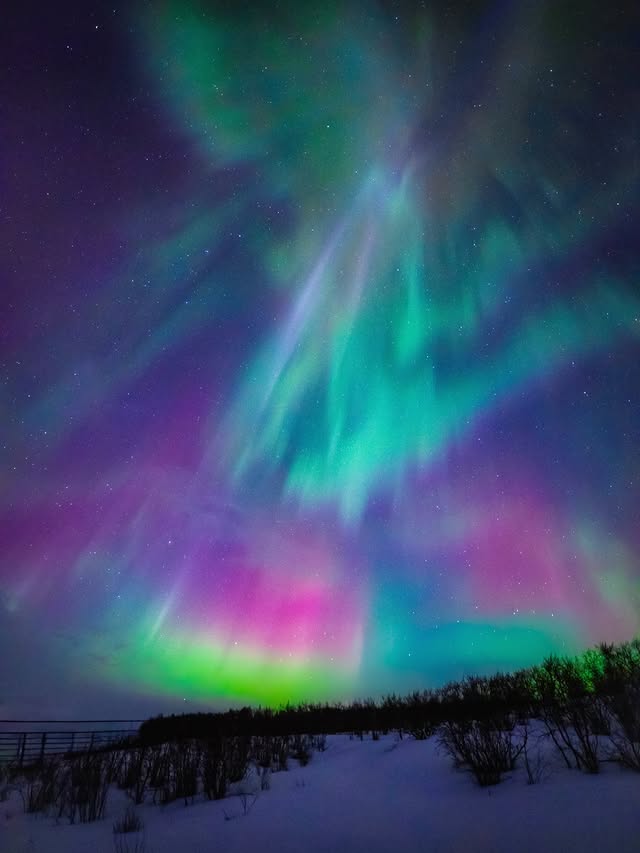
Located at 69°N, this remote village has a high probability of aurora sighting due to its position within the auroral oval. This village has a small population and very minimal light pollution.
The village has a unique microclimate due to its 500m altitude and its location near the Arctic Ocean, which leads to clearer, cloud-free skies. These three peculiarities make Kilpisjärvi one of the best places to see northern lights in Finland.
You can fly to Kittilä Airport, then drive 280 kilometres to Kilpisjärvi by rental car or bus. Kilpisjärvi also has several arctic adventures in store, such as hiking up Saana Fell. You can hike the 4-kilometre-long marked trail to the summit of Saana at 1029m.
Another adventure is snowmobiling to the Three Country Cairn, where the borders of Finland, Norway and Sweden meet. It’s a yellow cement monument on Lake Goldajarvi, around which you can walk and take pictures. On Lake Kilpisjärvi, you can enjoy dog sledging and ice fishing.
Kilpisjärvi remains a very uncrowded place to visit, and it is best for adventurous travellers who are willing to go the extra mile to catch a glimpse of the aurora borealis in Finland.
Ivalo & Inari
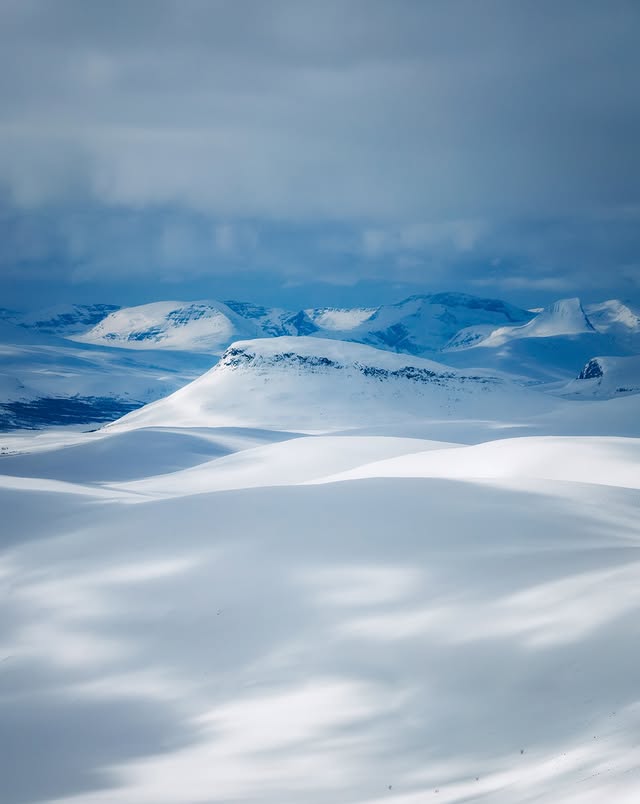
Ivalo and the surrounding Inari regions lie north of 68°N. Light pollution is very low due to Inari’s smaller population. Still, the atmosphere often forms cloud cover when warmer, moist air from the Arctic Ocean clashes with cold Arctic air, limiting views of the northern lights. Even so, being situated above 68°N still makes these areas excellent for viewing northern lights.
With an airport in Ivalo, these areas are easily accessible despite their remoteness, and at Wilderness Hotel Inari, there are Aurora cabins for comfortable viewing of the northern lights.
Beyond northern lights, Inari has other significance, such as being the cultural heart of the Sámi people. Siida, the Sámi Museum and Nature Centre in Inari, is an important place to learn about Sámi culture, history and Arctic nature.
You can also visit Pielpajarvi Wilderness Church in Inari, where, centuries ago, people gathered and stayed for the winter months. Reindeer sleigh rides, dog sledging, snowmobiling and ice fishing on frozen Lake Inari are other key activities you can do in Inari.
Saariselkä
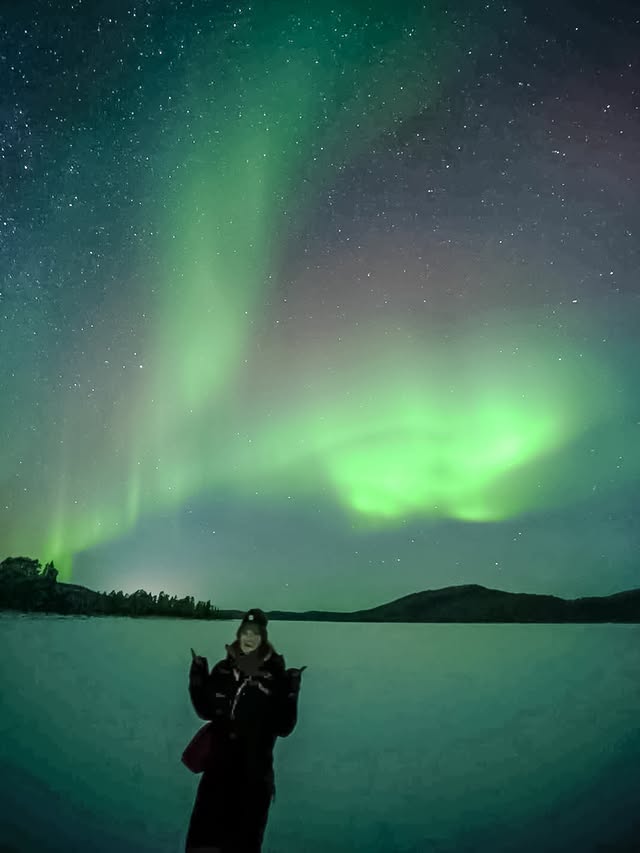
Located at 68°N, Saariselka is a 30-minute drive from Ivalo International Airport. It is a small village surrounded by vast wilderness, so there is very low light pollution, which is crucial for the northern lights. Kaunispää and Kiilopää fells provide an unobstructed view of the northern lights above the treeline.
Besides northern lights, Saariselkä features the longest toboggan run in Lapland, a high-speed sledging slope which begins at the top of Kaunispää fell. You can get to the summit with a chair lift ride from the Saariselkä Ski & Sport Resort. The slope is only open during lift operating hours. Skiing, snowboarding and guided or self-led snowmobiling are other winter activities you can find in Saariselkä.
Muonio & Ylläs
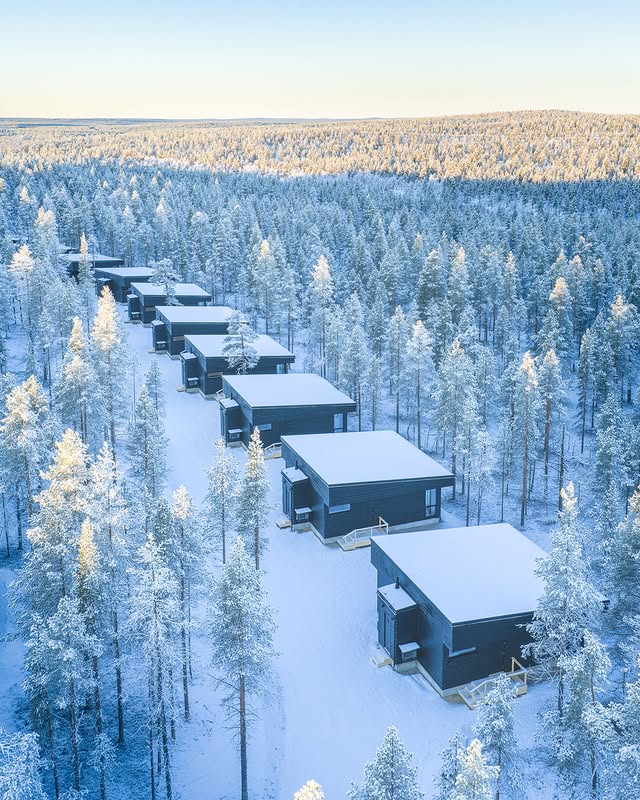
Located at 67.9°N, Muonio and Ylläs are good places to see the northern lights, with low light pollution and wide open skies. You can choose between guided aurora tours and viewing from the comfort of cabins.
Apart from viewing the northern lights, visitors can explore the southern and western parts of Pallas-Yllästunturi National Park or go snowmobiling, with over 400 kilometres of snowmobiling routes in the Ylläs region.
Ice floating is another unique activity you can do while you are in Ylläs. It is a guided activity in which you float in near-zero-degree water in a frozen lake, wearing waterproof, insulated dry suits.
Levi
Levi is a renowned ski resort and tourist town in the municipality of Kittilä, located at 67.7°N. Its location is ideal for viewing the aurora, and the town dims its streetlights during the aurora season. Levi is easily accessible via Kittilä airport, which is roughly 17 kilometres away.
You can either book a guided aurora tour and venture into the remote regions of Levi, or book a spot at places like Aurora Pyramids and fall asleep under the northern lights.
Skiing is a major activity here, with 43 slopes, and total beginners can also take part. And beyond skiing, there are over 800 kilometres of snowmobile tracks and opportunities for husky safaris and reindeer rides.
Rovaniemi
Rovaniemi is the homeland of Santa Claus, located above the Arctic Circle at 66.5° north. The chances of spotting the northern lights depend on venturing to remote locations or joining a guided tour, as light pollution reduces visibility.
It is the most accessible Lapland city and has direct flights from Helsinki. If you are visiting Rovaniemi, you can’t miss Santa Claus Village. You can meet Santa in his post office, send postcards and collect souvenirs. You can also cross the Arctic Circle and get certified for it. And visit Snowman World to enjoy ice slides and ice sculptures.
Quick Note on Helsinki
Helsinki is not a reliable place to catch northern lights, as it is too far south (60°N). While Lapland experiences 200 nights of northern lights, Helsinki sees them on 10-20 nights per year.
Finland Trip from India: Visa, Flights & Travel Logistics
Schengen Visa for Finland from India
Indians require a Schengen visa to visit Finland, and you can apply for a visa through VFS Global Centres in New Delhi, Bengaluru, Chennai, Hyderabad, Kolkata, or Mumbai. And when you do, make sure to apply 2-4 months before your planned journey. Visa processing usually takes 15-20 working days.
The required documents include a passport, flight reservations, proof of accommodation, bank statements and travel insurance covering EUR 30,000. The visa fee is EUR 90 (9700 INR) for anyone aged 12 or older and EUR 45 (4800 INR) for children aged 6-11.
Flights From India to Finland
There are direct non-stop flights from New Delhi to Helsinki operated by Finnair, and one-stop flights via the Middle East (Dubai, Doha, Abu Dhabi) or Europe (London, Munich, Frankfurt) operated by Qatar Airways and Lufthansa.
The round-trip fares typically range from 40,000 to 90,000 INR (approx.) during the northern lights season, from September to March. Non-stop flights take around 10 hours, and one-stop flights take anywhere from 13 to 30 hours to reach Helsinki.
Internal flights in Finland take around 1-2 hours, and the cheapest flights cost approximately 12,000 INR. Book 2-3 months in advance for lower prices.
Currency, SIM & Connectivity
Finland’s official currency is the Euro. As a cashless society, even remote regions of Finland accept cards, and using a forex card is the right choice for convenience.
In terms of connectivity, you can either buy a prepaid SIM from R-kioski stores at the Helsinki Airport. It is best if you are staying longer, and you prefer a local phone number and cheaper unlimited data. DNA, Elisa and Telia are options you can choose from.
Or go for an eSIM, which is more convenient for short trips. You can install it before travelling to Finland and ensure instant connectivity upon arrival. Airalo, Holafly and Saily are reliable eSIM options for Finland, which offer 5G connectivity. On the downside, they are data-only e-SIMs and are more expensive than a local SIM.
There is good network coverage in Lapland towns, though in remote wilderness areas, the signal tends to be patchy. And remember to bring a universal adapter, as Finland uses Type C and Type F electrical plugs and sockets.
How Much Does a Northern Lights Trip to Finland Cost from India? (2026 Travel Breakdown)
Estimated Cost Breakdown Per Person (7-Day Trip)
| Expenses | Budget Trip in INR (Approx.) |
| Flights (India-Helsinki round trip) | 40,000-60,000 |
| Internal flights (Helsinki- Lapland regions one way) | 22,000-50,000 |
| Accommodation (6 nights) | 46,000-1,85,000 |
| Food & dining (6 days) | 15,000-20,000 |
| Activities & Tours | 13,000-32,000 |
| Visa | 4,800-9,700 |
| Others (SIM, shopping, transport) | 5,000-10,000 |
| Total Per Person | 1,46,000-3,60,000 |
Note: Travel in September, October or March and book at least 4 to 5 months in advance to secure lower prices on flights and accommodation.
Practical Tips for Indian Travellers Visiting Finland for Northern Lights
Surviving -30°C and below in Lapland winter is all about layering.
- Base layer: Wear merino wool or other synthetic materials to keep your skin dry and warm
- Mid Layer: Add fleece or down jackets for insulation
- Outer Layer: Use windproof/waterproof jackets
- For feet: Wear thick wool socks and insulated winter boots
- For hands: Pair thin merino wool gloves with thick waterproof mittens
- For head: Put on a balaclava, a warm beanie and a neck gaiter
- As an extra, keep disposable hand and toe warmers to combat extreme cold.
Note: You can rent Arctic-grade winter gear in Finland. Though you must bring your own high-quality thermal base layers.
You must take precautions to navigate extreme cold climates; follow the advice of tour guides and locals when venturing into the wilderness and chasing the northern lights.
How to Increase Your Chances of Seeing the Northern Lights
Although northern lights tend to appear 200 nights a year in Finnish Lapland, clear skies are essential to catch the phenomenon yourself. Staying 3-5 nights increases your chances of seeing it.
Either go as far North as possible or get as far away from streetlights as possible. Booking a guided tour also increases your chances, as local guides know better about when and where to look.
You can track the probability of aurora borealis in Finland using Aurora Alert Realtime, My Aurora Forecasts and the Finnish Meteorological Institute’s real-time aurora map. Look for a KP index of +3, and a negative Bz value for vivid displays of the northern lights.
And if you are into capturing the northern lights on your phone, use night mode or a long exposure camera app. To capture it on DSLRs, a wide-angle lens (10 mm-24 mm), ISO 1600-3200, 10-15-second exposure, and a sturdy tripod are necessary to begin with.
Conclusion
A trip to Finland to see the northern lights is a wise choice because of northern Finland’s (Lapland) position within the auroral oval, the lack of light pollution, and the high probability of clear skies.
So if you are keen on catching them, choose September or March as those months have a high probability, along with milder temperatures and go as far north as possible.
Apart from spotting the northern lights, Lapland has winter activities like skiing, snowmobiling, husky sledging and more in store. So even if northern lights cannot be guaranteed, the experience will leave you with a mix of wonder and adrenaline from those Arctic adventures.
FAQs on Northern Lights in Finland
1. Is it guaranteed that you’ll see northern lights in Finland?
No. The Northern Lights are a natural phenomenon that depends on the strength of solar activity and a clear sky to be visible, so they cannot be guaranteed. Although you have your chances, if you visit Lapland, where auroras are visible 200 nights a year. Visit during peak months (September-October, February-March) and stay for at least 5-6 nights.
2. Can Children handle the extreme cold in Lapland?
Children over five can generally manage the cold with proper winter clothing. Though if you are travelling with young children, avoid December and January; choose September or October instead.
3. How early should you book a Finnish Northern Lights Trip?
Book at least 6-9 months in advance, especially for peak season (December-February), to secure better prices and a wider choice of tours.
4. Do you need to tip in Finland?
No. The Finns do not expect tips. You do have the option to round up the bill or leave a small tip for exceptional services, though it is not mandatory.
5. Is Finland Safe for Indian Families and Solo Women?
Yes. Finland is one of the safest countries in the world, which features low crime rates, high gender equality and a respectful culture.
6. Can you find vegetarian food in Finland?
Yes. Even though Finnish traditional cuisine is rooted in fish, meat and dairy, tourist places like Rovaniemi and Levi have Indian dining options and vegetarian items on the menu. In remote areas, like Kilpisjärvi and Utsjoki, options are very limited.
If you have strict dietary preferences, choose accommodations with Kitchenettes where you can cook. You can shop at K-supermarket and S-market stores in Rovaniemi, Saariselkä, and Levi, which provide vegetarian staples.
