


Key Takeaways:
|
There’s much more to Manila than an arrival point before Boracay, Palawan, or Cebu. The city introduces you to a different side of the Philippines through its history, food, architecture, and everyday life.
Walking through the walled city of Intramuros alone highlights the unique experiences in Manila that you won’t find elsewhere in the country.
But with so many attractions spread across different neighbourhoods, deciding where to start can feel overwhelming, especially if it’s your first visit.
This guide brings together the best places to visit in Manila, whether you’re interested in history, food, architecture, museums, shopping, or family attractions.
Best Places to Visit in Manila, Philippines
Manila’s attractions range from Spanish colonial landmarks and museums to modern districts, food streets, markets, and family-friendly experiences. Here is a list of the top places to visit in the city.
1. Intramuros
Best for: First-time visitors, history lovers, and photographers
Intramuros is the oldest part of Manila and the best place to begin your sightseeing. Built by the Spanish in the late 16th century, this district preserves centuries of Philippine history within its stone walls.
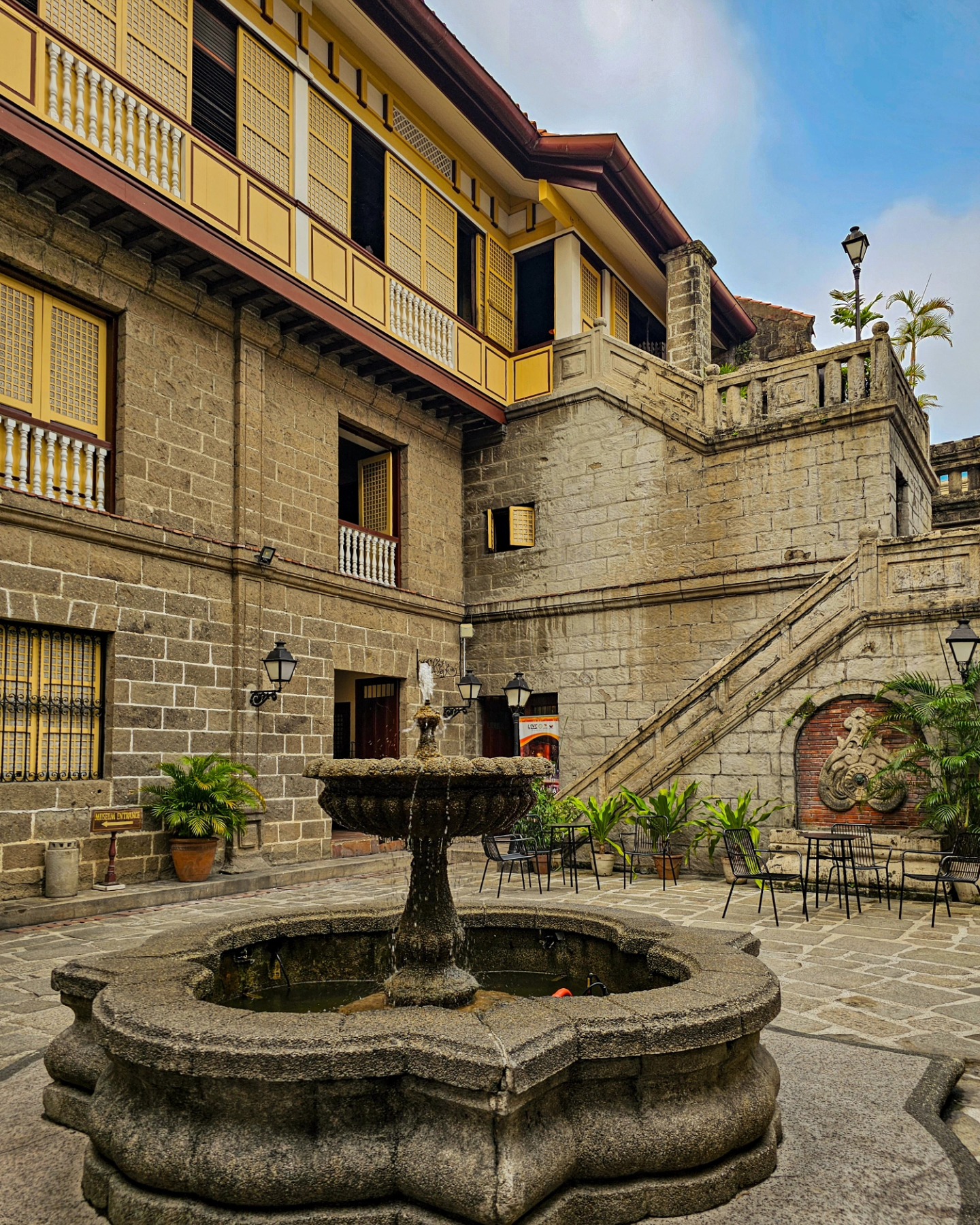
Fort Santiago, San Agustin Church, Casa Manila, and Manila Cathedral all stand within this district, making it easy to visit Manila’s several major landmarks in one trip.
Highlights of Intramuros
- General Luna Street: Spanish-era buildings, stone walls, horse-drawn carriages, and cafes line the route, giving you countless photo opportunities.
- Cycle through the walled city: Bamboo cycles are available for guided and self-guided rides. It is a practical way to cover more ground than walking, especially during warmer months.
- Visit Plaza San Luis Complex: Restored colonial buildings and courtyards in the area house restaurants, cafes, and souvenir shops. It’s a good place to take a break between sightseeing.
2. Fort Santiago
Best for: History enthusiasts, architecture lovers, and photographers
Fort Santiago is the most significant landmark within Intramuros and one of the first places to be included on any Manila itinerary. Once Manila’s main fortress, it now stands as a public park and museum honouring Dr José Rizal.
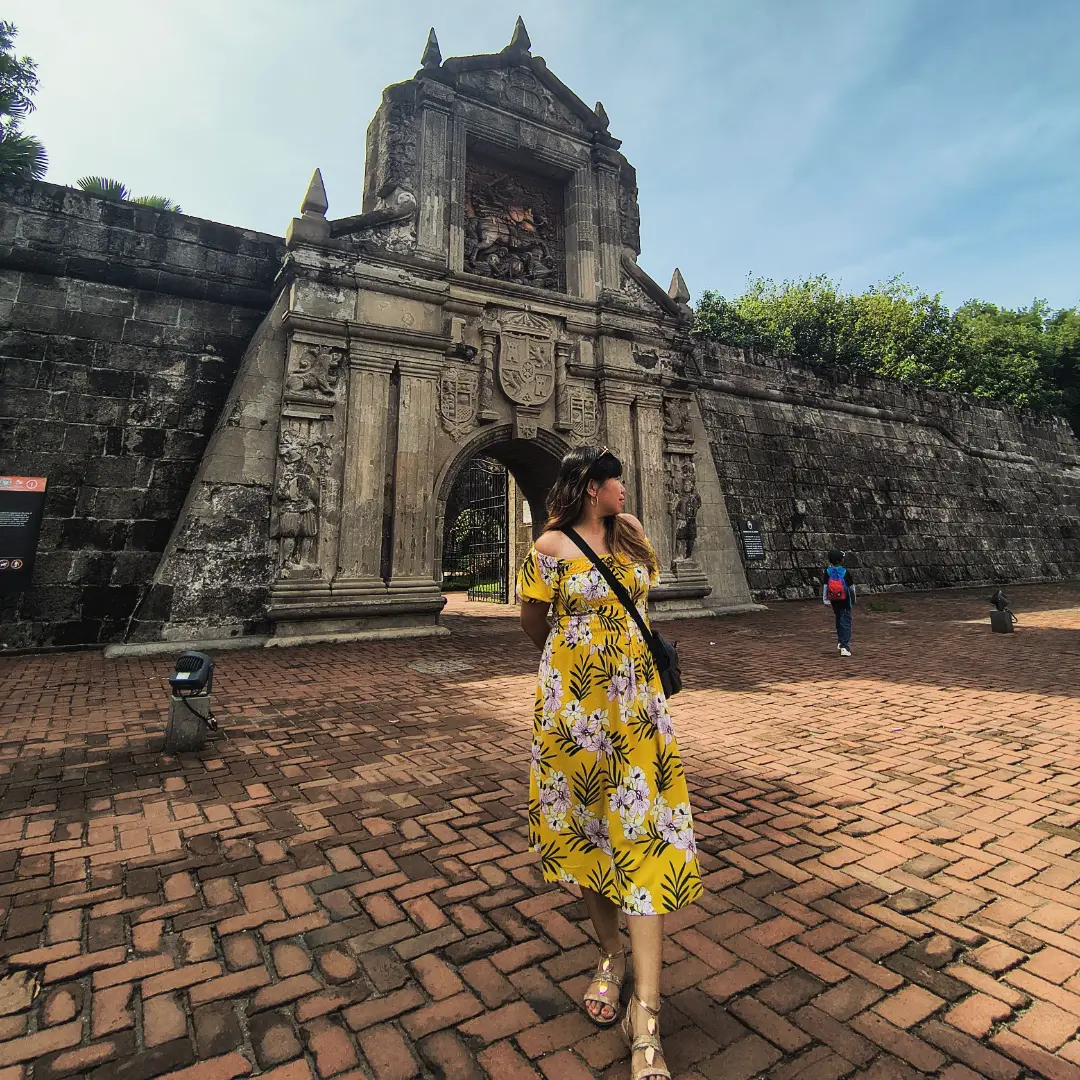
What to See and Do at Fort Santiago
- Plaza Moriones and the main gate: Plaza Moriones is the open, landscaped public square in front of Fort Santiago. Cross the restored moat, pass through the stone gate, and enter the historical parade grounds, now a large green space where visitors can walk and relax.
- Rizal Shrine Museum: Housed inside a restored barracks, the museum displays José Rizal’s personal belongings, manuscripts, and memorabilia, providing valuable insight into his life and legacy.
- Follow Rizal’s final footsteps: Follow the brass footprints on the ground, which mark the exact route Rizal took to his execution ground at present-day Rizal Park. It adds huge emotional depth to your visit.
- Climb the old ramparts and tour the dungeons: The defensive walls overlook the Pasig River and parts of Intramuros, providing some of the finest viewpoints in the historic district. And visit the dark underground chambers where prisoners were held during colonial times.
3. National Museum Complex
Best for: Art and culture lovers, history enthusiasts, and families
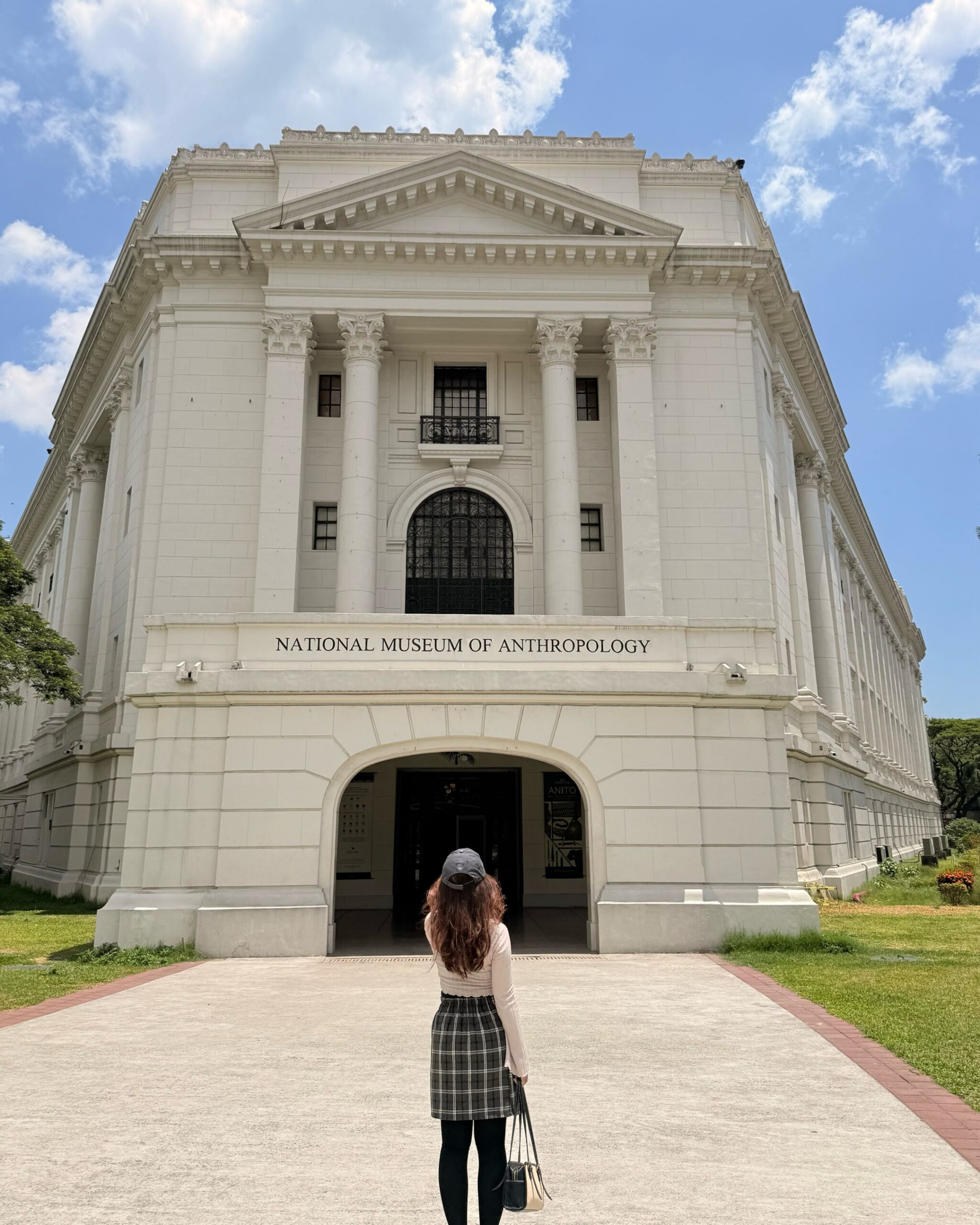
The National Museum Complex consists of three museums within walking distance of each other. Each museum focuses on a different aspect of the country’s story. Admission is free for everyone.
The National Museum Highlights
- National Museum of Fine Arts: Home to Juan Luna’s Spoliarium, the country’s most celebrated painting. The galleries also display works by Fernando Amorsolo and other Filipino masters alongside sculptures and religious art.
- National Museum of Anthropology: Houses archaeological discoveries, indigenous textiles, traditional weapons, and artefacts from the Philippines’ different indigenous and cultural communities. It provides useful context before visiting other historical sites in Manila.
- National Museum of Natural History: Exhibits cover the Philippines’ wildlife, geology, marine ecosystems, and biodiversity. The museum’s centrepiece is the “Tree of Life”, a striking glass-domed structure that connects the museum’s upper floors.
4. Rizal Park
Best for: First-time visitors, families, and casual sightseeing
Rizal Park (Luneta Park) is one of Manila’s largest public spaces, spanning about 58 hectares. The park is considered the birthplace of Philippine nationalism and holds immense historical significance.
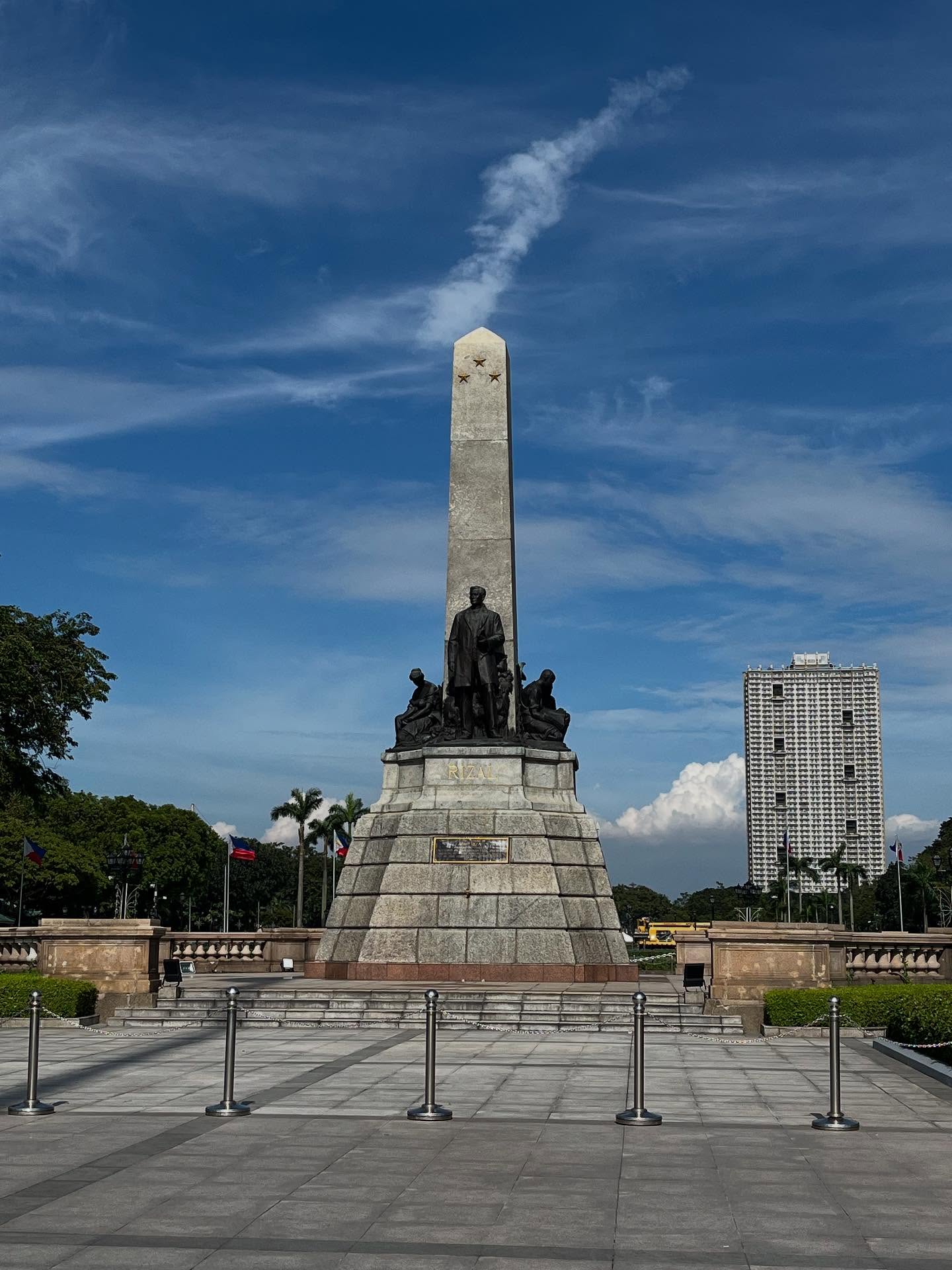
With landscaped gardens, open lawns and monuments, the park lies just steps away from the National Museum Complex.
Top Attractions in Rizal Park
- Rizal Monument: The monument marks the resting place of Dr José Rizal’s remains, and his execution took place nearby in 1896. It has become a defining landmark of the Philippines’ national heritage and is always guarded by ceremonial soldiers.
- Chinese and Japanese Gardens: These landscaped sections have ponds, bridges, pavilions, and shaded paths, making them a peaceful place to pause between sightseeing.
- Musical Dancing Fountain: A free show with synchronised water displays, coloured lights, and music. It is held every evening from 6:00 PM to 10:00 PM, Monday to Thursday, and from 7:00 PM to 12:00 AM, Friday to Sunday.
5. Binondo (Chinatown)
Best for: Food lovers, culture seekers, and budget travellers
Founded in 1594, Binondo is recognised as the world’s oldest Chinatown. Its narrow streets, family-run eateries, traditional bakeries, herbal medicine shops, temples, and gold stores reflect centuries of Chinese and Filipino influence.
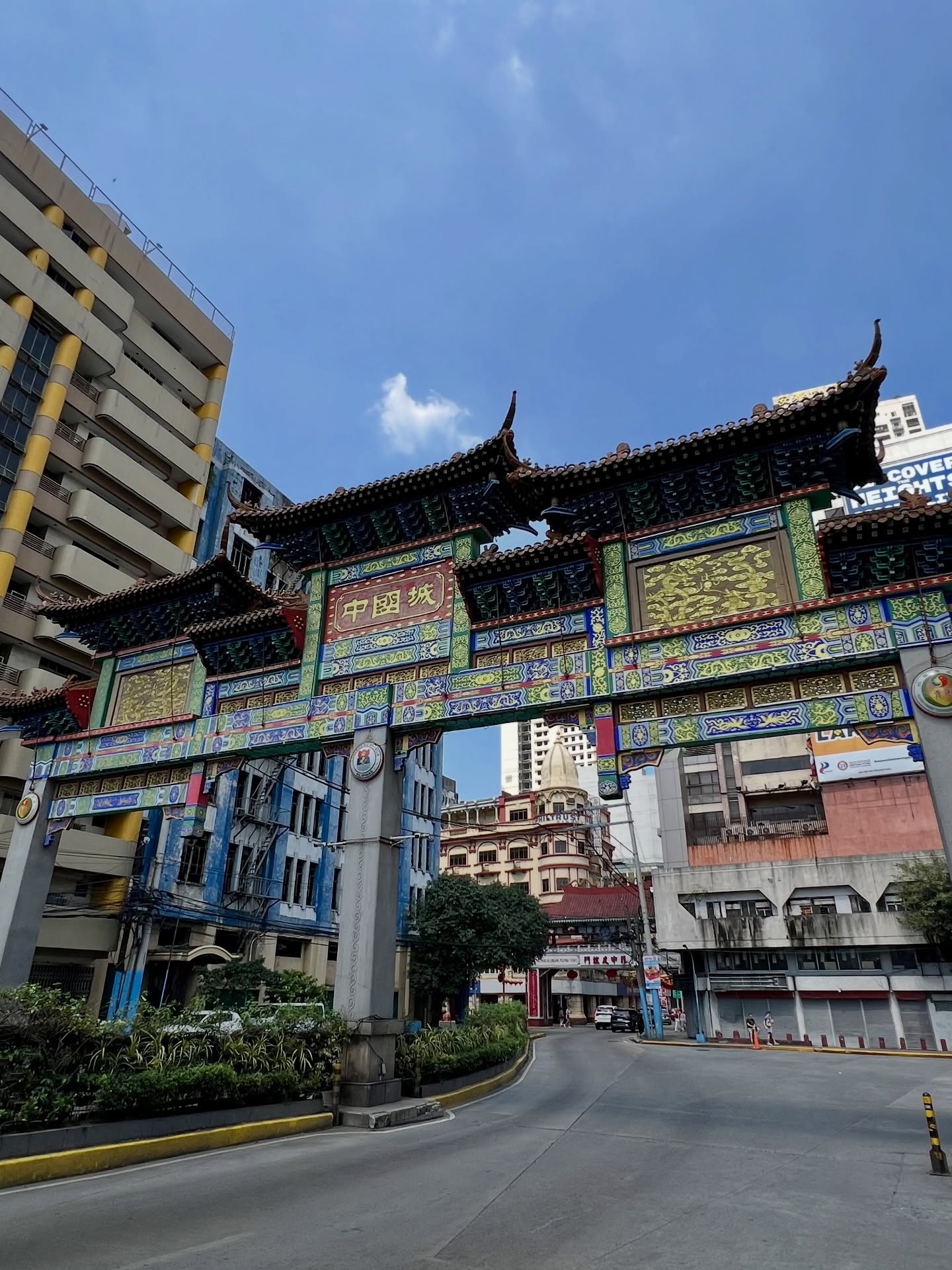
It is a great place to experience the rich fusion of Chinese and Filipino food culture.
Best Things to Do in Binondo
- Walk along Ongpin Street: This is Binondo’s main street, and the busiest part of the district. It is lined with traditional bakeries, tea shops, jewellery stores, herbal medicine outlets, and long-standing family businesses.
- Binondo food crawl: Try freshly made dumplings (siomai), fried siopao, beef brisket noodles, fresh lumpia and Chinese-Filipino desserts. Many restaurants here have been serving the same recipes for generations.
- Visit Binondo Church: This centuries-old church stands at the heart of Binondo. You can see the contrast between the Spanish colonial facade and an octagonal bell tower inspired by Chinese architecture. The church is dedicated to Saint Lorenzo Ruiz, the first Filipino saint.
- Lucky Chinatown Mall: If you need a break from the busy streets, this shopping complex has restaurants, cafes, souvenir shops, and an air-conditioned food hall under one roof.
6. Bonifacio Global City
Best for: Couples, shopping, cafes, nightlife, and luxury travellers
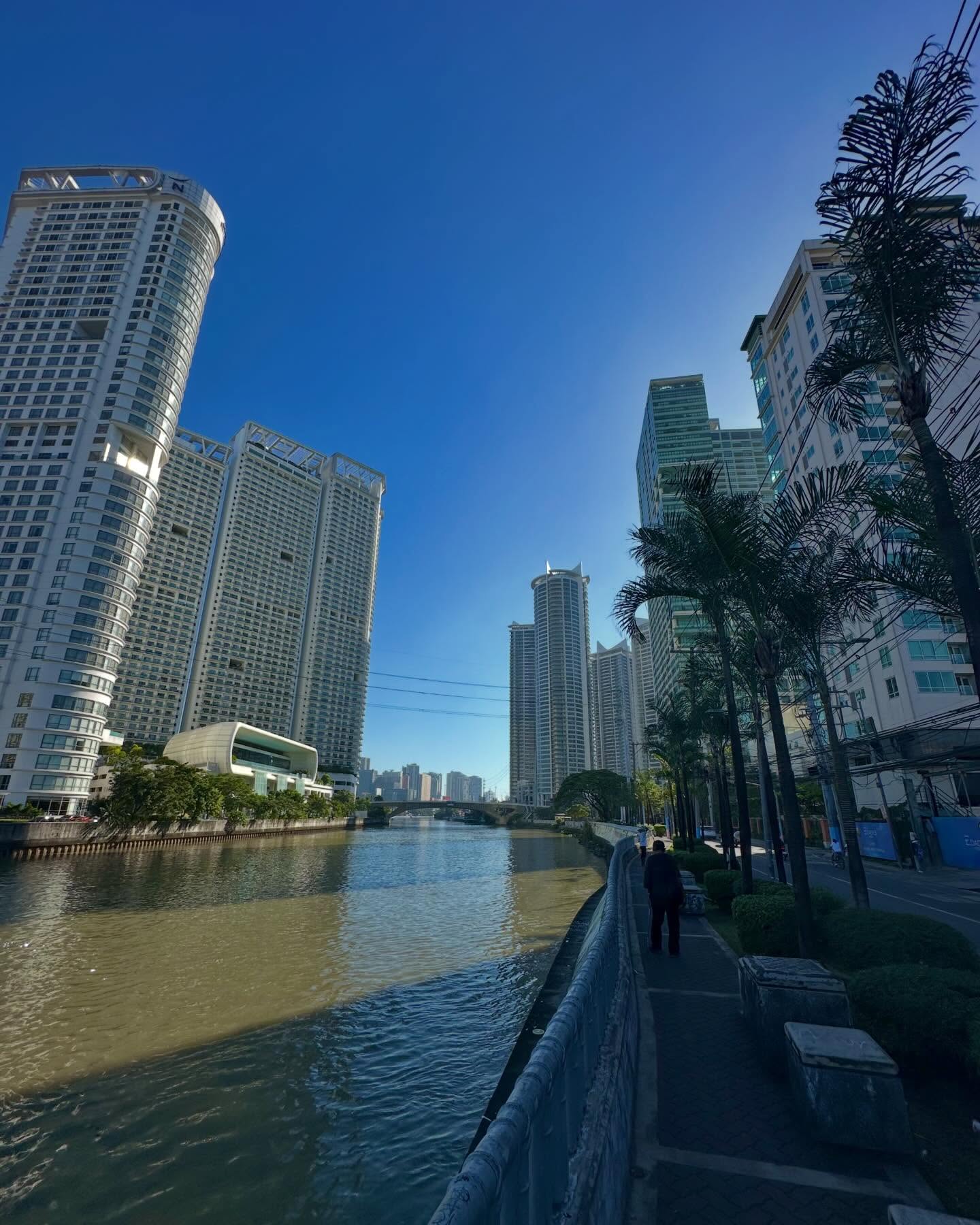
Bonifacio Global City presents a different side of Manila. Wide pedestrian walkways, landscaped parks, and skyscrapers replace the colonial streetscapes found elsewhere in the city.
Best Ways to Experience BGC
- Walking and hunting public art: Colourful murals, large sculptures and art installations appear throughout BGC, turning its urban blocks into open-air galleries. They are good photography spots.
- Bonifacio High Street: This open-air shopping and dining district brings together international brands, local boutiques, cafes, and restaurants. Even if you are not planning to shop, it is a pleasant place to walk, stop for coffee, or have dinner.
- Visit The Mind Museum: A leading science museum in the Philippines, with five interactive exhibits, such as Atom, Life, Earth, Universe, and Technology. Families with children can easily spend a few hours here.
- Spend the evening in BGC: After sunset, the district shifts its focus to dining, rooftop bars, and entertainment, making it a top place to experience nightlife in the Philippines.
7. San Agustin Church
Best for: Heritage lovers, architecture enthusiasts, and religious travellers
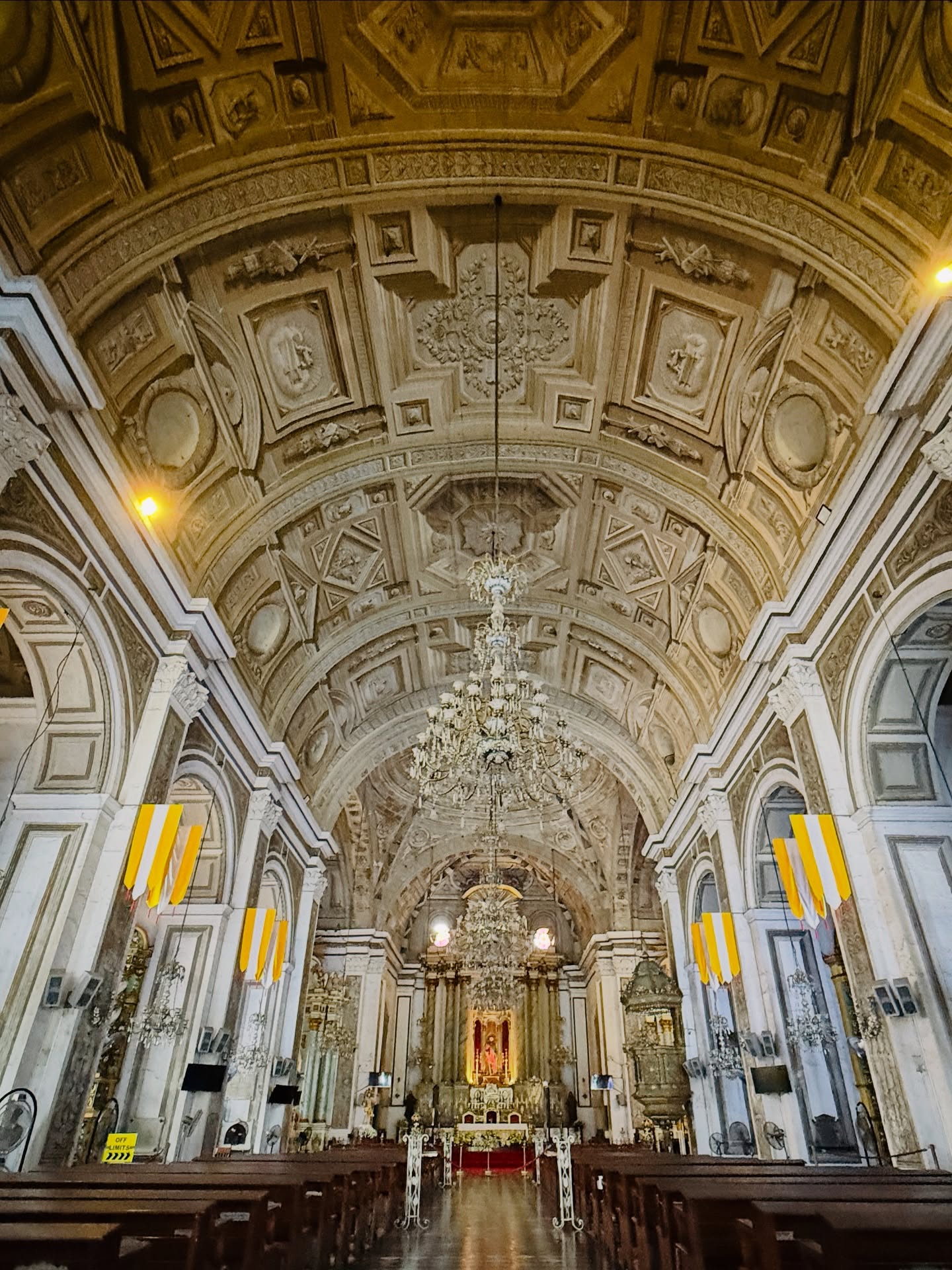
San Agustin Church is the oldest stone church in the Philippines and the only historic church in Intramuros to survive the Battle of Manila in 1945. While parts of the church were damaged, its main structure remained intact. The church remains an active place of worship.
Why Visit San Agustin Church
- The architecture: Thick stone walls, a simple facade, and finely carved wooden doors reflect the church’s Spanish colonial design. Its solid construction has helped it survive major earthquakes, invasions and wars.
- Painted ceiling: The ceiling creates the illusion of three-dimensional carvings and domes, even though the decorations are entirely painted.
- San Agustin Museum: Next to the church, the former monastery now houses the San Agustin Museum. Inside, you’ll find centuries-old religious paintings, wooden furniture, statues, handwritten choir books, ceremonial robes, and other church artefacts.
8. Manila Baywalk
Best for: Couples, sunsets, and evening strolls
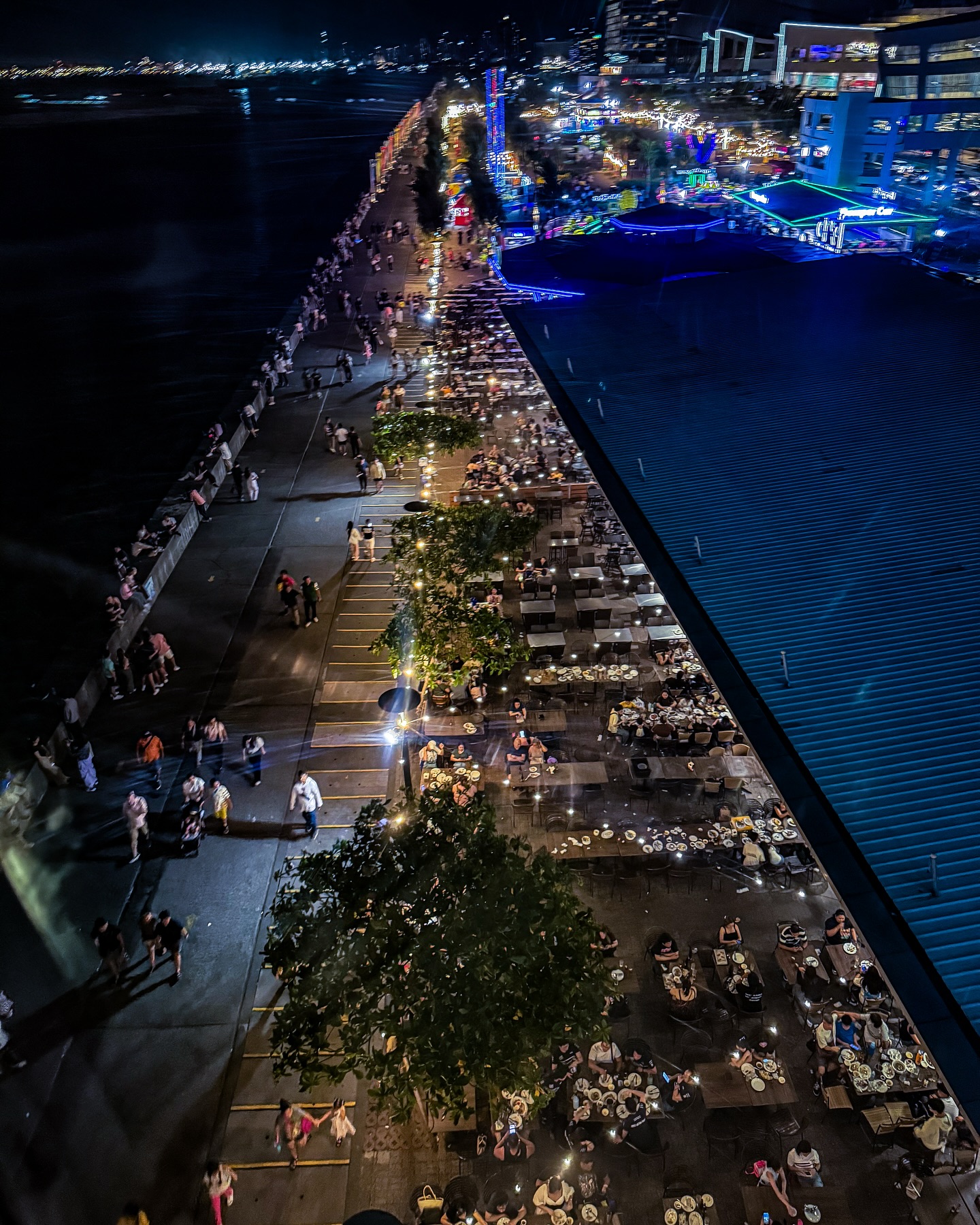
Manila Baywalk is a waterfront promenade that stretches along Roxas Boulevard, facing Manila Bay. It’s a great place to slow down after a day of sightseeing, with sea views and the sunset. The atmosphere changes through the evening as walkers, cyclists, and street performers gather along the promenade.
How to Spend an Evening at Manila Baywalk
- Watch the sunset over Manila Bay: On clear evenings, the sky turns shades of orange, pink, and purple as the sun sets over the water. Arrive around 5:00 PM to catch the sunset.
- Walk along the promenade: Stretching about 2 km along Manila Bay, the walkway is lined with palm trees, making it a pleasant place for an evening walk. Benches along the bay provide places to sit and watch boats crossing the harbour.
- Have dinner nearby: Restaurants along Roxas Boulevard serve Filipino, Asian, and international dishes, with several looking out towards Manila Bay.
9. Manila Ocean Park
Best for: Families with children and marine-life enthusiasts

Located beside Manila Bay, Manila Ocean Park combines aquariums, animal encounters, educational exhibits, and live presentations under one roof. It remains a favourite stop for families travelling with children in the Philippines.
Top Experiences at Manila Ocean Park
- The Oceanarium: The main aquarium houses thousands of marine animals from Philippine and Southeast Asian waters. Its curved underwater tunnel lets you watch sharks, rays, and large schools of fish swim overhead.
- Trails to Antarctica and jellyfish exhibits: You can see penguins up close at the Trails to Antarctica exhibit. At the jellyfish gallery, illuminated tanks display different jellyfish species. Both are favourites with children.
- Live shows and entertainment: Scheduled shows take place starring sea lions and birds, while trainers share information about their behaviour and conservation.
- Try hands-on experiences: Depending on the season, visitors can join activities such as bird feeding or fish spa at an additional fee.
10. Manila Cathedral
Best for: History lovers, religious travellers, architecture enthusiasts
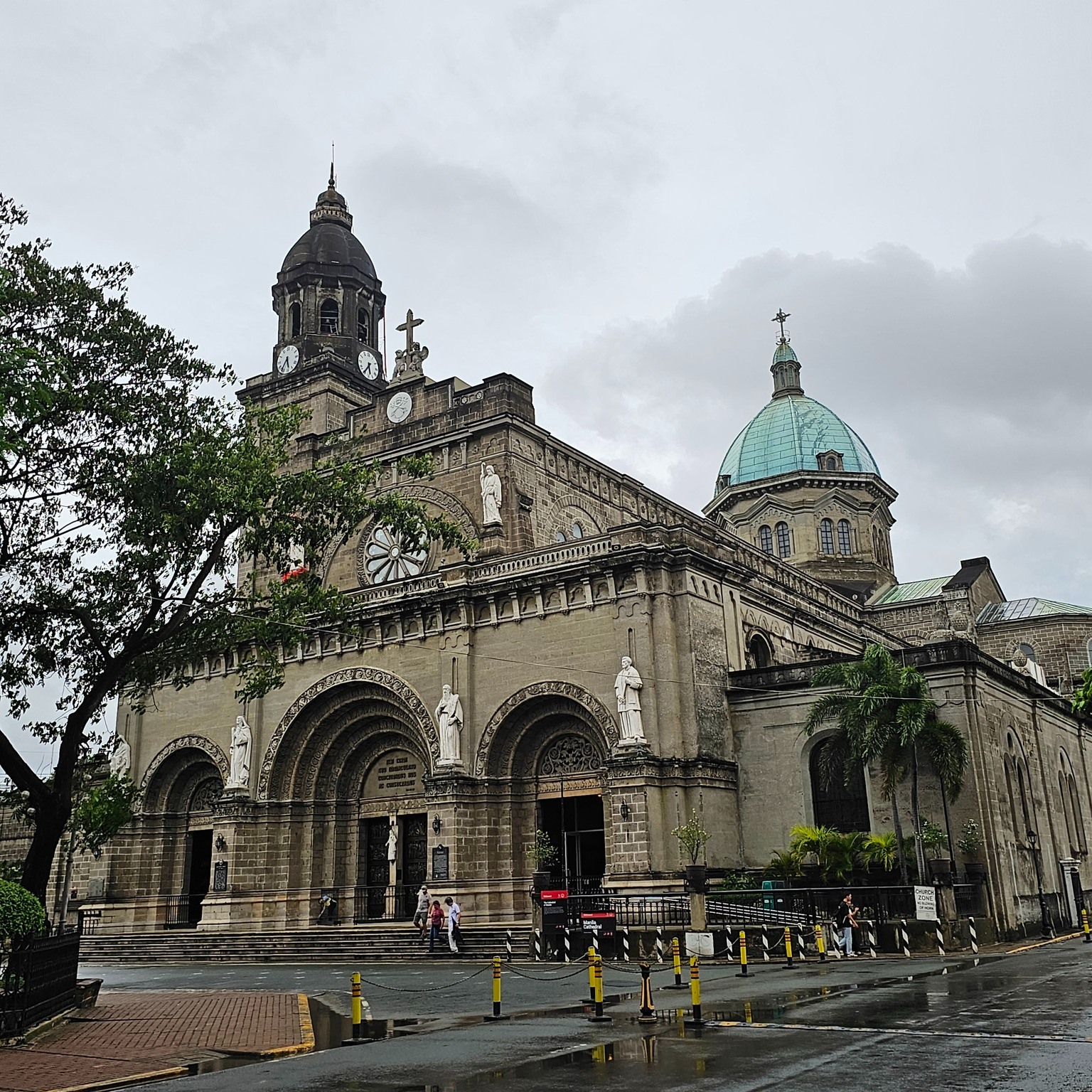
Standing on Plaza Roma in the heart of Intramuros, the Manila Cathedral is considered as the country’s most important Catholic church. Its grand interiors, stained-glass windows, and peaceful atmosphere are well worth experiencing while visiting the walled city.
Manila Cathedral Highlights
- The grand facade: The cathedral’s stone exterior, detailed carvings, and large bronze doors create a striking impression as you enter.
- Stained-glass windows: Colourful stained-glass windows depict biblical scenes, and as sunlight filters through them, they fill the cathedral with colour and create a peaceful atmosphere.
- The pipe organ: The cathedral has the largest pipe organ in the Philippines. It is used during major religious celebrations and occasional concerts.
- Side chapels: Walk along the aisles to see eight side chapels. The Chapel of St. Peter stands out for its glittering mosaic artwork.
11. Ayala Museum
Best for: Art and history lovers, and families
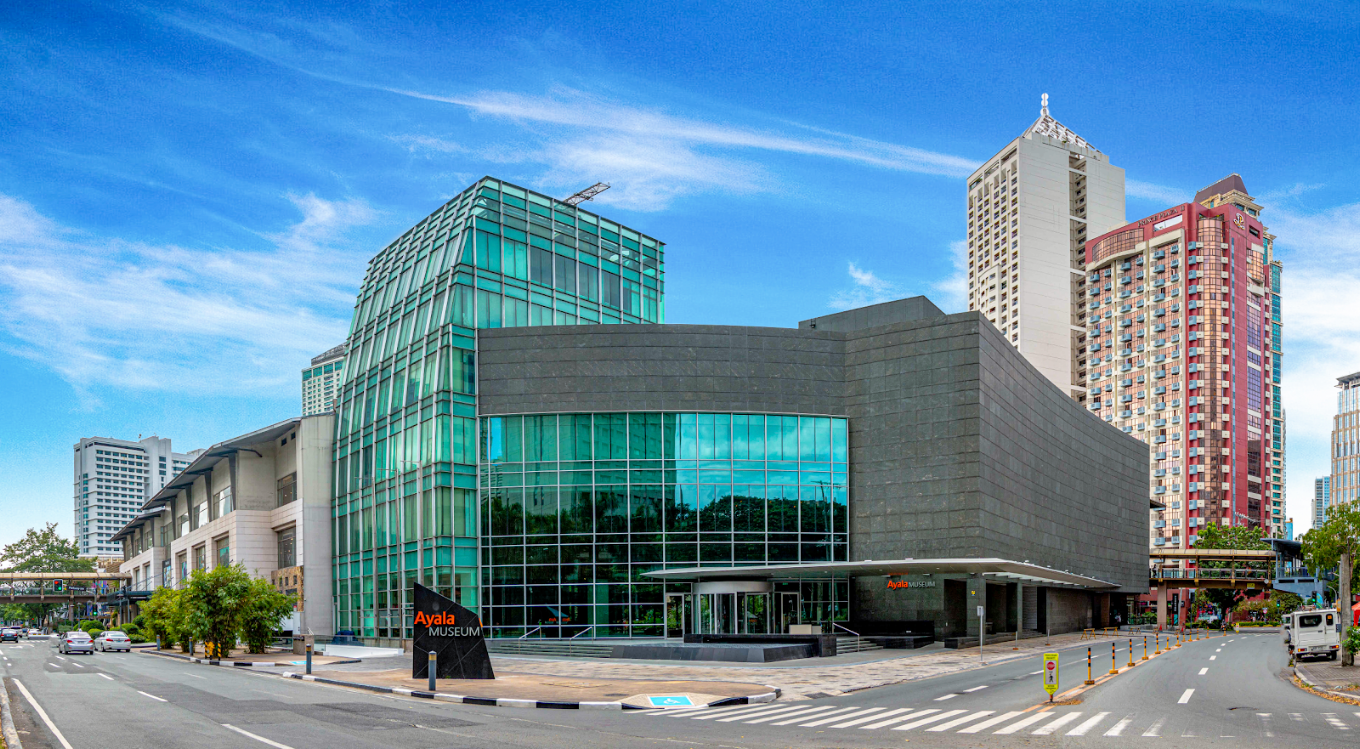
Located in Makati’s central business district, Ayala Museum is well suited to visitors who want a deeper understanding of the country beyond Manila’s colonial landmarks.
The galleries use a mix of historical artefacts, contemporary artworks, and multimedia displays, making the museum engaging even if you’re not usually interested in history.
Highlights of Ayala Museum
- The Gold of Ancestors collection: Hundreds of finely crafted gold ornaments, jewellery, and ceremonial objects reveal the skill of pre-colonial Filipino goldsmiths and the wealth of early trading communities.
- The dioramas of Philippine history: Sixty handcrafted miniatures visually narrate key events from pre-colonial times to independence, making complex history easy to follow.
- Filipino art: Rotating exhibitions display works by leading Filipino artists alongside pieces from the museum’s permanent collection, giving visitors an introduction to the country’s artistic heritage.
12. Casa Manila
Best for: Architecture enthusiasts and photographers
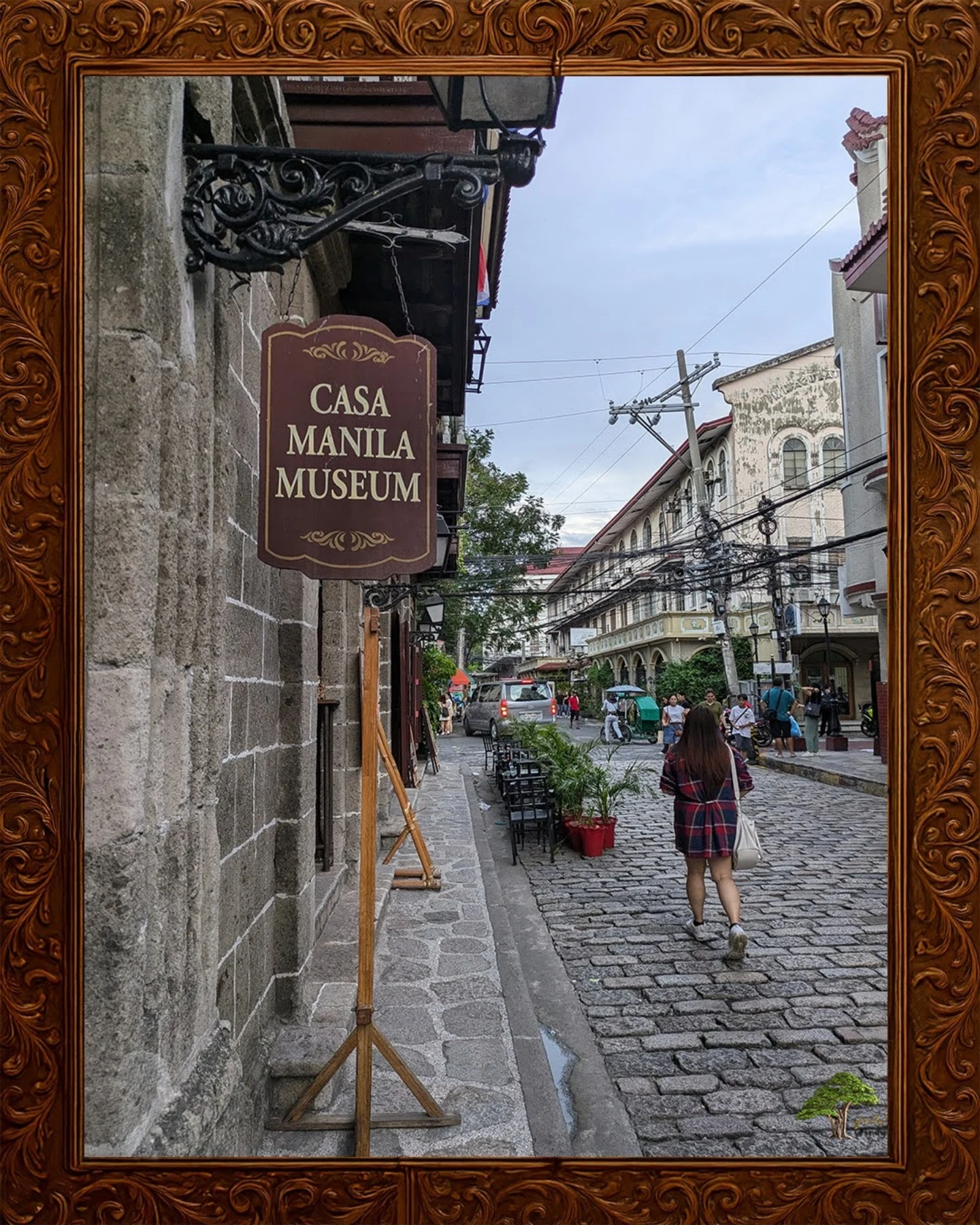
Casa Manila recreates the lifestyle of a wealthy Filipino family during the Spanish colonial period. Built in the 1980s, the museum is modelled after a 19th-century Bahay na bato (stone house).
What to See in Casa Manila
- The period rooms: The house contains furnished bedrooms, dining rooms, living areas, and courtyards arranged just as they were in the 1800s.
- The antique furniture: Many rooms display hardwood furniture, chandeliers, carved cabinets, porcelain, and decorative pieces collected from different parts of the Philippines and Asia.
- Bahay na Bato Architecture: Thick stone walls, wooden upper floors, translucent shell windows and sliding vents demonstrate architectural features developed to suit the tropical climate.
- The courtyard and balconies: The inner courtyard, wooden staircases, and traditional balconies provide some of the most attractive photo spots within Intramuros.
13. Escolta Street
Best for: Architecture lovers, photographers, and cafe hoppers
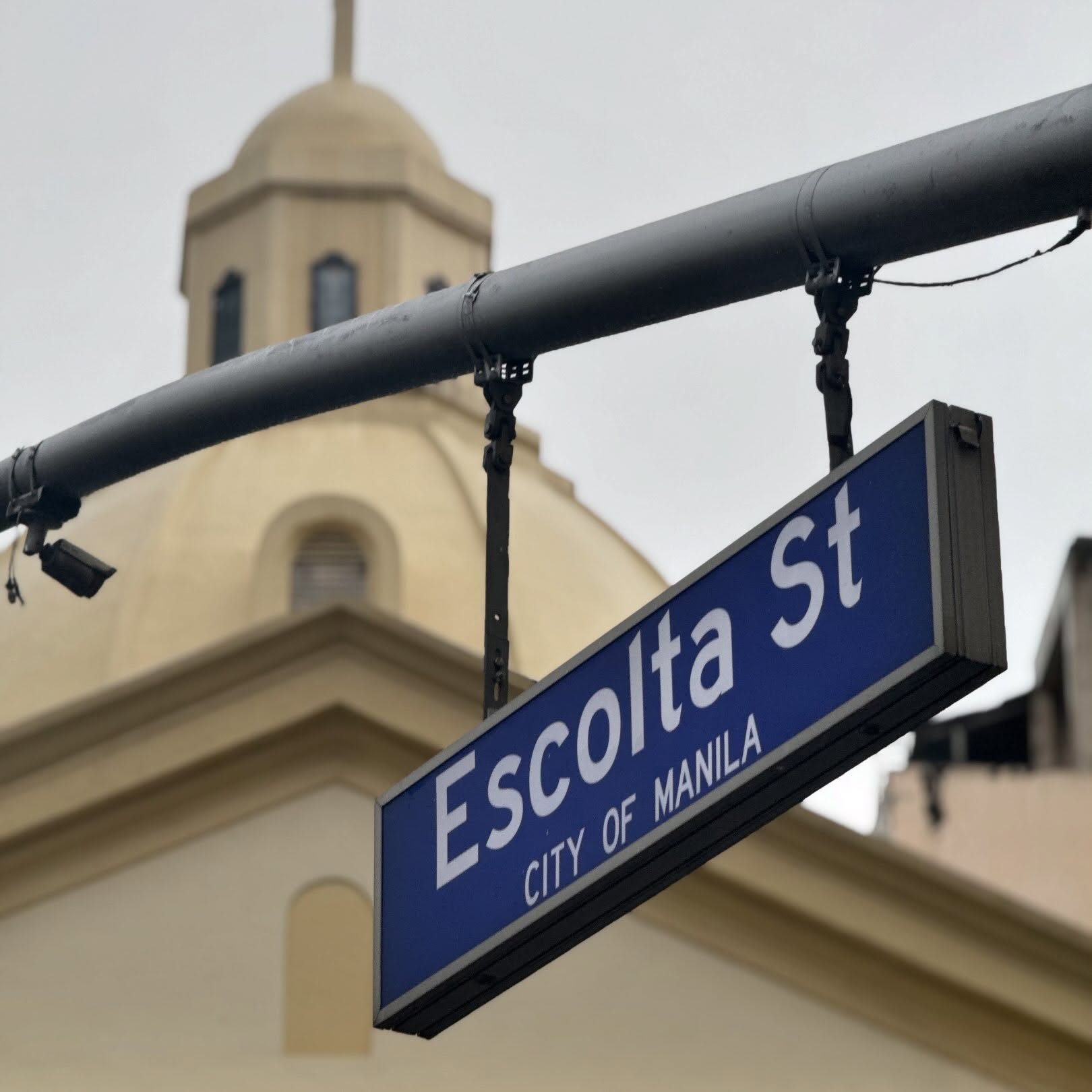
Escolta Street was once Manila’s premier commercial avenue, lined with department stores, cinemas, banks, and offices during the early 20th century.
Today, many of its Art Deco and Neoclassical buildings remain, giving visitors a glimpse of the city’s pre-war business district. While some buildings await restoration, others have found new life as cafes, creative studios, galleries, and event spaces.
What to See and Do in Escolta Street
- The historic architecture: Walk along the street to see the First United Building, the Capitol Theatre, and the Regina Building, some of Manila’s finest early 20th-century architecture.
- Visit First United Building: This restored heritage building houses cafes, design studios, bookshops, and creative spaces. It’s a good place to take a break while exploring Escolta.
- Capture the old streets: Historic buildings, vintage signboards, balconies, and ageing facades provide plenty of interesting details for your photos.
- Jones Bridge: Just a few minutes away, Jones Bridge provides great views of the Pasig River and makes an easy addition to an Escolta walk.
14. Greenbelt Park and Chapel
Best for: Couples, shopping, luxury travellers, and foodies
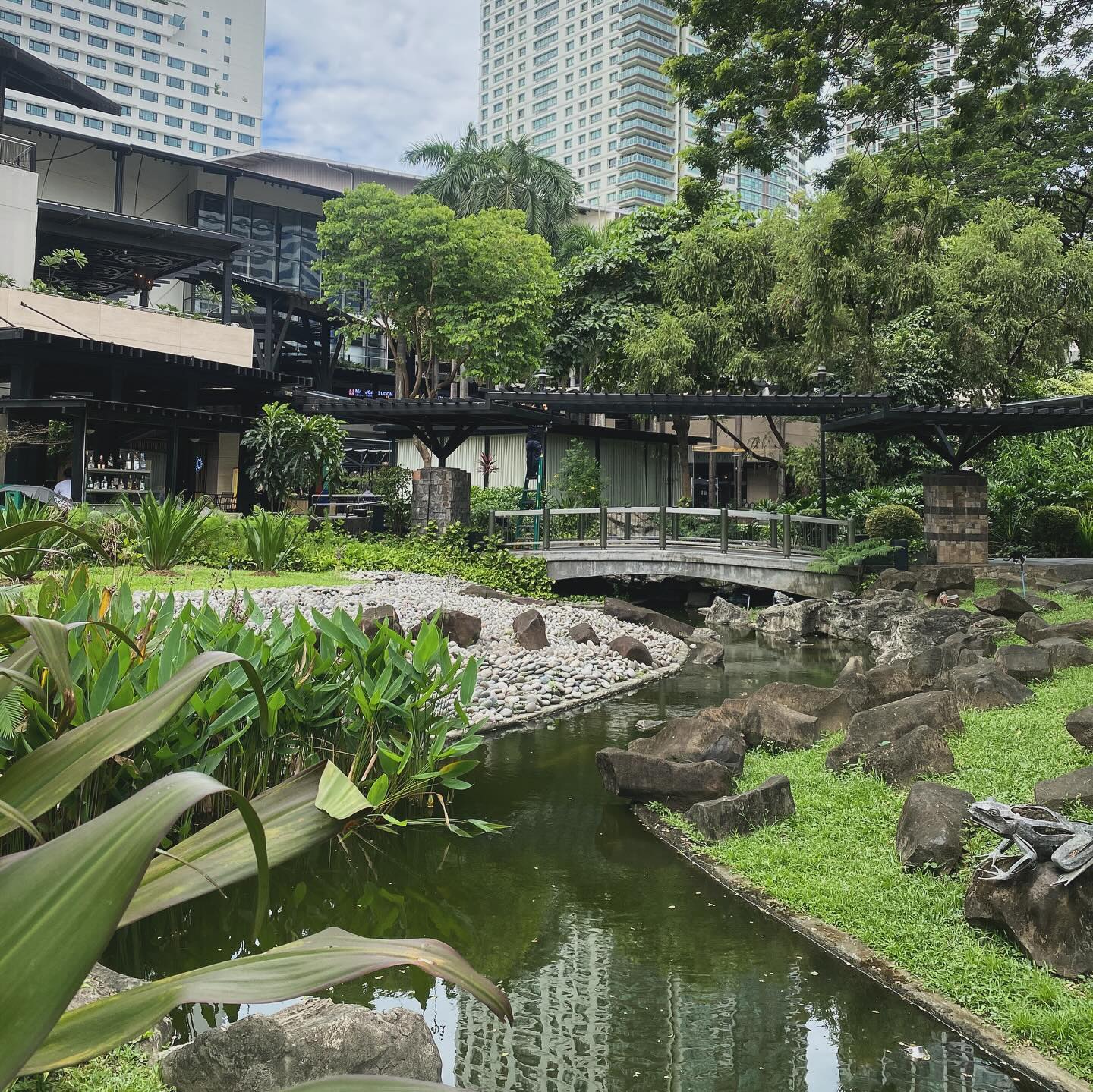
Greenbelt Park and Chapel are set within the Greenbelt shopping complex in the heart of Makati, Manila’s business district. Surrounded by shopping malls and office buildings, they provide a welcome break from the busy city.
Why Visit Greenbelt Park & Chapel
- The Park: Walking paths, koi ponds, trees, shaded benches, and Filipino sculptures create a calm setting in the middle of the city. It’s a pleasant stop after shopping or visiting nearby attractions.
- Sto. Niño de Paz Greenbelt Chapel: This open-air Catholic chapel sits beside the gardens and remains an active place of worship throughout the day.
- Greenbelt shopping and dining options: Greenbelt 3, 4, and 5 house international brands, Filipino designer labels, bookstores, cafes, and restaurants.
15. Divisoria Market
Best for: Local market culture, bargain shoppers and budget travellers
Divisoria Market is one of the best places to shop if you’re looking for affordable things to buy in the Philippines. This busy commercial district has hundreds of small shops selling everything from clothing and footwear to homeware, party supplies, fabrics, toys, souvenirs, and electronics.
Shopping in Divisoria Market
- Hunt for bargains: Clothing, bags, shoes, accessories, stationery, home decor, and souvenirs are sold at wholesale and retail prices. Buying multiple items often helps you negotiate a better deal.
- Experience everyday Manila: Divisoria gives visitors a glimpse into local shopping habits. Expect crowded walkways, busy streets, and a fast-moving atmosphere that contrasts sharply with the city’s modern shopping districts.
- Visit shopping centres: If you need a break from the busy streets and the heat, head into air-conditioned shopping centres such as 168 Shopping Mall, 999 Shopping Mall, Tutuban Centre, or Divisoria Mall.
Conclusion
Manila is a city where centuries-old landmarks stand alongside modern business districts, lively food streets, waterfront promenades, and family attractions. That contrast is what makes sightseeing here rewarding.
The best itinerary depends on how much time you have and what interests you most. Families, couples, history enthusiasts, photographers, and food lovers will all find places worth adding to their plans. You can contact Dimaak Tours to help you plan every part of your Philippines holiday.
FAQs About the Places to Visit in Manila
1. What are the best places to visit in Manila for first-time visitors?
For first-time visitors, Intramuros gives the best introduction to Manila. This historic district is home to Fort Santiago, San Agustin Church, Casa Manila, and the Manila Cathedral, making it easy to visit several major landmarks in one trip. Rizal Park, the National Museum Complex, and Manila Baywalk are also worthwhile stops.
2. Which places in Manila are best for couples?
Couples visiting Manila can include Manila Baywalk, Bonifacio Global City (BGC), Greenbelt Park and Chapel, Intramuros, and Ayala Museum in their itinerary.
Manila Baywalk is a good choice for a relaxed evening, with sunset views over Manila Bay and a waterfront promenade for walking. BGC provides a modern city experience with cafes, restaurants, public art, shopping, and evening entertainment.
3. What are the best historical places to visit in Manila?
The best historical places to visit in Manila are mainly found in Intramuros, the city’s oldest district. Fort Santiago is one of the most important landmarks here, with the Rizal Shrine Museum, old ramparts, and preserved historical structures. Other key historical sites include San Agustin Church, Manila Cathedral, and Casa Manila.
