

Key Takeaways:
|
Kandy isn’t just home to Sri Lanka’s most sacred Buddhist temple. It was also the island’s last independent kingdom, and many of its royal landmarks still shape the city today.
Historic temples, palace buildings, tea estates and mountain viewpoints together create some of the most unique places in Sri Lanka, all within easy reach of one another.
This guide covers the top places to visit in Kandy, including the city’s best-known landmarks, quieter cultural sites and nature escapes.
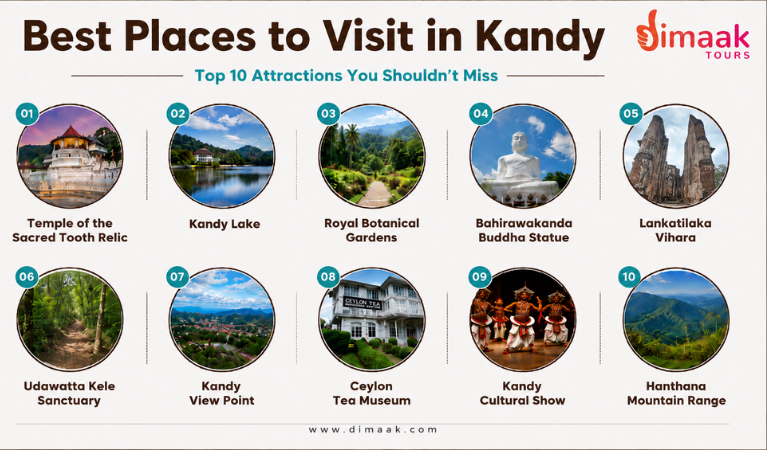
Best Places to Visit in Kandy, Sri Lanka
Most of Kandy’s top attractions lie within a short distance of each other, making sightseeing simple and convenient. Start with these places to make the most of your time in the city.
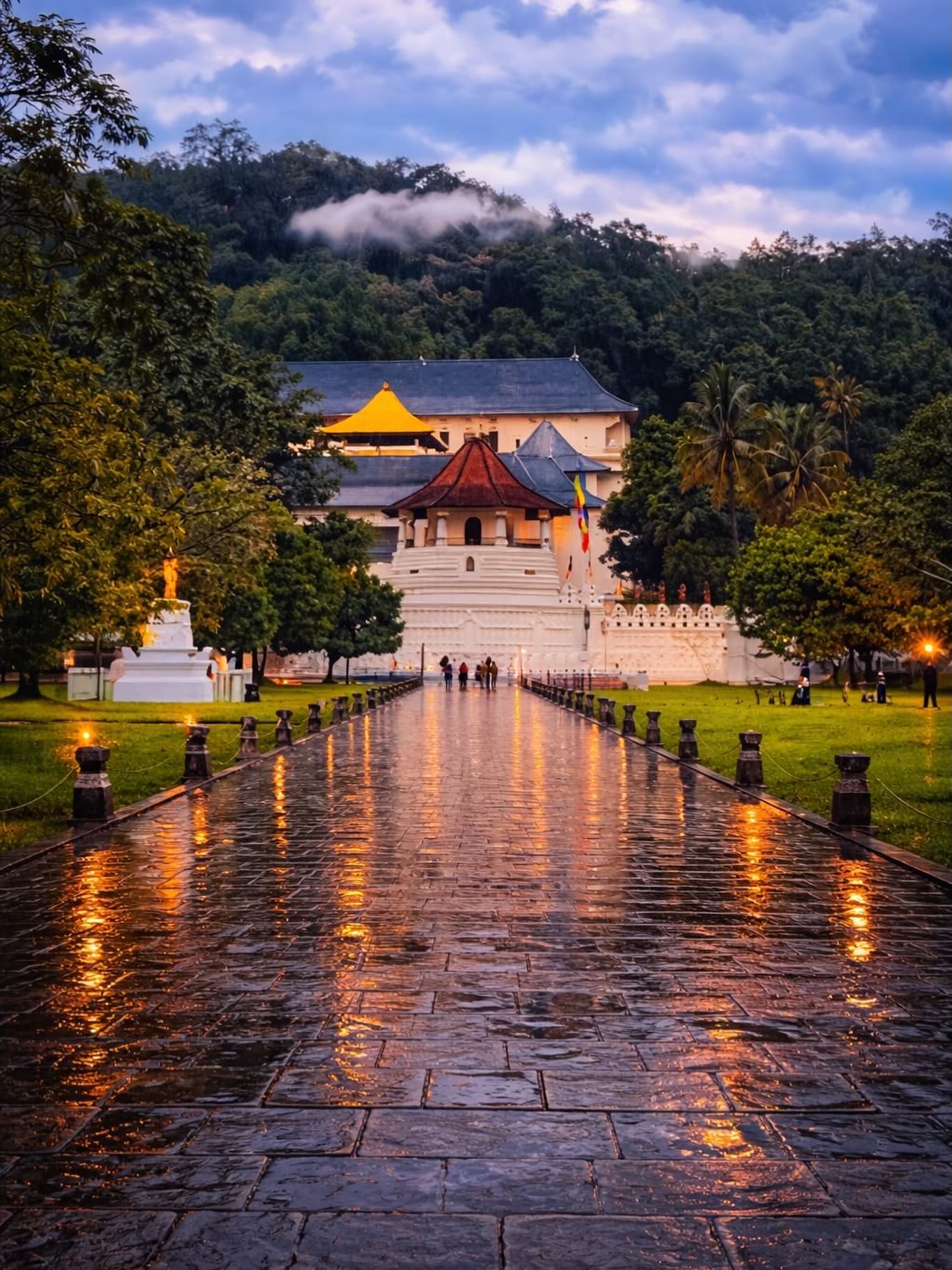
1. Temple of the Sacred Tooth Relic (Sri Dalada Maligawa)
The Temple of the Sacred Tooth Relic is Kandy’s most important landmark and a world-famous Buddhist shrine believed to house the left canine tooth of Lord Buddha.
The temple forms part of the former Royal Palace Complex, which also includes museums, ceremonial halls, and historic buildings worth exploring.
Highlights
- The shrine housing the Sacred Tooth Relic: The sacred tooth is kept inside seven nested golden caskets within the inner shrine and is never displayed publicly. You can catch a glimpse of the closed outer golden casket through a display window during daily Theva (pooja) ceremonies. The ceremony involves traditional Kandyan drumming, flute music, and food and flower offerings.
- The Octagon (Paththirippuwa): An octagonal tower built by the last Kandyan king, from where he appeared before his subjects. It now houses a library of ancient palm-leaf Buddhist manuscripts.
- The World Buddhism Museum: Located within the temple complex, the museum traces the spread of Buddhism across countries including India, Thailand and Japan through artefacts and exhibits.
- Royal Palace Complex: Visit the former royal residence, the open-air Audience Hall with carved wooden pillars, and museums displaying royal artefacts and Kandyan history.
Entry: LKR 2500 (approx. INR 700) for Indians
Opening Hours: Temple: 5:30 AM – 8:00 PM (Daily); museum and palace hours vary
Note: When visiting Sri Lankan temples and religious sites, wear modest clothing that covers your shoulders and knees and remove shoes and hats before entering.
2. Royal Botanic Gardens, Peradeniya
The Royal Botanic Gardens cover 147 acres of landscaped gardens with more than 4000 species of plants, with parts of the gardens overlooking the Mahaweli River. It is a great place to visit in Sri Lanka for families, couples, and photographers.
Highlights
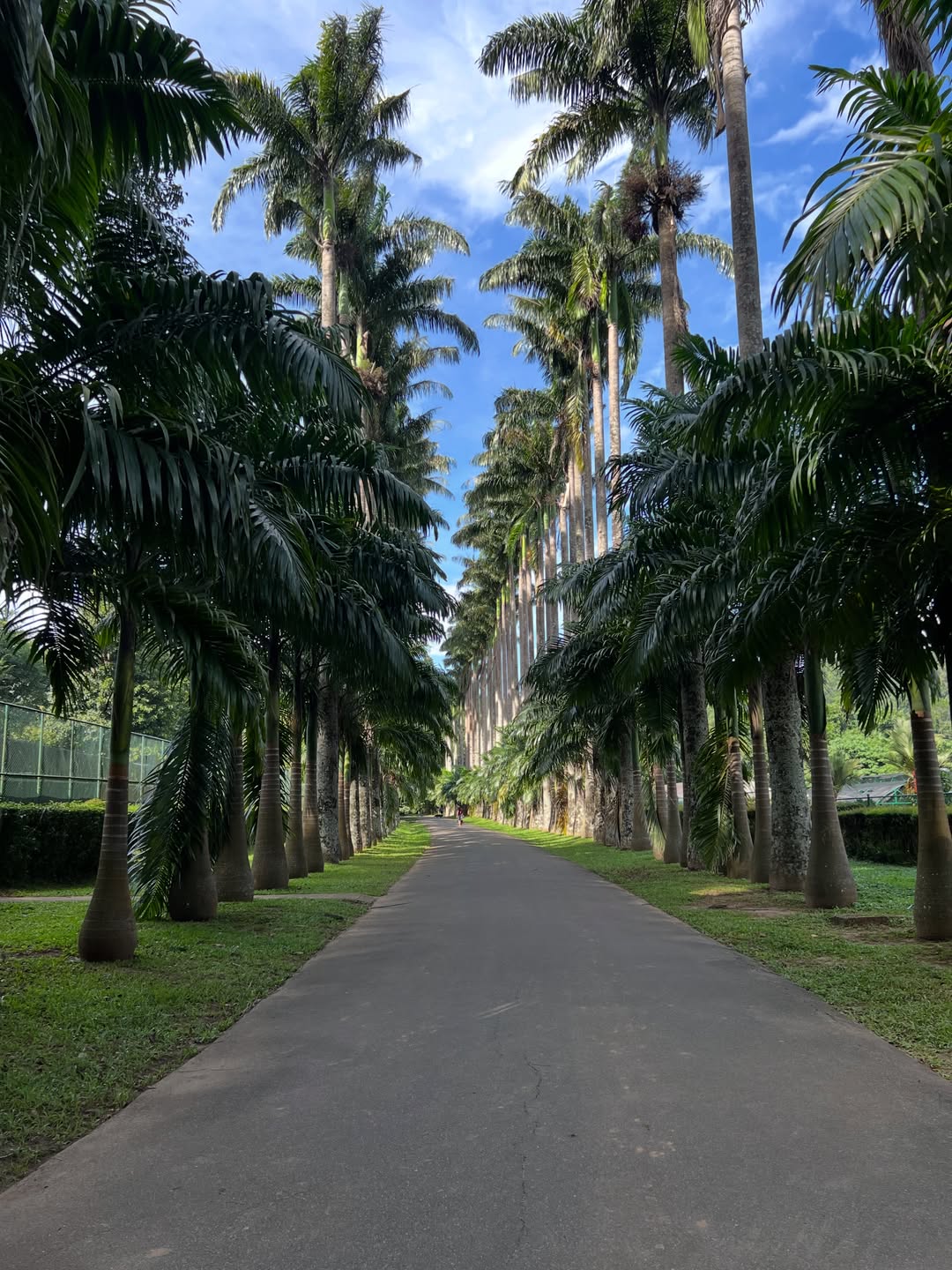
- Royal Palm Avenue: A straight path lined with tall, slender royal palm trees that has become one of Kandy’s most photographed spots.
- The Orchid House: Home to hundreds of orchid varieties, including Tiger Orchid, the world’s largest.
- Giant Bamboo and Javan Fig Tree: The Giant Bamboo rises up to 40 metres, while the Javan Fig Tree spreads across an impressive area with its wide-reaching branches and roots.
- Spice Garden: A small section near the main entrance showcasing Sri Lanka’s best-known spices, including cinnamon, pepper, cardamom, and nutmeg.
Entry: LKR 3540 (approx. INR 1000) for those older than 12 years
Opening Hours: 7:30 AM – 6:00 PM (Daily)
3. Kandy Lake
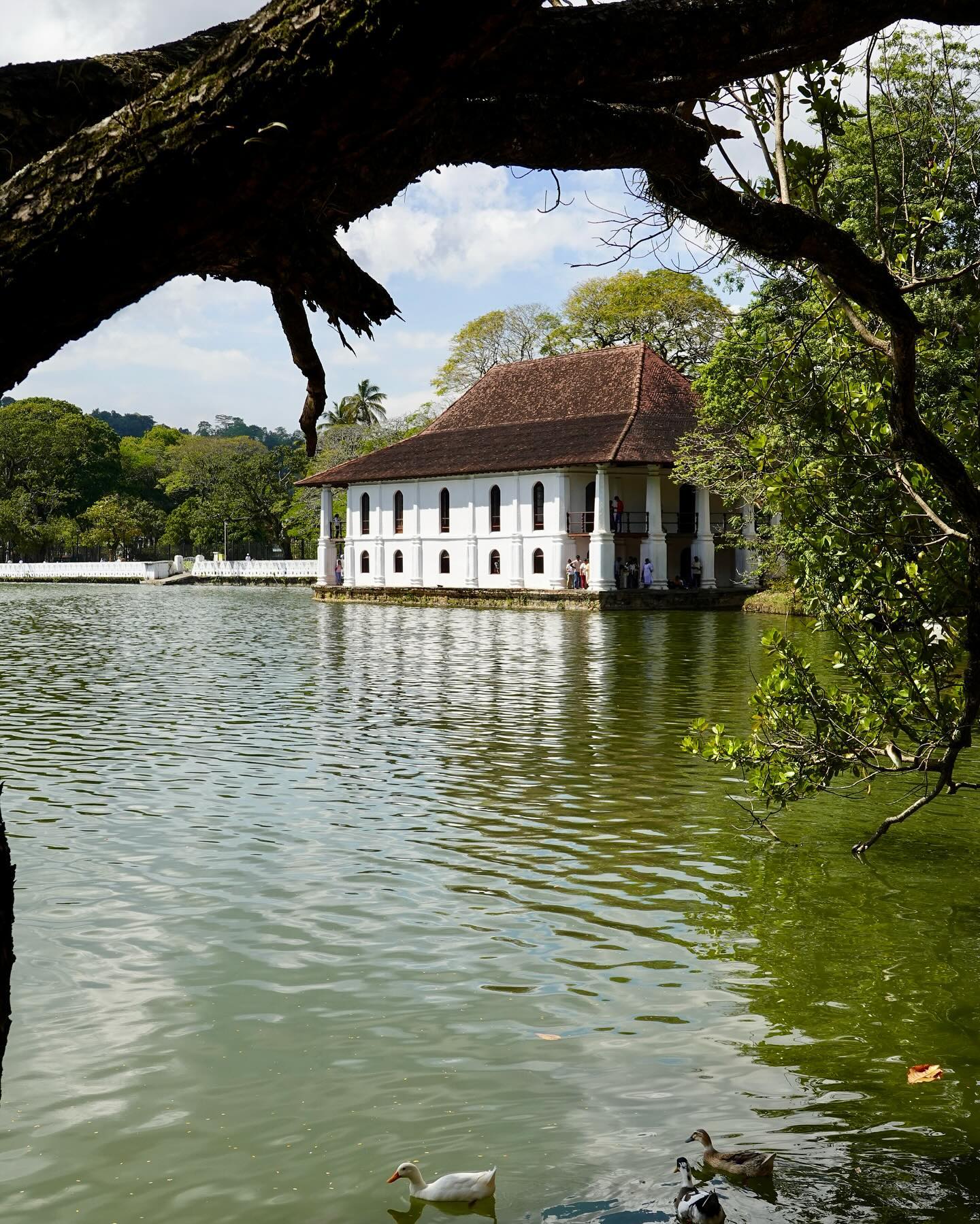
Kandy Lake lies at the centre of the city and links several of Kandy’s biggest attractions. A walk around this artificial lake is a relaxing break between sightseeing stops.
Highlights
- The lakeside promenade: The walking path circles the entire lake and provides uninterrupted views of the Temple of the Sacred Tooth Relic and the surrounding hills.
- The Cloud Wall (Valakulu Bamma): This distinctive white wall with triangular patterns runs along parts of the lakeside, which was left unfinished after the fall of the Kandyan Kingdom.
- Diyathilaka Mandapaya Island: A small man-made island at the centre of the lake, dotted with trees, surrounded by a stone wall.
- The Queen’s Bathing Pavilion: Sits partly in the waters on the edge of Kandy Lake, right next to the Temple of the Sacred Tooth Relic. It was originally built for the royal women and now functions as a police post.
Entry: Free (public access area)
Opening Hours: Accessible 24/7
4. Bahirawakanda Vihara Buddha Statue
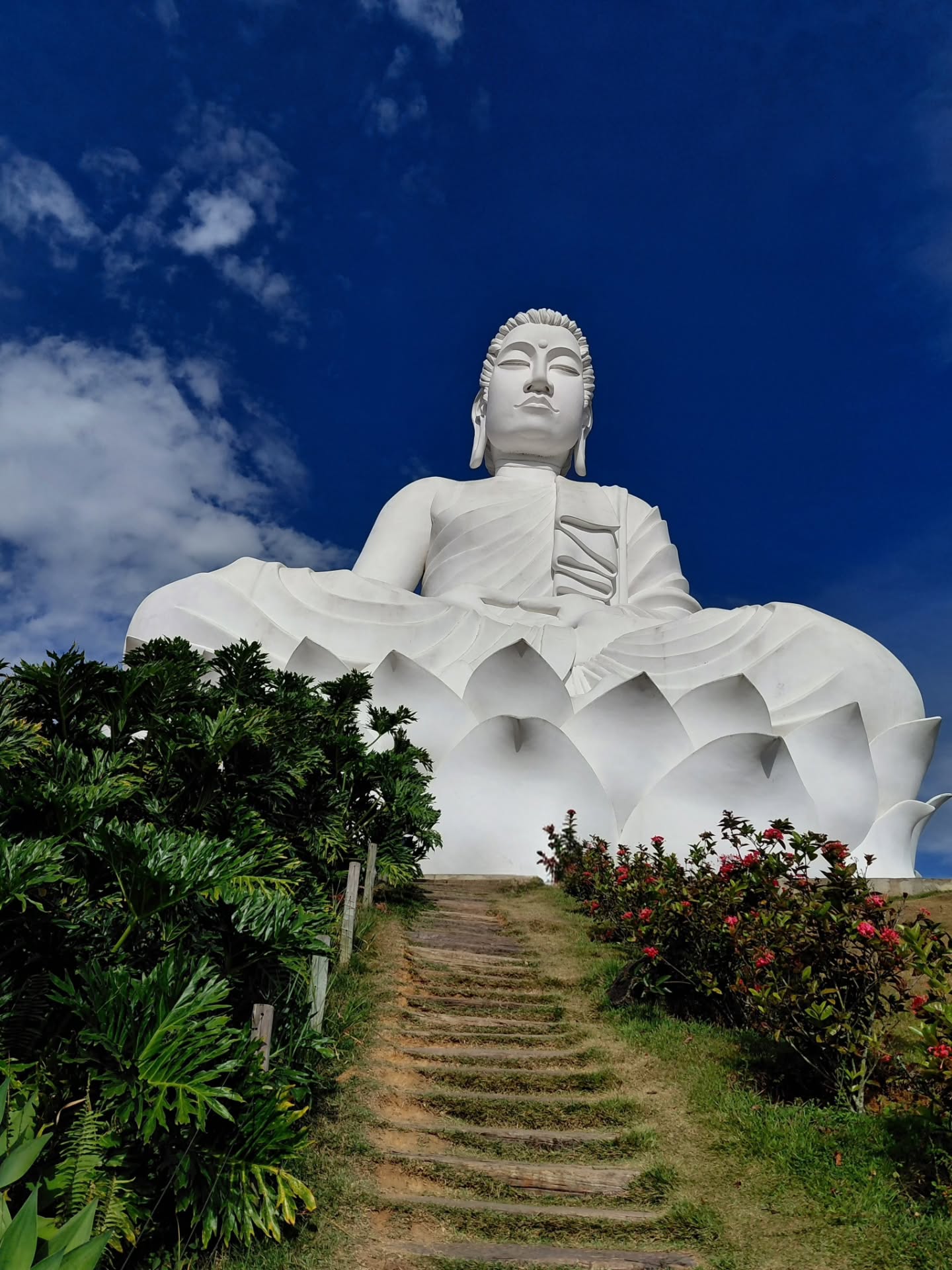
Located on Bahirawakanda Hill, about 2 kilometres from Kandy city centre, Bahirawakanda Vihara is a towering white Buddha statue overlooking the city.
Highlights
- The Giant Buddha Statue: Rising 88 feet (around 27 metres), the statue can be seen from most parts of Kandy.
- Panoramic views across Kandy: From the viewing platforms behind the statue, you can enjoy panoramic views of Kandy Lake, the Temple of the Sacred Tooth Relic, the city centre, and the surrounding hills.
- The inside gallery: A small, quiet space with pictures and panels depicting key moments from Lord Buddha’s life.
Entry: Around LKR 250 (approx. INR 70)
Opening Hours: 6:00 AM – 6:00 PM (Daily)
5. Ceylon Tea Museum
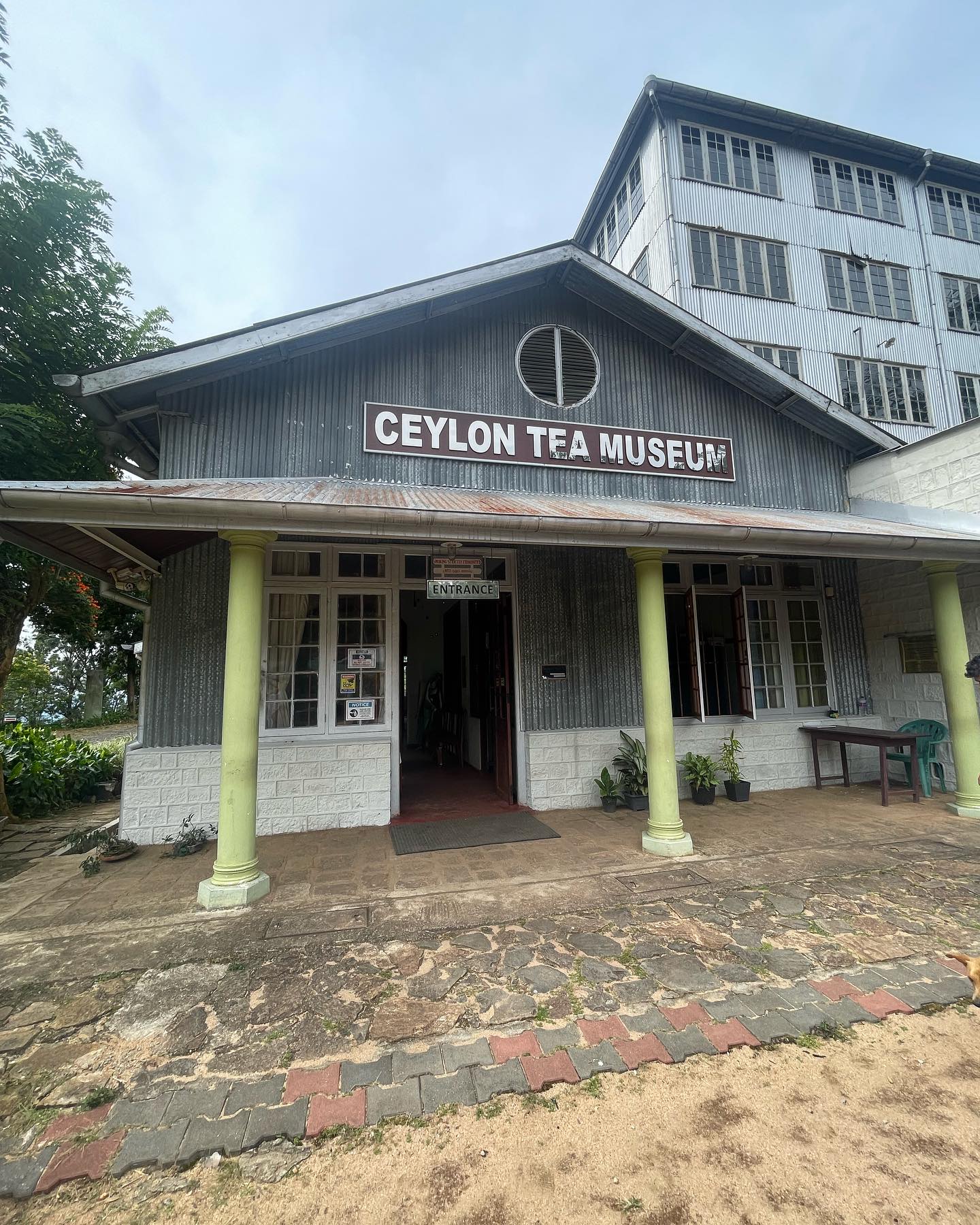
Visiting the Ceylon Tea Museum is one of Kandy’s top experiences, showcasing how tea shaped Sri Lanka’s economy and global identity. It is housed inside the historic 1925 Hanthana Tea Factory located about 4-5 kilometres south of Kandy.
Highlights
- Original tea-processing machinery: The museum preserves 19th- and early 20th-century rollers, dryers, sifters and sorting machines used to manufacture Ceylon tea.
- Tea pioneers gallery: There are displays of historic photographs, documents and exhibits celebrating pioneers such as James Taylor and Sir Thomas Lipton, along with a reference library on Sri Lanka’s tea industry.
- Shop for Pure Ceylon tea: The museum shop stocks Ceylon tea from the Sri Lanka Tea Board, along with recognised local brands such as Impra, Zesta and Basilur, making it a great place to buy authentic tea and tea-inspired souvenirs in Sri Lanka.
- Tea tasting with mountain views: The top-floor tea room serves a complimentary cup of black Ceylon tea, with additional speciality blends available for tasting. You can sip hot tea looking at the Knuckles and Matale mountain ranges far away. You can also use the telescope mounted on the top floor to view them.
Entry: LKR 1000 (approx. INR 300) for adults; LKR 500 (approx. INR 140) for children
Opening Hours: 8:30 AM – 4:00 PM (Tuesday-Friday); 8:00 AM – 5:00 PM (Saturday-Sunday); Closed on Mondays
6. Udawatta Kele Sanctuary
Just behind the Temple of the Sacred Tooth Relic lies a protected forest that feels surprisingly removed from central Kandy.
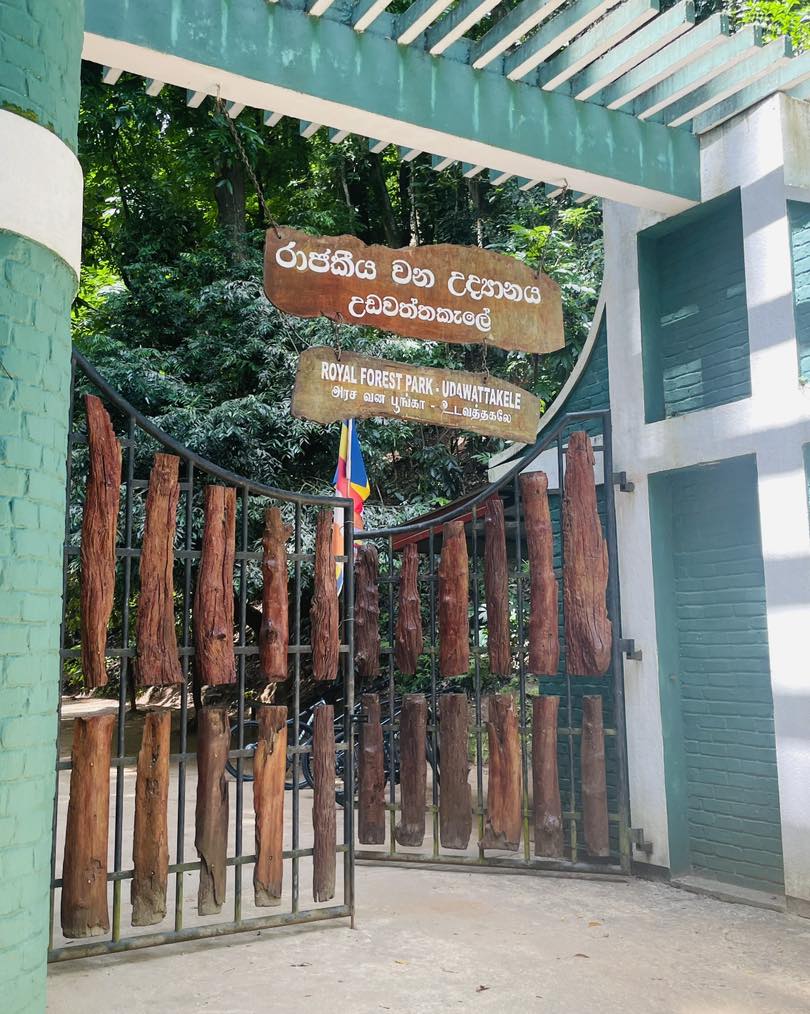
Udawatta Kele is worth visiting if you’d like a quieter break between sightseeing, with easy walking trails through protected woodland close to the city centre.
Highlights
- Forest walking trails: Well-marked paths run beneath towering hardwood trees, bamboo groves and thick vegetation. Several routes are suitable for casual walkers and don’t require much climbing.
- Birdwatching and wildlife: The sanctuary is home to more than 80 bird species, including the Sri Lankan hanging parrot and green-fronted leafbird. Monkeys, giant squirrels, monitor lizards and colourful butterflies are also commonly seen. Early mornings are usually the best time to spot wildlife along the main trails.
- Kodimale Peak: Follow a moderate uphill trail to the sanctuary’s highest point, about 635 metres above sea level, for some of its best views.
- Meditation Caves and Hermitages: You can see historic rock dwellings once used by Buddhist monks, just off the main walking trails.
Entry: Around LKR 930 (approx. INR 260) for adults
Opening Hours: 6:00 AM – 6:00 PM
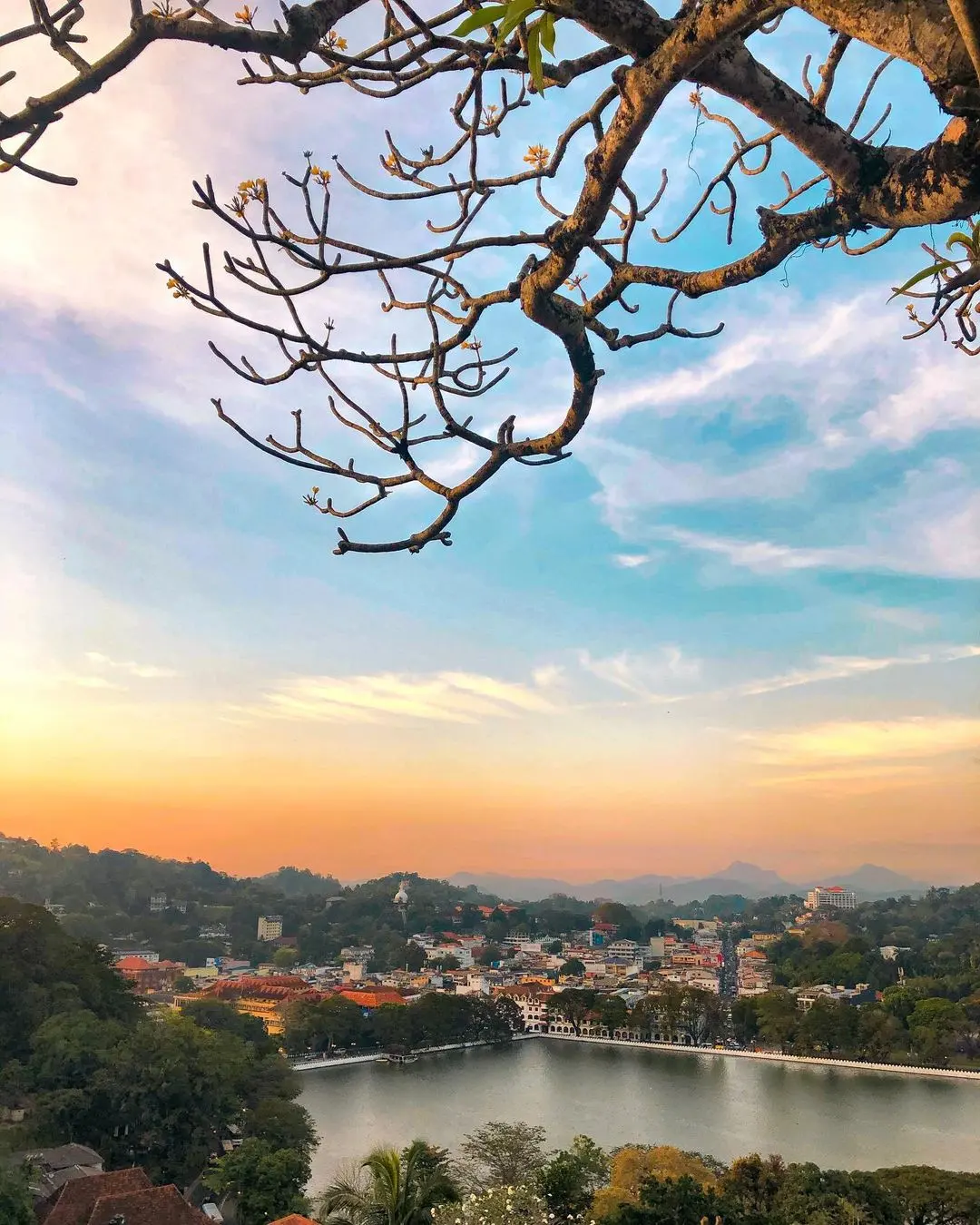
7. Kandy Viewpoint (Arthur’s Seat)
Arthur’s Seat gives you one of the clearest views of Kandy without needing a long hike. It sits about 550 metres above sea level and is easily accessible by taxi or tuk-tuks.
Highlights
- Open viewing deck: The modern platform gives you a clear vantage point across Kandy, making it one of the city’s best spots for photographs.
- Panoramic city views: The viewpoint overlooks Kandy Lake, the Temple of the Sacred Tooth Relic, the lush Udawattakale Kele Sanctuary and much of the historic city centre. On clear days, you can see far-off mountains, including the Hunnasgiriya peak part of the Knuckles Mountain Range.
- Sunrise, sunset and night views: Early mornings often bring a layer of mist across the city, while late afternoons cast a golden glow over Kandy Lake and the surrounding buildings. Night is great for watching the glowing lights of Kandy town and the illuminated Temple of the Sacred Tooth Relic area.
Entry: Free (public access area)
Opening Hours: Accessible 24/7
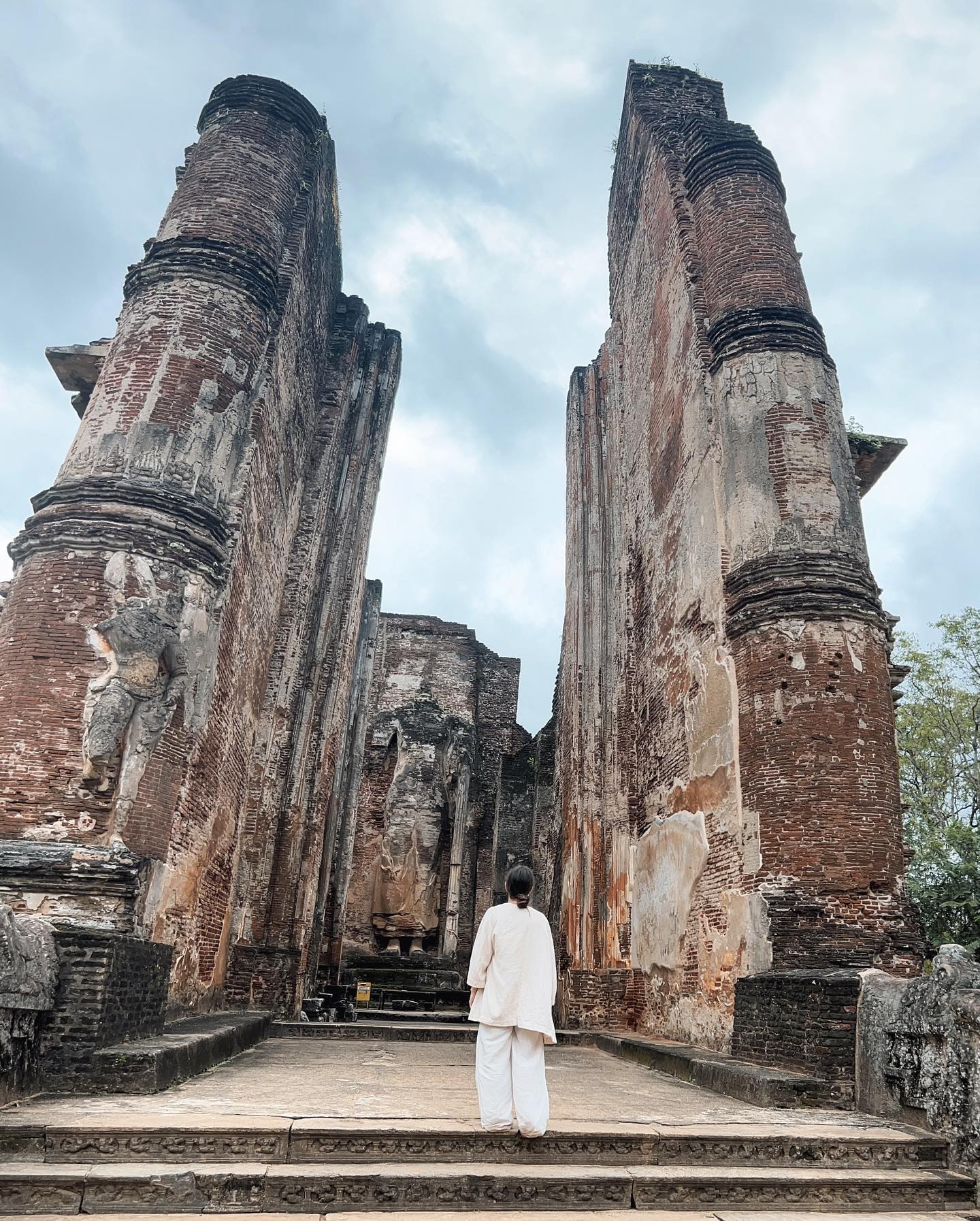
8. Lankatilaka Vihara
Lankatilaka Vihara is a 14th-century Buddhist rock temple built during the Gampola era. It sits in the countryside, 14-16 kilometres southwest of Kandy and is best visited together with Gadaladeniya Temple and Embekka Devalaya.
Highlights
- Main Buddha shrine: It houses a large seated Buddha beneath an intricately carved Makara Torana (dragon arch). The surrounding walls and ceilings are covered with colourful Kandyan-era murals.
- Distinctive architecture: Unlike most temples around Kandy, Lankatilaka combines Sinhalese and Dravidian design with colourful murals and beautifully crafted interiors.
- Hindu shrines: Besides the main Buddhist shrine, the temple also has smaller shrines dedicated to Hindu deities, reflecting Sri Lanka’s shared religious traditions.
- White stupa and hilltop setting: Beside the main temple stands a traditional white stupa overlooking the surrounding countryside.
Entry: Tourist fee applies (check when you arrive)
Opening Hours: Usually open daily from 8:00 AM to 5:00 PM
9. Gadaladeniya Temple
Located about 12 kilometres southwest of Kandy, Gadaladeniya Temple is a 14th-century Buddhist temple known for its stone construction and South Indian-inspired design.
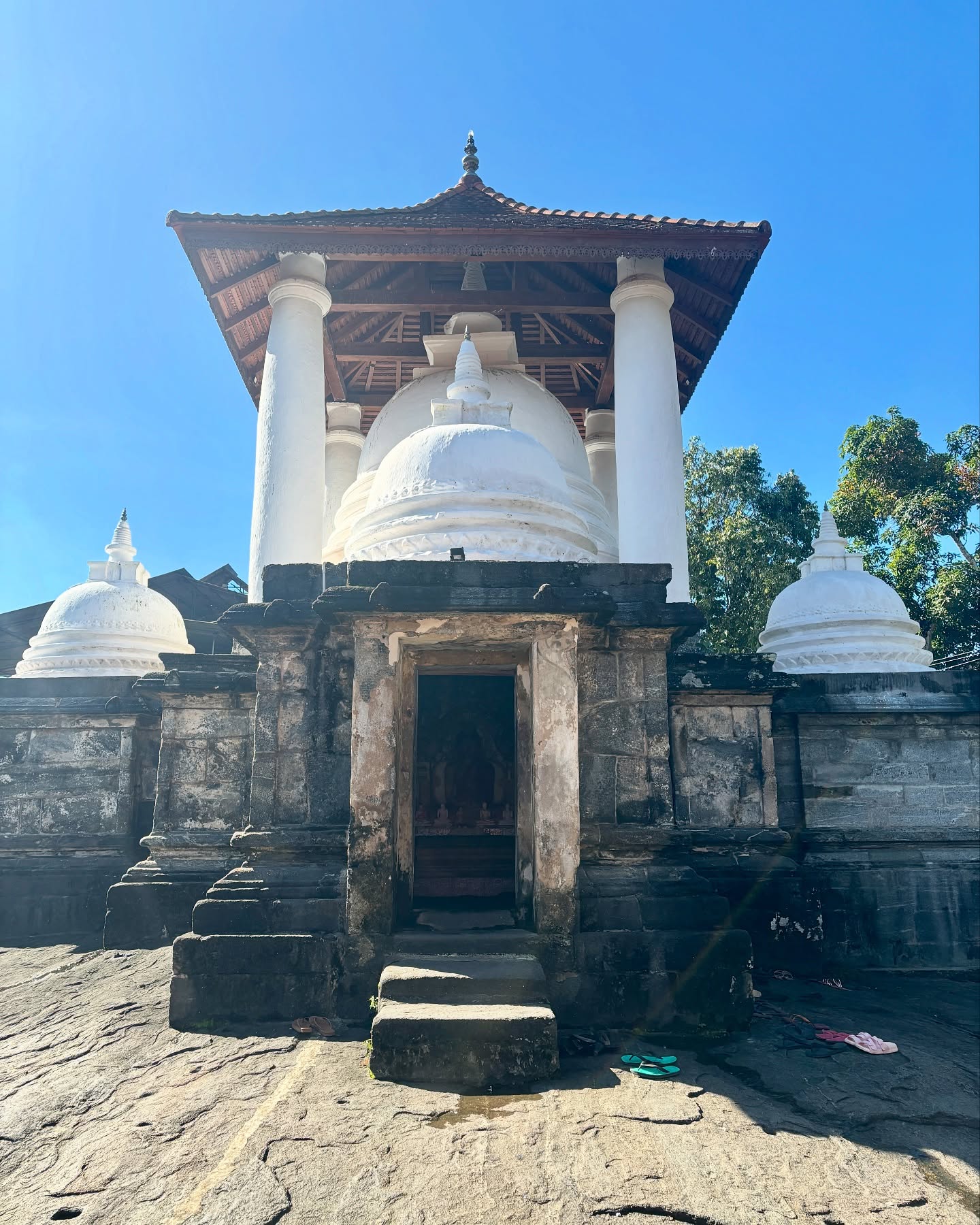
It stands on a broad rock plateau overlooking the surrounding countryside and forms part of the Lankatilaka-Gadaladeniya-Embekka temple circuit.
Highlights
- Granite architecture: Built almost entirely from thick granite blocks, the temple has a noticeably different appearance from most Buddhist temples around Kandy. The architectural details reflect the craftsmanship of South Indian artisans invited during the Gampola Kingdom.
- Centre Stupa: A distinctive stone stupa rises from the centre of the complex, surrounded by four smaller shrine chambers.
- Integrated Hindu Shrine: Alongside the Buddhist temple is a shrine honouring Lord Vishnu, reflecting the religious harmony of the Gampola Kingdom.
- Quiet surroundings: The hilltop location sees fewer visitors than Kandy’s central tourist attractions, making it a peaceful stop.
Entry: Foreign visitor entry fees apply (confirm on arrival)
Opening Hours: Open daily, usually between 8:00 AM and 5:00 PM
10. Embekka Devalaya
Embekka Devalaya is a 14th-century wooden temple built by King Vikramabahu III in Udunuwara, Kandy. Visitors come to Embekka for its remarkable wooden craftsmanship.
The carvings here are considered among the finest surviving examples from Sri Lanka’s medieval period.
Highlights
- Wood carvings: More than 500 carvings decorate the pillars and roof brackets, presenting dancers, wrestlers, elephants, swans, mythical creatures and floral patterns.
- Three-part temple complex: Walk through the sanctum, the Dancing Hall (Digge) and the famous Drummers’ Hall, each displaying different styles of traditional craftsmanship.
- Sacred sanctum: The temple’s inner chamber houses the sacred images of Kataragama Deviyo and Devatha Bandara, where daily puja rituals continue to take place.
- Timber roof: The roof is held together by a massive wooden locking pin, reflecting the remarkable carpentry skills of the Gampola period.
- Drummers’ Hall (Hevisi Mandapaya): Major highlight of the complex, with intricately carved timber pillars.
Entry: International visitor charges apply (check on arrival)
Opening Hours: Typically open every day from early hours to evening
11. Degaldoruwa Raja Maha Vihara
Degaldoruwa Raja Maha Vihara is a historic 18th-century rock cave temple in Amunugama, about 7 kilometres east of Kandy city.
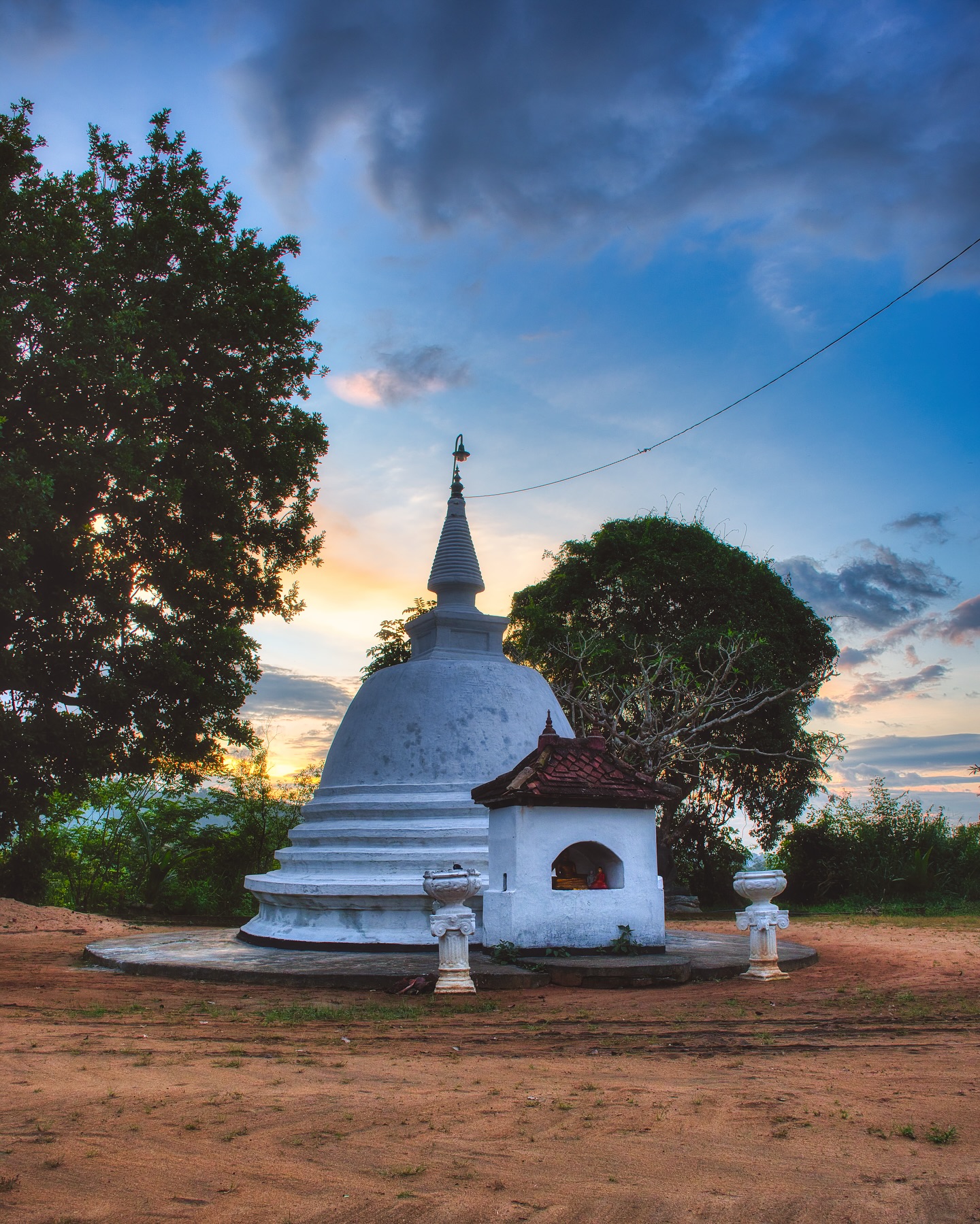
Degaldoruwa feels very different from most temples around Kandy. It’s particularly worthwhile if you’re interested in Buddhist art and quieter religious sites.
Highlights
- The Cave Shrine: Excavated out of a huge natural rock overhang that shelters both the inner shrine and entrance chamber.
- Reclining Buddha statue: The cave sanctuary houses a large reclining Buddha alongside several seated images.
- The Drumming Hall: An open pillared pavilion at the entrance where drummers once performed during temple ceremonies.
- The Moonstone carvings: At the entrance to the inner shrine, you’ll find an unusually designed moonstone.
- Kandyan murals: The walls and ceilings display colourful paintings portraying stories from the Buddha’s earlier lives, as narrated in the Jataka texts.
Entry: Free
Opening Hours: Generally 8:00 AM to 5:00 PM daily
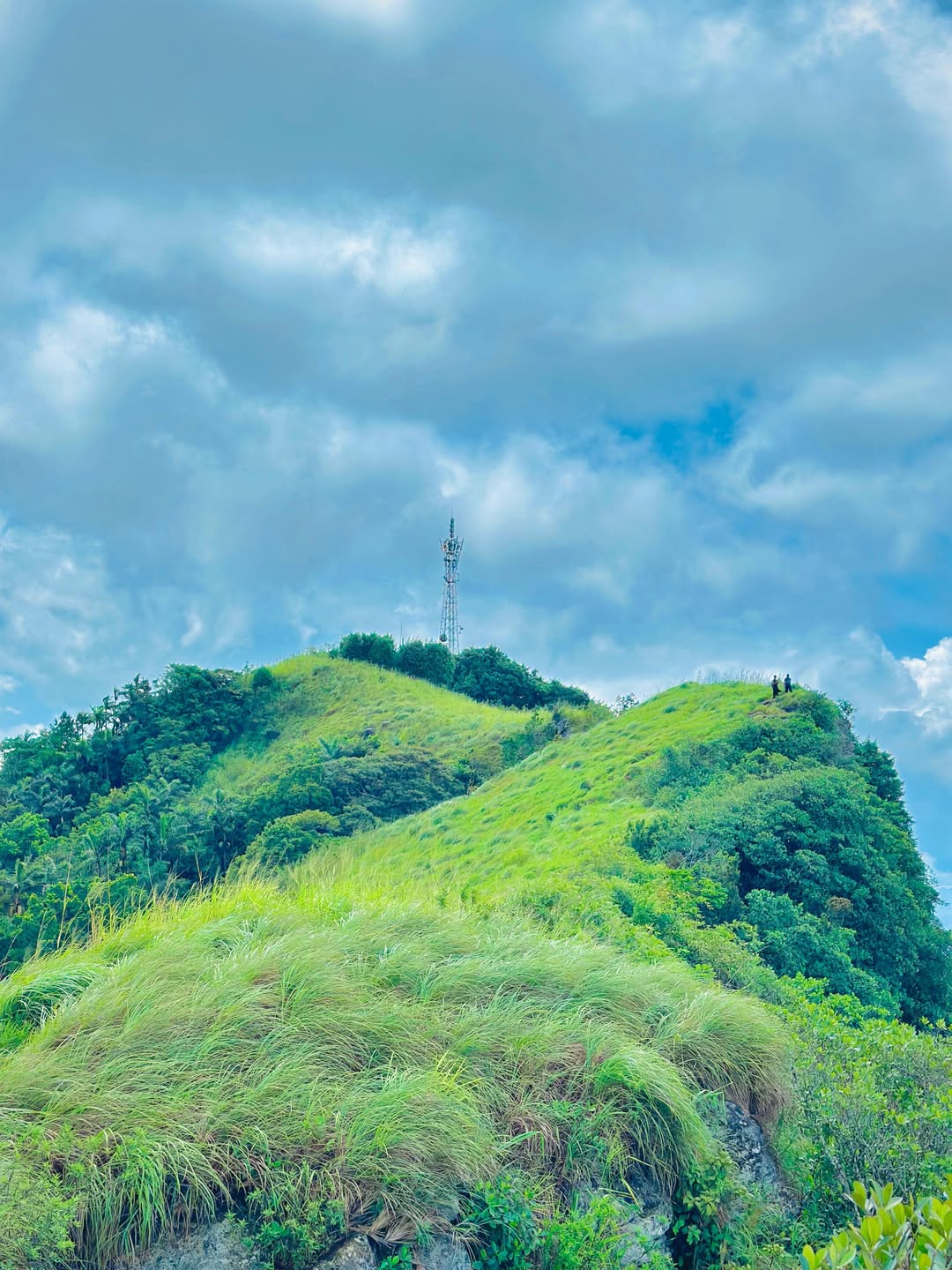
12. Hanthana Mountain Range
Hanthana’s fresh mountain air, tea-covered slopes and walking trails lie only a short drive from the city. It’s one of the best places around Kandy for outdoor enthusiasts.
Highlights
- Seven mountain peaks: The mountain range includes seven peaks, with Uura Kanda (1200 metres) providing some of the finest views over Kandy, the Knuckles Mountain Range and the surrounding hills.
- Hiking trails: Walking routes pass through tea estates, pine forests and open grasslands, with trails ranging from moderate hikes to longer treks.
- Nature and wildlife: Keep an eye out for native birdlife, including species such as the Sri Lanka hanging parrot, along with a variety of mountain plants.
- Tea estate scenery: The walking routes in the Hanthana Mountain Range pass through active tea plantations where estate workers are regularly seen during morning hours.
Entry: Free (hiring a local guide for the longer or less-marked routes is recommended.)
Opening Hours: Generally open for hiking from 9:00 AM – 3:00 PM for safety reasons
Conclusion
If you have at least two days in Kandy, you can easily pair the city’s famous tourist attractions with a countryside temple circuit and a tea estate or hiking trail. A well-planned route reduces unnecessary travel between attractions, leaving more time for the experiences that matter.=
If you’re planning your Sri Lanka holiday, Dimaak Tours can help you build an itinerary covering Kandy and beyond, with transport and accommodation to suit your schedule and budget.
FAQs About Places to Visit in Kandy, Sri Lanka
1. What are the best places to visit in Kandy for first-time visitors?
The Temple of the Sacred Tooth Relic, Kandy Lake, Royal Botanic Gardens, the Bahirawakanda Vihara Buddha Statue, and the Ceylon Tea Museum are some of the top places to visit in Kandy for first-time visitors. These spots beautifully showcase the rich history, culture, and natural beauty of Sri Lanka’s last royal capital.
2. How many days should I spend in Kandy?
Two days work for most travellers. One day is enough to cover the city’s main attractions, while a second day lets you visit the nearby countryside temples, Hanthana Mountain Range, or spend more time exploring the tea estates and nature trails.
3. What are the lesser-known, unique places to visit in Kandy?
Some of Kandy’s quieter, unique attractions include Degaldoruwa Raja Maha Vihara, Udawatta Kele Sanctuary, Hanthana Mountain Range, and the Lankatilaka-Gadaladeniya-Embekka temple circuit.
